The UWM Foundation started small – raising $18,000 from 530 donors in its first campaign in 1974.
In the years since, the Foundation has helped tens of thousands of students complete their education, raised millions of dollars for much-needed housing and academic facilities through its Real Estate Foundation arm, and helped spark innovation and research through the affiliated Research Foundation.
In fiscal year 2014, total Foundation assets surpassed $200 million.
The Foundation, which celebrates its 40th anniversary this year, has been a quiet, but vital resource in supporting UWM’s efforts to educate students, and to help encourage research and economic growth throughout southeastern Wisconsin.
Like most other university foundations, UWM takes its responsibilities for raising and managing funds seriously, but it is the active role it has taken in supporting research and facilities that is unusual, says David Gilbert, Foundation president.
For example, the Foundation’s real estate affiliate, which develops and holds real estate for the benefit of the university, helped fund the construction of the Cambridge Commons and RiverView residence halls when the campus urgently needed more student housing a few years ago. Waiting for the state to allocate money to expand the living space might have taken many more years.
Innovation Campus is the latest building effort funded through the Foundation to aid the university in both expanding facilities and building research collaborations with the nearby Milwaukee Regional Medical Center and businesses such as GE Healthcare.
“Students and faculty don’t always know what we do, but with the help of our Board of Directors and many volunteers, we touch virtually every aspect of life at UWM,” says Gilbert.
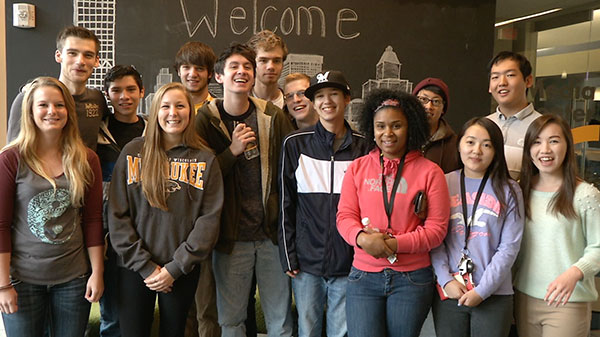
Christine Fiasca, chair of the Foundation Board of Directors, notes that the Foundation’s support helps many UWM students through scholarships (See video http://youtu.be/Z5f5_RGSvTk). With many of UWM’s graduates staying in the area, that helps build the local economy. She and her husband, who met at UWM, are both graduates.
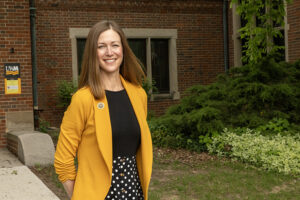
“I was the daughter of immigrants, and worked my way through school. I had a great education at UWM and a great career here in Milwaukee,” says Fiasca, who is vice president, Product Finance for Northwestern Mutual. “Through the Foundation, we’re helping students succeed in their careers. It’s a great way for me to give back,” says Fiasca, who has served on the board for nine years.
“We’re actually educating more Wisconsin residents any other college or university,” says Jill Pelisek, another member of the Board of Directors. Pelisek is also Lawrence G. Regner Executive-in-Residence and an adjunct instructor in the Sheldon Lubar School of Business.
The Foundation’s creators anticipated the need for a separate foundation to support the work of the university.
“Jack always had a special passion in his heart for UWM and he recognized that it really was the economic engine of the Southeast Wisconsin area,” says Pelisek. Her late husband Jack Pelisek, who had also served as president of the UW System Board of Regents was one of the three organizers of the foundation. (The others were Robert S. Zigman and Werner A. Baum, then the UWM chancellor).
“They saw the university had great potential and believed the research and expertise here could benefit Southeast Wisconsin and beyond,” she says.
She adds that Jack Pelisek foresaw that dealing with the legislative process for funding might present some future problems. “So he thought it would be beneficial for UWM to have a foundation.”
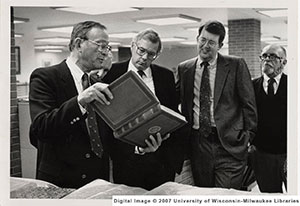
The Foundation’s first fund drive was focused on raising money to bring the American Geographical Society’s collection to UWM. Now, she says, “people come from all over the world to do research here, and it’s one of the reasons UWM is known outside the United States.”
“If Jack were here, he’d be so proud of the Foundation and its accomplishments.”