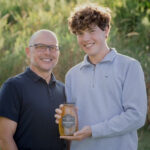
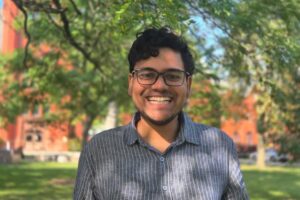
Your wine might be full-bodied or have an excellent bouquet, but is it sustainable? Meghan Murphy hopes that wine enthusiasts will start to ask themselves that question before selecting their bottle.
Murphy, who graduated from UWM in 2016 with a major in sociology, is the sustainability and viticulture manager of the Gundlach Bundschu Winery in Sonoma, California. The company is the oldest family-owned winery in the state. She oversees more than 300 acres of vineyards and ensures that the winery will be sustainable for generations to come. In recognition of her hard work, Murphy was named one of Wine Enthusiast magazine’s “Future 40” last year.
She sat down to talk about her work, her sustainability achievements and some of her favorite wines.
It’s a long way from UWM to Sonoma Valley. How did you become the sustainability manager for the Bundschu Company?
After graduation, I moved to Chicago and got my first job in technical recruiting. I absolutely hated it. I would fake phone calls to get by with my manager. (I thought) OK, let’s get out there and see if traveling will help me understand my purpose in life. I got a Teaching English as a Foreign Language certificate and moved to Vietnam in 2017. That’s when I figured out (that) sustainability is the direction I want to go. We were in this amazingly gorgeous place, and it was so impacted by Western society and pollution. I realized that I could help in some way.
I graduated with my master’s in 2019 from the University of South Florida’s Patel College of Global Sustainability. My husband and I – we met while I was at UWM – always knew we wanted to come to California (where my husband’s family lives) and build a life here. I was able to get in touch with the CEO of my company for an interview, and within two weeks, we were flying to San Francisco to move into my in-laws’ Airstream so we could get started working.
How did a sociology major from UWM help you on your career path?
I wasn’t sure exactly what I wanted to do for my career when I started college, but I knew that a degree in sociology would be able to increase my understanding of just everything in general. I had a great counselor at UWM, Andy Cuneo, who helped me understand that too. Sociology has helped bolster my career in so many ways. Sustainability is all about systems thinking and understanding how different feedback loops play into each other, understanding the “why” behind things. And that is totally what sociology is, is understanding the “why” behind really anything.
Did you have any farming experience when you were hired at the winery?
I started as a sustainability manager, but I had no idea what farming grapes and making wine meant. I had never been to wine country, and it was so foreign to me. I started from the bottom learning the ins and outs of viticulture and the cellar. Five years later, I’m running all of our vineyards and our facilities and all of our environmental compliance and sustainability certifications. It’s totally my passion and my dream job.
What are some of the sustainability measures that you’ve implemented?
For our most recent project, we’ve initiated no-till trials. Traditionally, in viticulture, you till or plow the ground to reduce competition between the ground cover and your vines, or to enhance your canopy growth or quicken ripening in your fruit.
But new research and trials are showing us that the more roots that you’re holding in the ground, the more water you’re holding, the more nutrients you’re holding, and the more nutrient cycling efficiencies you have. It’s a new concept in viticulture to not till up your land during the growing season. We’ve made huge progress in reducing our tillage. We’re still trying to fully understand the effects on our site specifically.
In addition, we are working on reducing our water usage. The average amount of water you use per bottle of wine is about six gallons, and we’ve been making great progress in getting that down to four.
Did I also hear that there was a sheep experiment?

Yeah! We have sheep grazing at our vineyards every winter. This past year, we had 700 sheep come in and they do what’s called “mob grazing.” They’re eating the cover crop, which allows us to skip mowing or weed whacking. They’re incorporating nutrients with their droppings. They are also aerating the vineyards with their hooves. It’s a super old practice that was eradicated due to industrialization and mechanization. (Sustainability) is understanding that going back to our roots of farming is the best way forward if we’re farming in line with Mother Nature instead of working against it.
Bundschu was the 16th winery in the world to achieve its Regenerative Organic Certification. What does that mean and why is it a big deal?
That was one of my huge flagship projects here at the company – getting us from conventional farming to organic and now regenerative organic. ROC is the gold standard of farming. It’s a new certification that’s for food, beverage, textiles, personal care products, etc. It’s all about recognizing that climate change has impacted our soils and our land. It fits on three pillars of soil health, farmworker fairness and animal welfare. It’s a science-based certification, and it’s very outcome-driven and allows us to have the best possible data to make more informed managerial decisions.
It definitely is a challenge. ROC has the most rigorous standards out there, and it’s the only certification that recognizes farmworkers. Not only are we ensuring that we’re protecting our environment and our ecosystem in a holistic manner, but we’re taking the best care possible of our farmworkers as well.
Some people balk at sustainability measures because they’re worried about the expense. What do you do when you run into that?
You have to make a case for everything, especially if you know it’s outside the norm or going to be more expensive. But what’s great about really anything that involves sustainability initiatives is that it has a great return on your investment. It might be a little expensive up front, but not only is it going to be the best course of action for the environment, but it’s also going to pay off in the end.
You work at a vineyard. I’d be remiss if I didn’t ask for a good wine recommendation.
Sauvignon blanc is one of my favorite wines, especially coming out of California. If you find a Gundlach Bundschu sauvignon blanc, give it a try. The 2024 vintage we have out right now is so good. We have an amazing pinot noir as well.