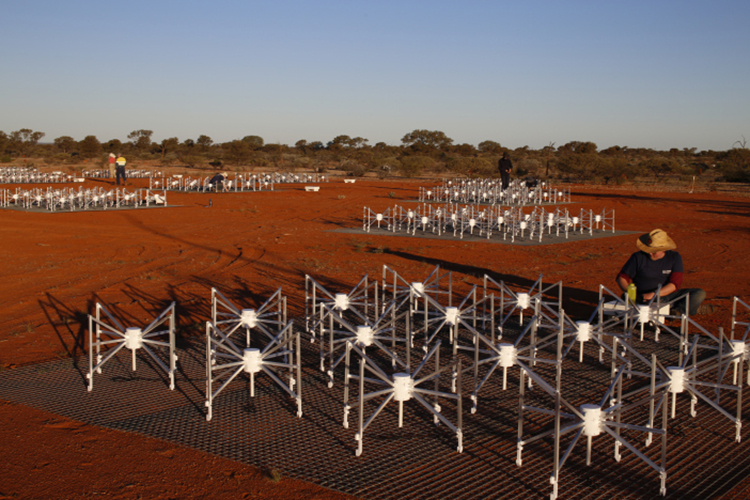
These antennas are part of the Murchison Widefield Array, a radio telescope array that uses low-frequency radio waves to detect and study things like hydrogen emissions, the ionosphere, supernovae and more. (Contributed photo)
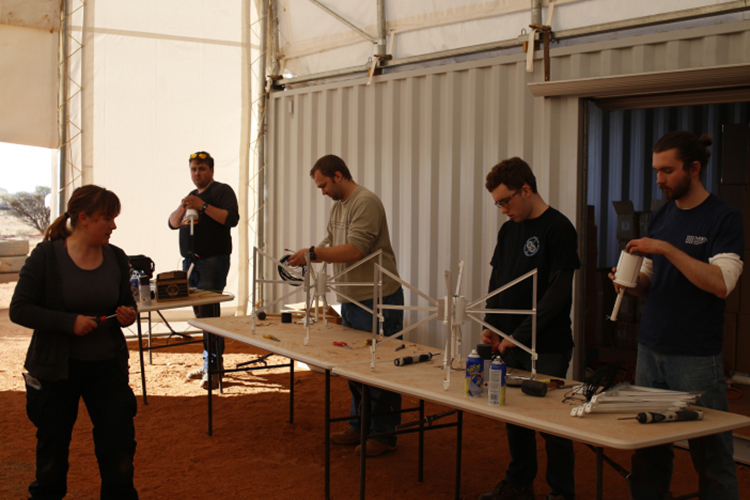
The students helped assemble 576 antennas. It wasn't long, physics major Rusty Mundorf said, before they could just about build them blindfolded. (Contributed photo)
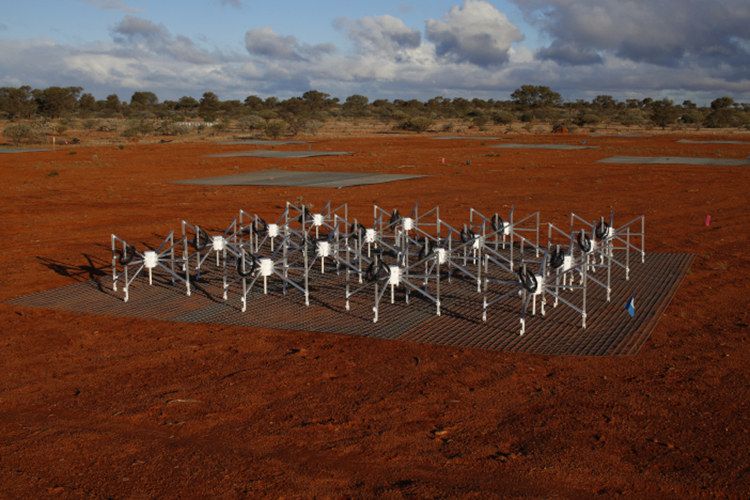
The antennas sit in the wild landscape of the Australian Outback, far from electromagnetic interference. (Contributed photo)
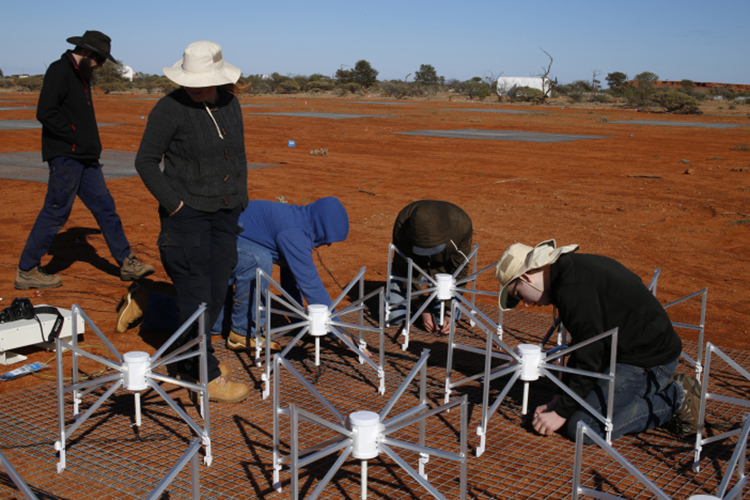
“It’s always interesting to see the practical side of science, and there is a sense of pride in seeing something that you’ve built after a week of work, knowing that someone will use it to study something meaningful in the future,” said UWM physics student William Fiore. (Contributed photo)
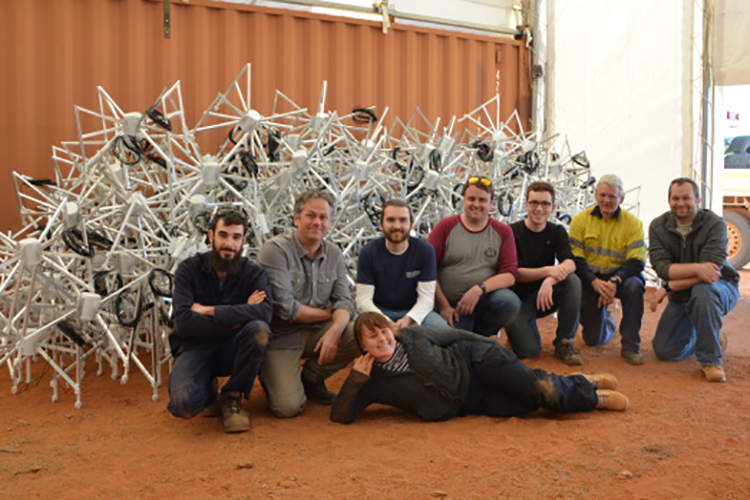
UWM students spent five days as part of the team building the antennas. (Contributed photo)
UWM physics students got the chance to combine science with an adventure when they ventured to the Australian Outback this summer. They helped build a radio telescope array that’s part of an international hunt for pulsars.
Physics majors Rusty Mundorf, Kaleb Maraccini, William Fiore and Robert Bavisotto are all undergraduate researchers who work with UWM physicist David Kaplan. When Kaplan needed a crew to work on expanding the MWA, those four applied.