Research done at UWM leads to better health, a cleaner environment, economic development and a greater understanding of our world. Here’s a look at some of the innovative work that took place in 2015.
Microgrids
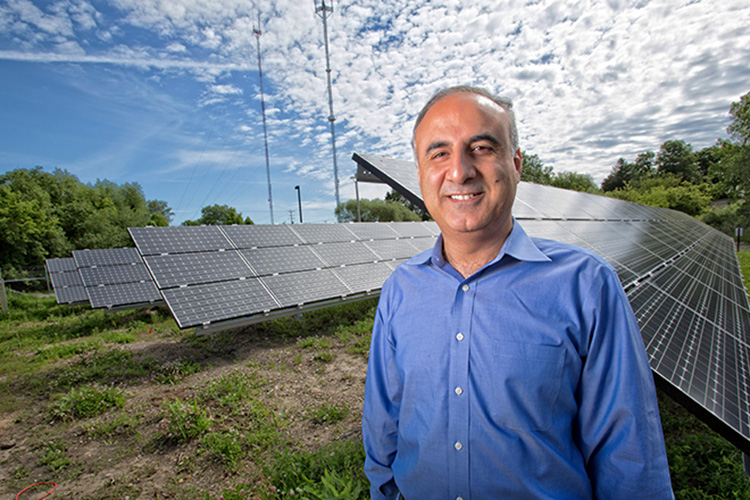
UWM Professor Adel Nasiri is working with Milwaukee companies advance microgrid technology. Microgrids are free-standing power sources that integrate disparate energy-generating sources, store the energy and then distribute it uninterrupted to a limited surrounding area during power outages. Learn more about their research.
Ebola sensor

Junhong Chen, a UWM professor of mechanical and materials engineering, and his colleagues received a grant to develop a sensor that could be used to immediately detect the Ebola virus with a simple “spit” test. Chen will use a sensor platform he created to detect water contamination to make the low-cost virus sensor. Read more about this effort.
Anthropology

Anthropologists with UWM’s Cultural Resource Management program helped excavate a German American cemetery from the 1800s after construction turn up remains in a lot next to a homeless shelter that wants to expand. CRM helps public and private agencies comply state and federal laws protecting historic sites and local resources. Learn more about its work.
Toxic stress

Social worker David Pate studies toxic stress, or early exposure to chronic, unmitigated stress that affects behavior, learning and health for a lifetime. Pate says the concept of toxic stress has helped him explain what some 500 disadvantaged black men have told him for nearly 20 years about their day-to-day wishes and challenges of being a black father in Milwaukee and elsewhere. Read more about his work.
Aquaculture
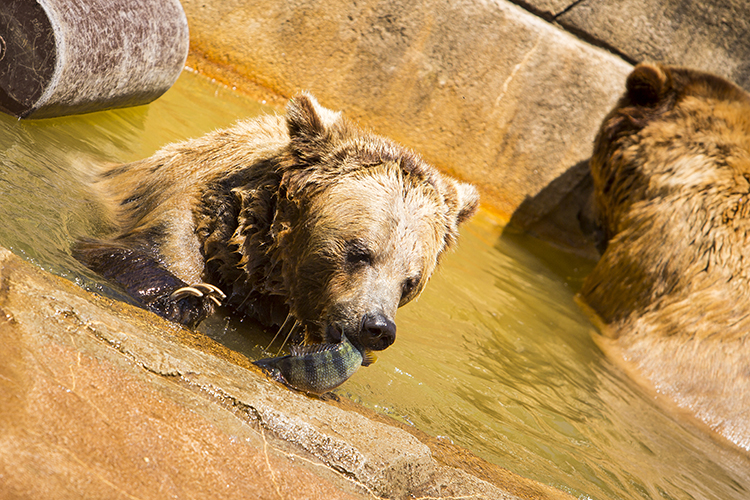
Scientist Fred Binkowski grows tens of thousands of yellow perch each year in a lab at UWM’s School of Freshwater Sciences, as he researches ways to improve methods of raising fish, called aquaculture. Some of the fish provide a tasty treat for animals at the Milwaukee County Zoo. Learn more about Binkowski’s work.
Nanoparticles

Scientist Rebecca Klaper and her colleagues are exploring how nanoparticles — found in everything from sunscreen to sporting goods — interact with the environment and living things. “Part of the goal is to help the technology move forward in a safe and sustainable way,” Klaper says. Read more about their research.
Child caregivers
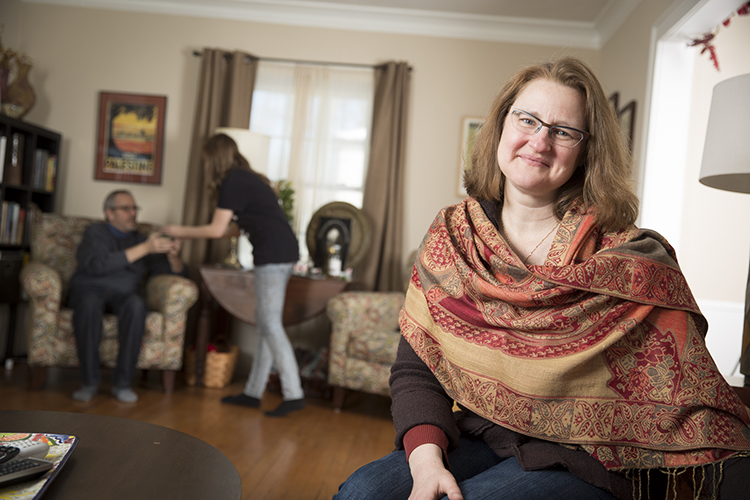
An estimated 1.3 million children and teens help care for family members with serious health conditions, a number likely to swell as baby boomers age. Their work has potentially serious consequences for society because young caregivers frequently drop out of school, affecting their future earning power, said Melinda Kavanaugh, an assistant professor of social work and one of the nation’s few experts on young caregivers. Learn more about her recent research.
Evolution
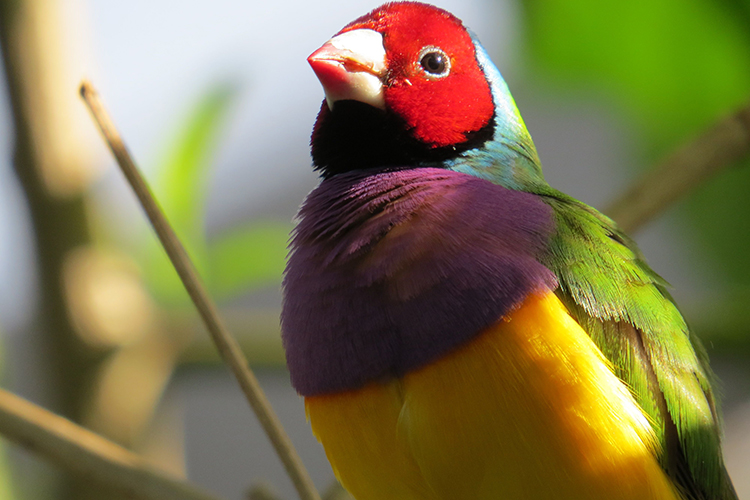
Everyone knows male birds have brighter plumage than females. But a new study done by Peter Dunn and Linda Whittingham, professors of behavioral ecology, and Jessica Armenta, a former graduate student who now teaches at Austin Community College in Texas, found that while males are often have brighter feathers than females, the two sexes have come closer together in color over time to blend into their surroundings and hide from predators. Learn more about how their study is shaping our ideas about evolution.
How we think

Engineer Ramin Pashaie is building a device that could help answer a particularly puzzling biological question – how blood is directed to the brain to power thinking. Pashaie received a prestigious Early CAREER grant from the National Science Foundation to develop technology that will help researchers understand how information processing and blood flow are intertwined, one of the first steps in understanding the circuitry of diseases like Alzheimer’s or atherosclerosis, in which plaque builds up in the arteries. Read an interview with him.
Climate change

You can watch spring start with an online tracker based on the work of geographer Mark Schwartz. His spring indices measure relationships between temperature and plant growth, with ramifications for climate change. Read an interview with Schwartz.