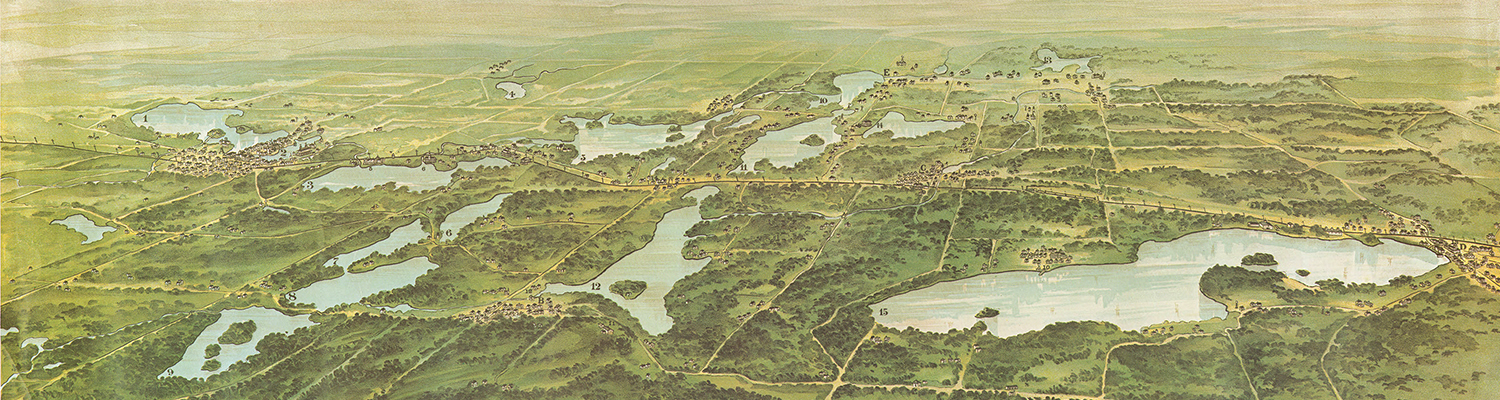
American Geographical Society Library
The American Geographical Society Library (AGSL) was established in 1978 when the research collections of the American Geographical Society (AGS) moved, and ownership was transferred, to the University of Wisconsin-Milwaukee. From the late nineteenth into the mid-twentieth centuries, the AGS led the nation in the collection and distribution of geographic information through involvement in important events in history, from assisting with the United States’ effort to prepare for and participate in the Paris Peace Conference at the end of World War I to leading an effort to map the world at the 1:1,000,000 scale.
By the middle of the twentieth century, the AGS had compiled a cartographic collection that held items such as maps, atlases, globes, a library with an internationally focused monograph and serial collection, and a burgeoning photograph and film negative collection. Following World War II, these collections comprised more than 500,000 items. The collections have thrived at UWM and today, the AGSL consists of nearly 2 million items including maps, atlases, globes, photographs, monographs, serials, and digital geospatial data.

Geospatial Data
Learn about GIS, request data, & use our interactive discovery application.
Digital Collections
Search our Digital Collections for AGSL Materials.
Upcoming events
The AGSL events have concluded for the spring. We will see you in the fall!
If you would like to help support the AGSL’s preservation efforts, you can donate here. Just choose “other funds” under designations and search or scroll to find the AGSL.
Follow us on social media:
Hours:
Monday – Friday: 9am – 4:30pm
Summer Hours: start 5/26/26
Monday: closed
Tuesday – Friday: 9 am – 12pm – appointment only
12pm – 4:30 pm – open to the public
Address
Golda Meir Library
Third Floor East Wing
2311 E Hartford Ave.
Milwaukee WI 53211
Contact
(414) 229-6282
agsl@uwm.edu
gisdata@uwm.edu