Zero feet to Lake Michigan. Make sure you don’t fall in.
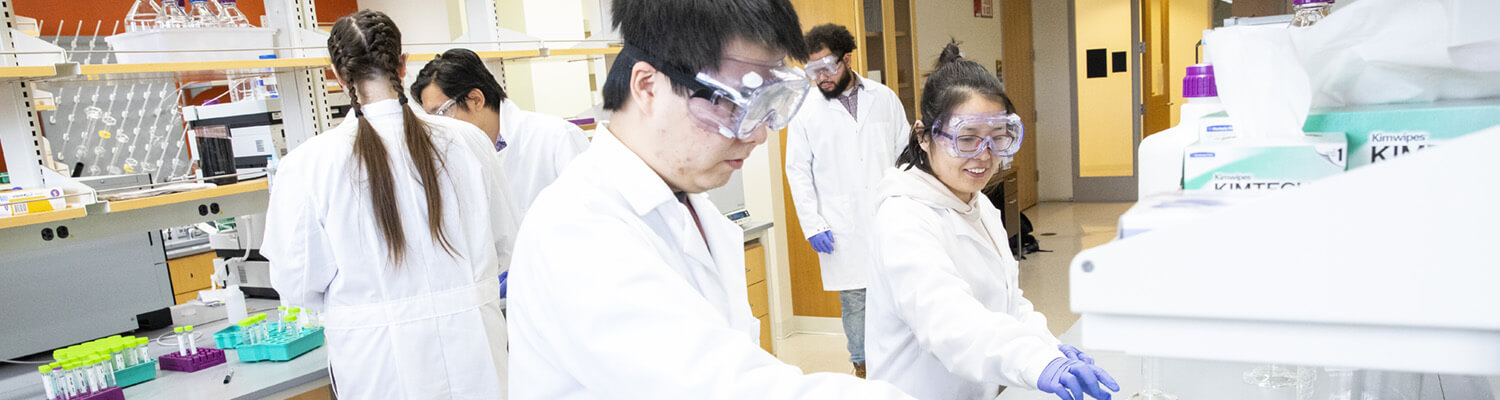
We’re located in Milwaukee’s Harbor District right on the water. That’s part of what makes our school unique. The School of Freshwater Sciences offers the ideal location and resources to study water in all its complexities. Our faculty and students not only have direct access to the water but also to one of the best water-focused research facilities in the world.
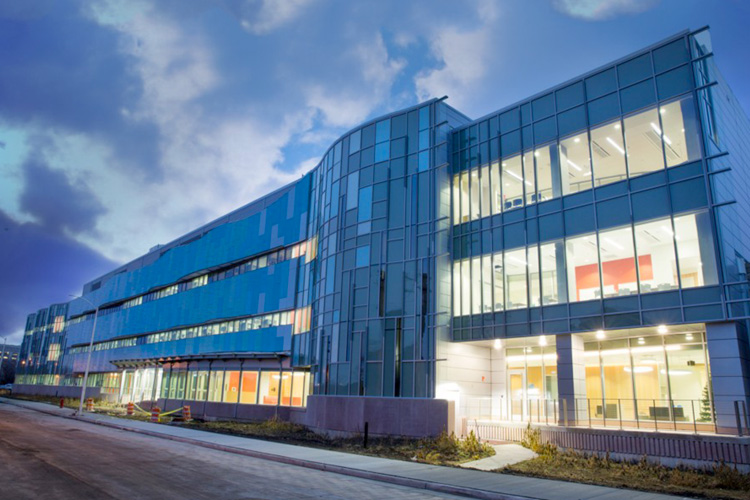
Starboard Building
Our 92,000ft2 research building houses state-of-the-art facilities and analytic tools.
The $53 million, 92,000 square foot research building opened in 2014 and features
- biosecure and quarantine labs for studying aquatic species
- flexible learning commons where students can study or where the school can host external groups
- a pathogen testing facility
- the scenic Harborview Conference Room
- the Great Lakes Genomics Center
Port Building
Our 120,000ft2 building supports major marine operations and research activities.
We have been conducting freshwater research in this converted ceramic tile factory since 1973. Many of our research groups and on-site collaborators maintain offices here, including the Great Lakes Aquaculture Center, which occupies several large labs and a wet bay for Great Lakes and field research.
Other Labs & Facilities
Analytical Core Facility
This collection of five labs and support facilities houses state-of-the-art equipment resources for our students and faculty.
Each lab has a unique focus: organics, inorganics, nutrients, radiology, and microbiology. These areas help uncover different water issues. Key tools, such as the inductively coupled plasma mass spectrometer (ICPMS), spot contaminants, check water age, and track nutrient flows in ecosystems.
Aquatic Robotics Lab
Remotely operated submersibles. Drones and hexicoptors. The Lake Michigan Autonomous Robot (LMAR).
These are a few of the robots from the School of Freshwater Sciences to study the Great Lakes and other freshwater systems. In the Aquatic Robotics Lab, engineering and freshwater sciences students work with faculty. They design, build, and operate robots. These robots perform vital research tasks. For example, they collect live organisms from Lake Michigan’s bottom and track lake sturgeon in the Winnebago system.
Data Visualization Labs
Modeling lake dynamics and how contaminants move through the system.
Predicting rainfall to the square kilometer or for the next 100-year storm. Analyzing the vast data from DNA sequencing. Freshwater research needs complex models and large data sets to grasp interactions among many factors. The School of Freshwater Sciences has labs for data visualization. These labs allow researchers to show and interact with models in real time.
DNA Sequencing Lab
The only lab in the world solely dedicated to environmental issues and ecosystem health.
This lab, maintained by the Great Lakes Genomics Center, houses four powerful DNA sequencers capable of uncovering pathogens in urban infrastructure or determining impacts of pharmaceutical contaminants in the world’s surface waters.
Faculty Research Labs
Our faculty and senior scientists maintain their own research labs, each with a dedicated team of students, technicians and research assistants.
Labs focus on ecosystem dynamics, water technology, and human and ecosystem health. Kikkoman Healthy Water Labs honors the company’s support for the School and its commitment to clean water. The Center for Water Policy has offices in the science labs. This setup helps promote collaboration.
Fish Research Labs
Unique labs that facilitate the development of new aquaculture technologies.
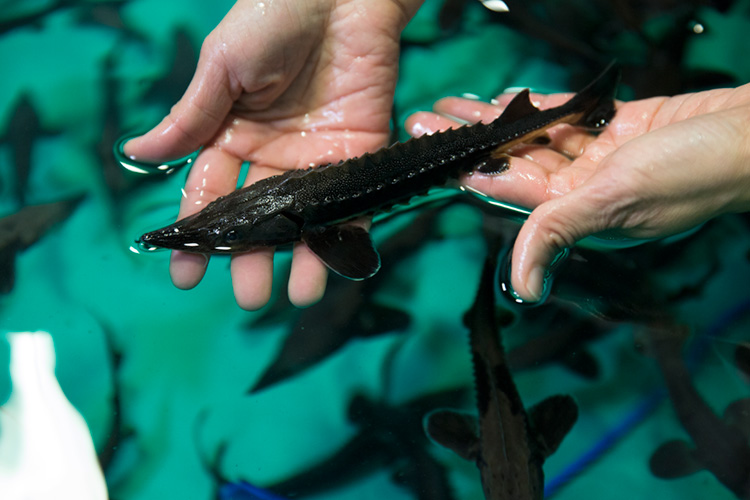
The Great Lakes Aquaculture Center has large labs in our Port Building. These labs focus on water technology research. They study all aspects of yellow perch. This includes spawning fry and testing systems for growing North American yellow perch in recirculating aquaculture. The labs also manage and conserve non-aquaculture fish. They are one of the few places in Wisconsin allowed to spawn and raise lake sturgeon.
Quarantine and Biosecure Lab
These specialized facilities allow research of diseases in fish populations with impact on fisheries and tourism.
Quarantine facilities let researchers bring aquatic organisms from the wild to our labs. This keeps other research animals safe. Our biosecure facilities help us study diseases and parasites in fish. We also seek ways to help managers keep fish populations healthy, which benefits both fisheries and tourism. These facilities offer students and faculty a unique opportunity. They can do important research. This helps improve the long-term health of our water resources.