Mechanical engineering doctoral student conquered 3MT 2026

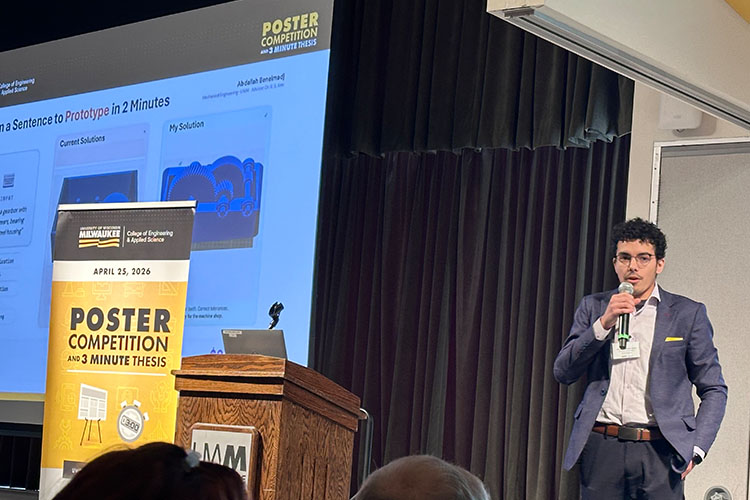
A young man with dark hair in a dark blue jacket and white shirt speaks while holding a microphone at an engineering and computer science research competition. A large screen and a banner is to his right
Abdallah Benelmadjat discusses how an AI tool he designed can produce mechanical design from simple instructions.

Abdallah Benelmadjat, PhD student in mechanical engineering, took the top prize in the “Three-Minute Thesis (3MT)” by explaining his research to a general audience in just three minutes and using only one static PowerPoint tile.

3MT, founded by the University of Queensland, is a “competition within a competition” at UWM, exclusively for PhD students who also participated in the college’s research poster competition held just beforehand. The event was sponsored by the family of the late Michael Krauski, who founded the college’s research poster competition.

Benelmadjat described building an AI tool that can take a simple written description and automatically create mechanical designs. His advisor is Professor Ryoichi Amano.
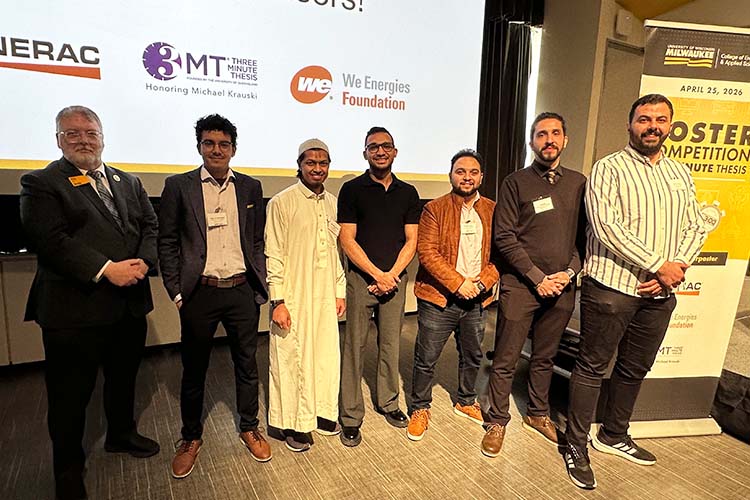
A group of seven men stand in a row, looking at the camera. One in the middle is wearing traditional dress of Bangladesh.
Master of Ceremonies and UWM Graduate School Dean Bryan Porter (from left), and the six 3MT finalists, including Benelmadjat, Hasan, Mohamed Abdelaziz Sayed Youssef, Mohamed Youseff, Rafie, and Alsotary.
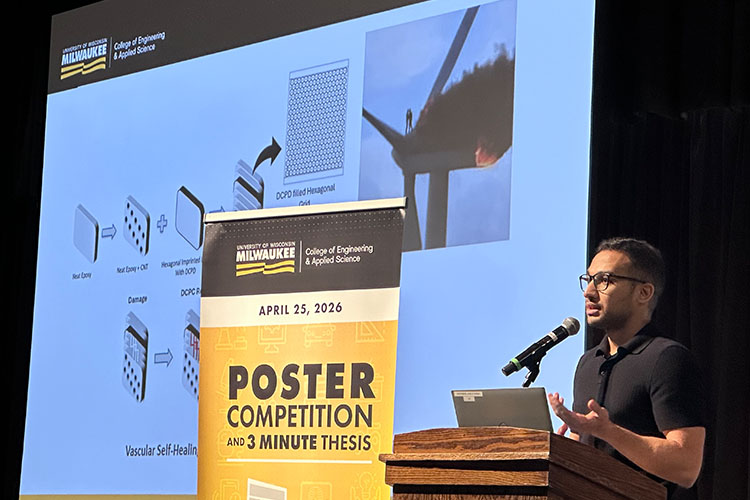
A man with very short dark hair and glasses speaks are a podium. Behind him is a large screen and to his right is a yellow banner.
Mohamed Abdelaziz Sayed Youssef described a durable plastic that can automatically heal its own cracks using built-in micro “veins” filled with repair fluid.
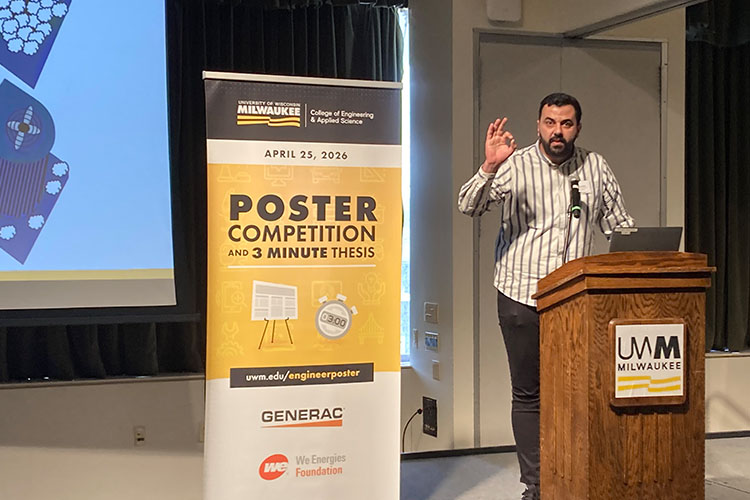
A man with dark, short hair and a white shirt with black stripes make a hand gesture while speaking at a podium. A yellow banner is to his right.
Omar Alsotary explained how ice buildup impacts heat pumps in winter—and how to keep them running efficiently.
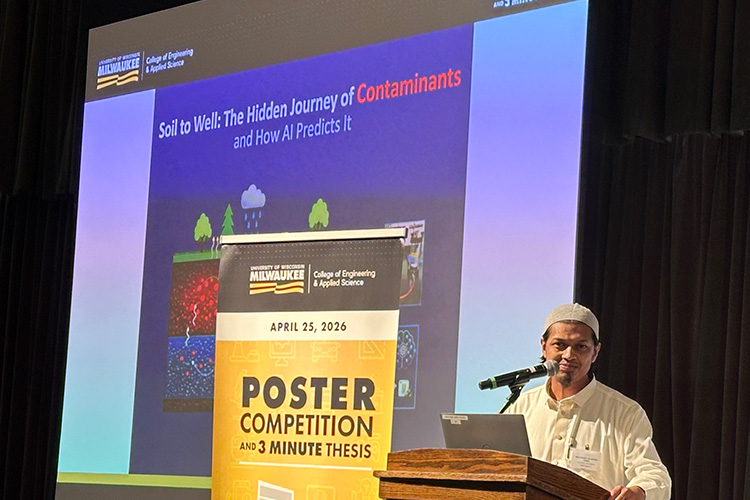
A man stands at a podium. He is smiling and wearing a long white tunic, traditional dress in Bangladesh, and cap.
Abul Borkot Md Rafiqul Hasan, who won last year’s 3MT, presented again, this time on a different topic.
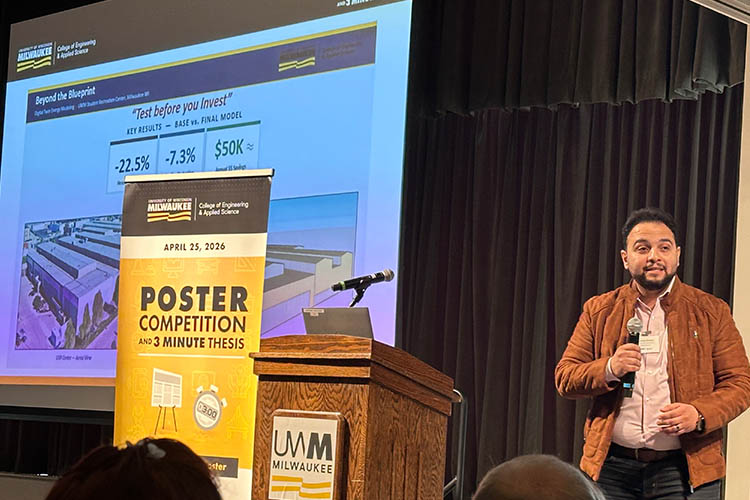
A man with dark hair and brown jacket speaks from a stage, microphone in hand. A large screen and banner are at his right.
Mohamed Youseff explains how a digital twin can give small companies with older facilities quick energy savings answers.
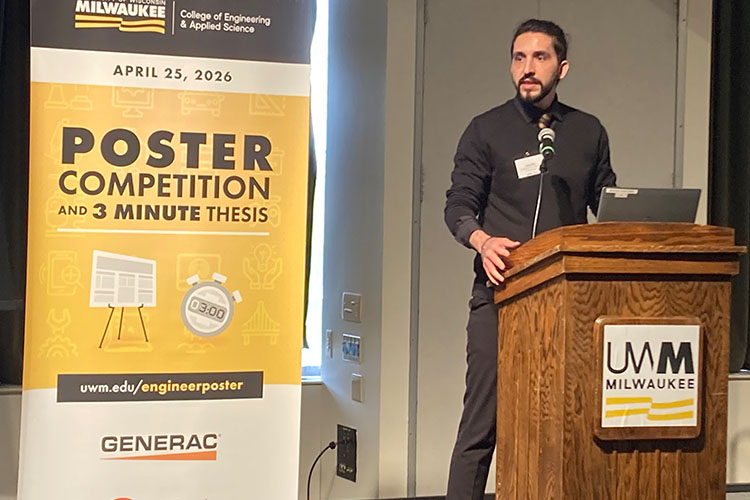
A man with dark hair pulled into a man-bun with black clothing addresses an audience at a podium. A banner is to his right.
Farid Rafie describes how the surface of diamonds can used to build extremely high-performance sensors.

Participants covered a wide array of topics from developing a more precise way to build extremely sensitive sensors made from diamonds to creation of a digital twin model for a building that allows virtual testing of energy-savings opportunities, saving time compared to a complete energy audit.  

Of the 12 contenders who submitted materials, half advanced to the finalist stage. Priya Premnath, assistant professor of biomedical engineering, and Ilya Avdeev, professor, mechanical engineering, served as coaches.

The five other finalists were:

  • Omar Alsotary, Mechanical Engineering. Advisor: Ryo Amano
  • Abul Borkot Md Rafiqul Hasan, Mechanical Engineering. Advisor: Krishna Pillai
  • Farid Rafie, Materials Science & Engineering. Advisor: Nidal Abu-Zahra
  • Mohamed Abdelaziz Sayed Youssef, Mechanical Engineering. Advisor: Ryo Amano
  • Mohamed Youssef, Mechanical Engineering. Advisor: Ryo Amano