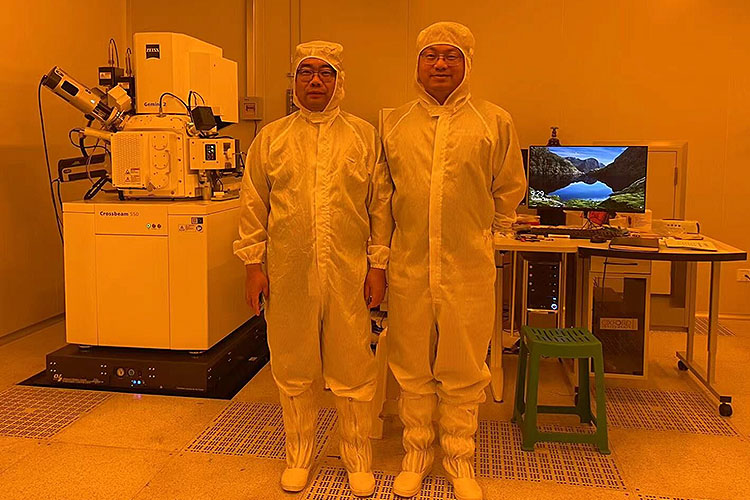
Alex Yasha Yi, a professor of electrical engineering and Director of Research at UWM’s Connected Systems Institute, has been elected a Fellow of the National Academy of Inventors—one of the highest honors an academic inventor can receive.
It’s a distinction reserved for people whose ideas don’t just live in labs and journals—they turn into technologies that reshape industries, improve lives, and spark economic growth. Yi’s career does exactly that.
Yi joins a cohort of only 2,253 Fellows worldwide, representing more than 300 prestigious universities and governmental and nonprofit research institutes.
His research spans intelligent electronics, devices that power artificial intelligence, and next-generation optoelectronic technologies designed to make energy systems smarter and more efficient.
During his career, Yi has secured 34 issued patents, including 18 in the U.S. Many of these inventions have been licensed by major international energy companies, generating more than $300 million in revenue. He is also a Fellow of the Optical Society of America.
Nominators say Yi’s inventions have the potential to transform multiple fields. Among them:
- Ultrasensitive sensors capable of detecting particles as tiny as those found in air pollution—opening the door to better environmental monitoring and AI-powered sensing.
- Advanced optoelectronic crystals that make it possible to build thinner, more efficient solar panels and other renewable energy technologies.
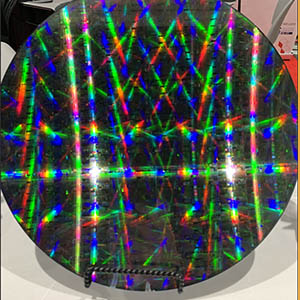
- Super-thin, light-controlling lenses, recognized by MIT Technology Review as a breakthrough technology with major implications for the future of semiconductor manufacturing.
- Chip-scale LiDAR systems now being tested at Mcity, the world’s first proving ground for connected and autonomous vehicles. This kind of LiDAR system features ultra-compact, Light Detection and Ranging sensors that put all data onto single silicon chips, making them much smaller, cheaper, more robust and perfect for consumer electronics.
Yi joins three other faculty members in the college who were previously named NAI fellows: Brian Armstrong, professor, mechanical engineering (also named a Senior Member of NAI in 2019); Pradeep Rohatgi, professor, materials science & engineering; and Junhong Chen (now Crown Family Professor of Molecular Engineering in the University of Chicago).
He will formally be inducted at the 15th annual NAI conference, which will take place in June in Los Angeles.