Welcome to All New International Students for Fall 2021!

UWM just welcomed nearly 300 new international students for fall 2021, which is higher than the number we welcomed in fall 2019, pre-COVID.

They have faced significant challenges to get here in the middle of a pandemic, and their arrival to UWM demonstrates their passion and hard work! Please make sure all new international students around you feel welcome and included in the Panther family!

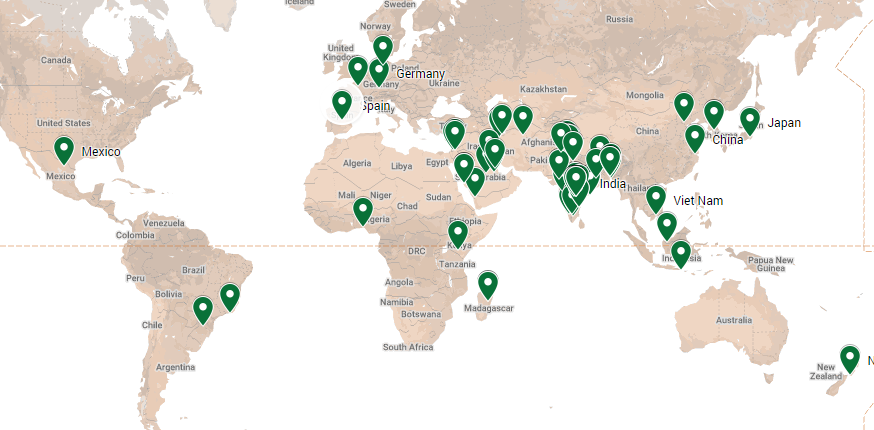
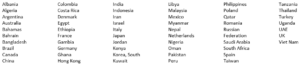
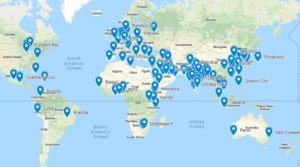
These students are from countries including:

List of countries for incoming fall 2021 international students
Map graphic of new students for fall 2021

UWM Welcomes 86 New International Students

Map of incoming international students for spring 2021.

Imagine what it takes to relocate to another country to study: All the paperwork, packing, saying goodbyes, anxiety, excitement, travel, jet lag, finding a place to live, new food, new friends, new experiences, culture shock, etc. Now imagine doing all that in a global pandemic, with COVID-19, travel bans and difficulty getting a visa.

UWM enrolled 86 new international students for spring 2021, which aligns with new enrollment numbers we typically see each spring. 86 people started a life-changing journey to become part of the Panther family.

A giant shout out to these new students and thank you to everyone who has helped (or will help) UWM’s new international students feel welcome!

UW-Milwaukee Student Starts Day 7,700 Miles Away

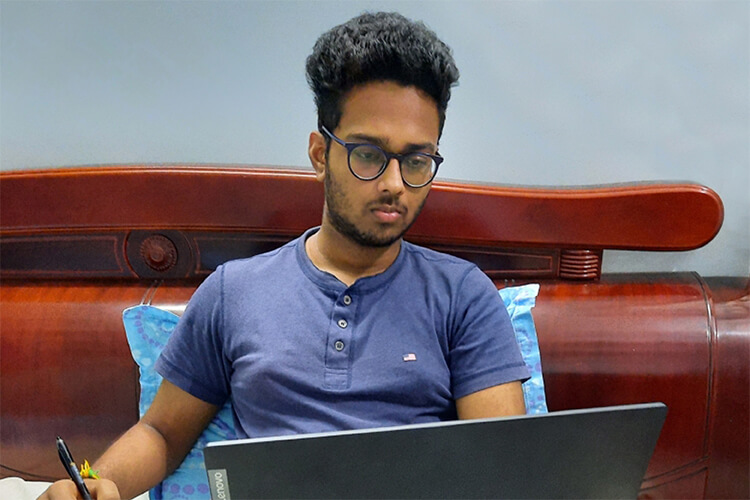
Indian student studying on laptop

The University of Wisconsin-Milwaukee allows students participating in online classes to do so asynchronously, which means students can study at the times that work best for their respective schedules.

By the time Ram Ravipati wakes up for classes at the University of Wisconsin-Milwaukee, it’s nearly dinner time in his family’s home.

That’s because Ram, a first-year student, lives in Vidya Nagar, Guntur, India. He has adapted to a 10 hour and 30-minute time zone difference and takes all his classes online.

Although UWM students studying online can enroll in classes with asynchronous instruction, Ram chose to adjust his sleep patterns to mirror those of his classmates in the United States.

“When I wake up, it’s morning in Milwaukee, but it’s the afternoon here,” Ram said. “I actually eat dinner with my family, but it’s breakfast for me.”

He lives about 7,700 miles from UWM’s campus in the American Midwest. Milwaukee is a manufacturing city with a regional population of roughly one million that is located about 150 kilometers north of Chicago.

Before Ram finished high school, he researched universities around the world. UWM became his first choice when he recognized Microsoft CEO Satya Nadella’s name on a list of notable UWM alumni.

When the pandemic shut down schools and businesses across the world, Ram thought about enrolling in online classes from a university in India. But UWM adopted a hybrid model of instruction for the fall semester, which means many classes offer a mixture of in-person and online instruction. That flexibility allowed Ram to enroll at UWM while staying in India.

“Some of the most talented people in the world, like Satya Nadella, went [to UWM],” he said. “Going to UWM was my dream, so when I found out they were offering online classes, I chose UWM.”

Ram, a computer science major in UWM’s College of Engineering & Applied Science, has adapted quickly to his online classes. He routinely speaks to his professors during their online office hours and receives swift responses whenever he emails them a question. He also attends drop-in tutoring sessions when he needs extra help.

“It’s not a difficult task to take online classes,” he said. “I actually think it’s kind of fun and interesting because when you start doing online classes, you can do things in your own way.

“If I miss something in my notes, I can go back to the lecture and rewatch that part of the class. It helps a lot.”

Ram also finds it easy to connect with his fellow students. He is one of about 1,200 international students and 24,000 total students at UWM.

He has applied for a visa and is hoping to meet his new friends on UWM’s campus in the spring.

“We have a Facebook group for the Class of 2024, so we’re in there exchanging our Snapchats, setting up some group chats and getting to know each other,” he said. “It’s not hard to make friends.”

He hopes to work for a large technology company to gain experience after he graduates. He plans to eventually start his own software company in India.

“The computer industry is growing right now and there are more opportunities in this industry than any other,” he said. “I want to start a software company and I want to create jobs for many students.”
A StoryMap Summer: Educators Create Global Curriculum at UWM

Four local educators spent their summer break in virtual residence at the UWM American Geographical Society Library (AGSL).  National Resource Center-funded fellowships supported these teachers, who used the Library’s vast collections of maps and other primary sources to develop globally-focused curriculum for use in K-12 classrooms.  The fellowships were created to foster global competence among participating educators through an intensive hands-on professional development experience.  This summer, all the projects explored how global history and boundaries continue to impact contemporary societies.  The projects developed ways for the teachers to more effectively teach about the histories of American Sign Language (ASL) & Sign Languages, a broad history of Afro-Latinos, a look at colonialism’s effect on modern day events, and geographic vocabulary highlighting “Who I Am, Where I’m From” for students who are refugees.   

The participating teachers serve students in diverse Milwaukee Public Schools settings and will be implementing their curriculum during the 2020-2021 school year.   With the shift to virtual teaching due to the pandemic, the teachers also benefited from the experience of working with digital collections and using ArcGIS StoryMaps, a tool for building unique, dynamic narratives. The teachers loved learning the new skill as part of their fellowship and all thought their students would like the change in lesson format.     

To learn more about the teachers’ projects and read their blog posts about the experience, check out the AGSL’s blog: https://agslibraryblog.wordpress.com/. 

Stay tuned for information about the 2021 AGSL Summer Teacher Fellowships!

Workshops Connect Teachers to Global Peace-building Strategies

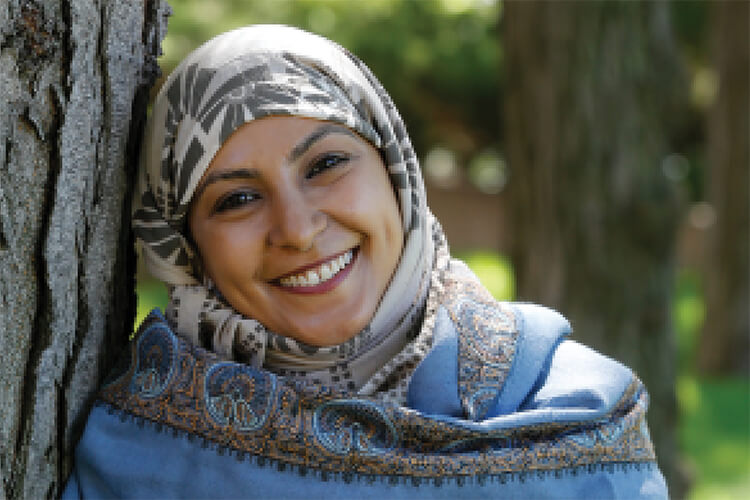
Smiling woman in hijab.

“…[A] powerful, deep, and extremely necessary discussion of global issues that are very relevant to us in this very moment.”

From Standing Rock to Yemen, youth and young adults seeking social change have been leaders in some of the world’s most notable movements.

The next major changemaker could be seated in a neighborhood classroom.

Helping young people connect global issues to their own lives is a key part of the mission of UW-Milwaukee’s Institute of World Affairs. Toward that end, the Institute hosted 40 teachers over the course of a six-week virtual summer workshop series that explored new ways to empower students through conflict resolution and a global spin on curriculum.

Fadia Thabet and Sophie Bouwsma of The Transformation Collaborative facilitated the workshop series, entitled “Addressing Injustice, Building Global Peace” and held virtually due to the COVID-19 pandemic. While many participants were from the Milwaukee area, some joined from other states—an advantage of the virtual format.

The six-week series was divided into three workshops consisting of two sessions each.

The first session of each workshop gave participants a chance to learn about different concepts and share their knowledge in small-group activities. Those concepts ranged from conflict mapping tools to self-identity exploration.

The second sessions featured guest speakers who have done related activism in the United States and abroad. These speakers included:

  • Dora Urujeni, a former parliament member in Rwanda and cofounder of Memos, an organization dedicated to genocide prevention education
  • Nancy Gallardo, a clean water advocate who has protested against pipeline projects at Standing Rock and in Michigan
  • Victoria Ibiwoye, the founder of OneAfricanChild Foundation, which addresses educational inequities through global citizenship education
  • Fabio Arnaldo Ayala, a former teacher who now works as a restorative practices consultant
  • Layth Raji, the president of Iraqi Youth Parliament and an advocate for women’s rights and youth political involvement

Although the workshops dealt with different topics, the importance of building relationships with students was at the heart of each one. Listening to students and involving them in the learning process is a great way to empower them, Ibiwoye said.

“Oftentimes when we think about the role of young people in education, we often think about young people being at the receiving end,” she said. “I think that mindset really needs to change. A lot of young people have unique experience, they have firsthand knowledge, they have skills. We should engage young people more as leaders and partners rather than as beneficiaries.”

The diverse experiences and backgrounds of the participating educators also enriched the programs.  From world language teachers to trauma specialists, participating educators brought unique perspectives and experiences to the conversations.   The workshop series also provided a forum for teachers to share global education resources that they have already implemented in their classrooms.

One of the global frameworks featured during the workshops is the United Nations (UN) Sustainable Development Goals (SDGs), a group of 17 interrelated objectives that promote equality and environmentalism.

Incorporating the SDGs into the curriculum embodies a “think globally, act locally” mindset. Students can create a project using their own environments to tackle one of the 17 goals.

Take water. The fight for clean water might initially seem abstract to many students, but collecting water samples of a local stream or river localizes the issue, Gallardo said.

When youth and young adults learn how complex issues affect their own communities, they can persuade many other young people to get involved. The movement at Standing Rock exemplified that, she said.

“It sparks that fire that was needed, especially in a community that is so poor and has seen so much loss, their dignity and their land and everything,” Gallardo said. “For these youth to carry the flag and send that message really inspired many more youth to partake.

“It’s finding your voice. I think for kids, sometimes they feel like they don’t have a voice. They certainly do.”

Meet Priyal Shah, UWM’s Regional Manager for South Asia

Indian woman representing UWM at education fair.

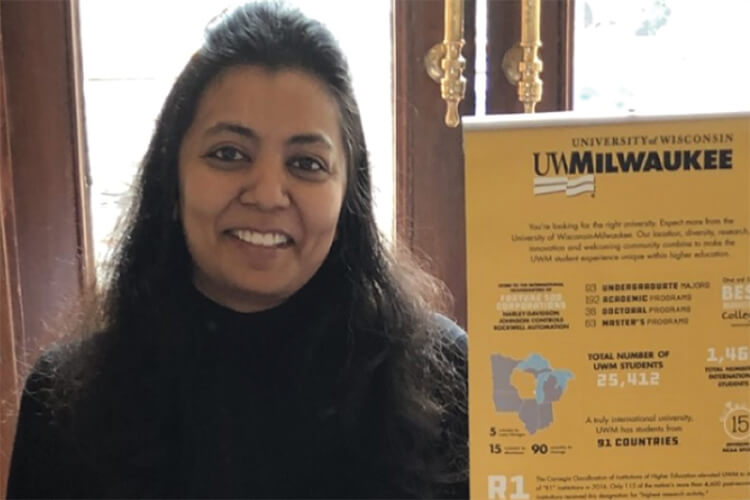
Priyal Shah is UWM’s Regional Manager, covering a territory of India, Bangladesh, Nepal and Sri Lanka. More than 250 students from Priyal’s region were enrolled at UWM during the Fall 2019 semester.

Priyal has been in her role since September 2018, and is involved in a number of activities to support UWM’s efforts to become an even more globally diverse university.

She works with UWM’s international recruitment partners and is a resource for students during the application process. She can be reached on WhatsApp at: +91-7043555570, via email at priyal@uwm.edu, or by phone at: +91-7043555570.

Here’s a little more information to help you get to know Priyal:

How did you become interested in your job?

I’ve actually been involved in the education sector for six to seven years and marketing and sales have been my focus. My job has given me the opportunity to strategize and explore my skills. I love traveling and meeting people, and this job is all about that. 

What did you study at your university in India? What were your favorite classes?

I studied commerce at one of the top five commerce colleges in Ahmedabad. My favorite subjects were marketing, business management and statistics. 

What do you like best about UWM and the City of Milwaukee? 

I just love UWM, the UWM team and Milwaukee They are very skilled in marketing, planning and overall relationship building. 

The most attractive feature is Lake Michigan. I was in awe of the beauty of the lake. I also adore the architecture, the art galleries and the museums. 

What do you like the most about your job and working in higher education?

What I like most about my job is traveling, because it allows me to explore different cities and different countries. Trying new food and meeting new people is also a very nice thing. 

What are some common questions that you get from students you are meeting with? 

Students want to know about campus, location, ranking and job placement opportunities. They also want to know more about the programs, the requirements and how to apply to UWM. 

Tell us a little about yourself

I am a fun, happy-go-lucky person. I love humor, music and dance. I enjoy celebrating all the festivals. 

I’m a very family oriented person. I’m part of a big family and family functions are a big part of my life.

 I’m also a bit of a shopaholic, so shopping for me is a bit like meditation.

Academics, Athletics Made UWM Perfect Choice for Benjamin Cadel

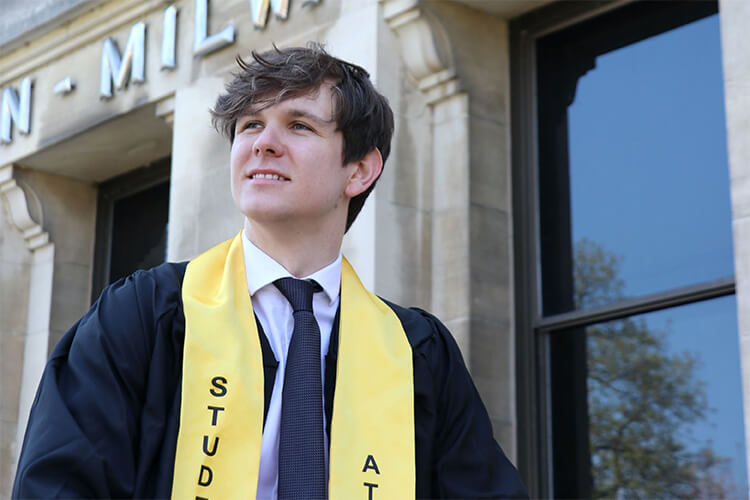
White male student wearing graduation gown and smiling into distance

A perfect blend of academic excellence and athletic support made UW-Milwaukee Benjamin Cadel’s first choice when he was searching for a university in the United States.

Cadel came to Milwaukee from Paris, France in 2017 to join the men’s swimming and diving team, one of UWM’s 15 NCAA Division I athletic teams. He did not see UWM’s campus until he arrived for his first week of classes.

“Sometimes it felt like a movie because I was in such a good atmosphere and environment on the athletic side and with my classes,” he said. “It was beautiful because the weather was so good, the campus was super nice and I just wasn’t expecting it.”

His transition to the United States was made easier because Cadel was one of three international students who joined the swim team for the 2017-18 season. There are currently more than 1,200 total international students at UWM.

“At the beginning, the thing that helped a lot was my teammates,” Cadel said. “We spent a lot of time together because they were also coming in from Egypt. We discovered a lot of things together.”

Cadel said he was immediately impressed by the athletic infrastructure at UWM, from the pool to the athletic staff and coaches.

“If I had an injury or something, someone would take care of it and I had never had anything like this even though I was on one of the best teams in France,” he said. “I definitely felt this huge difference in the sports culture and so as an athlete it’s a relief because you know everything is in place to help you do your best and perform.”

Although Cadel’s coaches took his athletic performance seriously, there was an even greater emphasis placed on his academic success. Cadel graduated in May with a bachelor’s degree in mathematics from the College of Letters and Science.

“They pushed me to be the best student,” he said. “You have meetings every week to talk about your grades, how you’re doing in classes and whether they’re good options for you.

“They want you to be the best athlete, but they also want you to be the best student and that’s good because that was my priority.”

Cadel also credited UWM’s faculty for being patient with him and making him feel comfortable despite his limited English skills when he first started classes.

Although Cadel decided he wanted to study in the United States years before he ever set foot on UWM’s campus, he admits he was nervous when the time finally came to make the trip. But he now looks at his time at UWM as the best experience of his life.

He encourages other students who may be worried about studying at UWM to take the chance.

“I didn’t know if I would be friends with anyone, or if I would just be here for one year, go back (to France) and be done,” he said. “But after these three years I’m sure I have found friends for life.

“When I go back to France, whenever anyone from the team wants to visit, I will be happy to host them.”

Statement of Solidarity Against Anti-Asian Racism and Xenophobia

The Asian Faculty and Staff Association at the University of Wisconsin-Milwaukee (AFSA), reaffirms our commitment to supporting and advocating for students, faculty, and staff of the Asian Diaspora as the coronavirus (COVID-19) global health pandemic impacts our community in unique ways.

Members of the Asian, Asian American, and Asian Pacific Islander community have experienced unique vulnerability as targets of racism and xenophobia as anxiety and fear over COVID-19 has spread over the past several months*. Locally, this vulnerability also comes at a time when social support and community comforts have been weakened, whether due to the loss of contact with peers to adhere with the important act of social distancing or closure of community fixtures such as local Asian restaurants and business. In the Milwaukee area, some have been forced to close due to racist attacks on their staff.

  • In the face of this vulnerability, AFSA resolutely stands in solidarity with UWM students, faculty, and staff against these acts. We support, and will advocate, for:
  • A campus and local community that is free of anti-Asian violence and racism,
  • Education and empowerment to rise above the rhetoric of anti-Asian sentiment that swirls around the local, national, and global conversations concerning the COVID-19 pandemic,
  • An official statement of intolerance of anti-Asian racism and xenophobia from the University of Wisconsin-Milwaukee (including intolerance for derogatory references such as the “Wuhan” or “Chinese” virus, etc.),
  • Resources to support students, faculty, and staff members of the Asian and Asian American community directly impacted by racism incited by COVID-19, and
  • Equitable treatment of all marginalized communities disproportionately impacted by the COVID-19 virus.

In addition to rising anti-Asian sentiment, UWM students may face challenges around travel, leading some to remain separated from their families and loved ones overseas or unable to return to the U.S. to complete work related to their degree programs. We reaffirm our support for students impacted by these unique challenges and support the excellent work of various campus partners who provide resources for students in navigating these challenges, including the Center for International Education.

We urge our students, colleagues, and community members at UWM to act with concern and compassion for those who have been directly and indirectly impacted by the COVID-19 virus. We stand in solidarity with those who are working to develop effective medical treatments and methods of curbing the rates of infection and with those working to support diverse communities.
To learn more about coronavirus-related racism and xenophobia, please see this resource compiled by Dr. Jason Oliver Chang. Resources for individuals experiencing acts of violence or harassment can be found at Asian Americans Advancing Justice; their website also contains information about intervening as a bystander. Reports of incidents at UWM can be made through the Equity/Diversity Services office.


* The national clearinghouse “Stop AAPI Hate” has collected 1700 incident reports over six weeks, Asian Pacific Planning & Policy Council.

Provost Congratulates 2020 International Graduates

Internship, Job Opportunities Led Khanh G Nguyen to Milwaukee

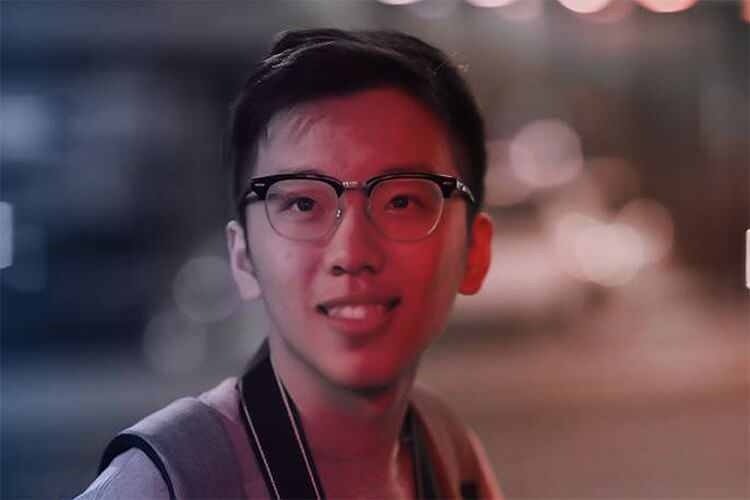
Vietnam student with glasses and camera around his neck.

Khanh G Nguyen never stops scouting the city of Milwaukee for the perfect picture.

“I’m a photographer and Milwaukee is just beautiful,” Nguyen said. “I usually go out by myself with my camera to explore the city. It’s also really nice to have Lake Michigan nearby for a refreshing walk.” 

Nguyen is a senior at the University of Wisconsin-Milwaukee, a top-ranked American research university (Carnegie Classifications of Institutions of Higher Education) that the World University Rankings named among the top three percent of universities worldwide.

He picked UW-Milwaukee after talking to his cousin, who lives in the city. Milwaukee has a regional population of about 1 million. 

“She told me Milwaukee is one of the best cities for business because everything is growing,” Nguyen said. “It’s not like Chicago where it’s difficult to get a job. 

“There’s a lot of opportunities to get a job here. It’s very easy to get an internship in the summer and to get a job after you graduate.” 

Nguyen, who is from northern Vietnam, was also attracted to UWM because of its size. He is one of about 1,300 international students at the university, which has a total student population of about 24,000. 

He is majoring in marketing, one of 94 undergraduate programs at UWM. The university also has 104 graduate programs. 

“There are more options for me to study at a big university,” Nguyen said. “Besides business, I can do any other classes I want to do. For example, my first year I chose guitar and my second year I chose a sports class.” 

Nguyen has also taken advantage of a number of networking events hosted by the Lubar School of Business, one of 15 schools and colleges at UWM. 

“In business it’s very important to go to networking events, so we have CEO’s from the city come in to talk to us,” he said. “It’s a good chance for you to go talk to them. I got my internship last year because I talked to a recruiter at a career fair. 

Nguyen plans to work for an agency or start-up business for the next few years to get experience before starting his own business. He said he will continue to receive support from his UWM instructors even after he has graduated.

“I took two entrepreneur classes at UWM and I’ve been in contact with both my professors from those classes,” Nguyen said. “They are advising me on how to start a business.”