Chemistry & Biochemistry’s Dr. Xiaohua Peng was featured in In Focus discussing her new start-up SynXT Therapeutics. SynXT Therapeutics (founded by Dr. Peng and former UWM graduate student Dr. Taufeeque Ali) are developing a new type of cancer therapy. This therapy has shown promise in treating triple negative breast cancer without the side effects of traditional chemotherapy. You can read more about Drs. Peng and Ali’s journey with SynXT Therapeutics and breast cancer research in In Focus.
Behind the Scenes with Cannon Design
As we approach the final weeks of the second academic year in the new Chemistry Building, we want to share with you a little behind the scenes perspective on the building planning process with Cannon Design. Cannon Design was awarded the design contract and help take concepts and make them what is our reality today. More about Cannon Design’s summary of the design process can be viewed on their website.
Maya Fernando Wins Mentor of the Year Award from Office of Undergraduate Research
Undergraduate research has been a focus of UWM enabling students to engage in research in addition to their course curriculum. The Office of Undergraduate Research (OUR) has supported this important aspect of University education by offering fellowships, enabling conference participation, organizing workshops and symposia, and professional development opportunities. Maya Ferando, who is a graduate student in Prof. Arnold’s research group, has directly supervised graduate students Shaun Harrington, Devin Esch, Marley Makowiak and Paul Wiebe and worked closely with Ryan Burmesch, Braden Barkley, Natalie Cox, Makena Vesperman, Alec Veliz, Kali Quade and Dayana Griggs. Her ability to work well with undergraduate students and their demanding course schedules has garnered high praises from her students. Her outstanding ability to motivate and teach students to successfully complete many aspects of their research has resulted in the recognition by the OUR, who bestowed her with the 2026 Graduate Student Mentor of the Year Award.
More information about the OUR Research Mentor of the Year can be read on their website at the following link: https://uwm.edu/undergraduate-research/symposium/research-mentor-of-the-year/
Discovery and Innovation Grant awarded to Prof. Liedhegner (Biomedical Science) and Prof. Silvaggi (Biochemsitry)
We congratulate UWM Investigator: Assistant Professor Elizabeth Liedhegner, School of Biomedical Sciences & Health Care Administration and UWM Co-Investigator: Professor Nicholas Silvaggi, Department of Chemistry & Biochemistry as the recipients of a Discovery and Innovation Grant (DIG) for their research “Understanding the role of Sterol Carrier Protein 2 (SCP-2) in lipid metabolism: toward structure-based design of SCP-2 inhibitors as tools to investigate function.”
Sterol carrier protein 2 (SCP-2) is a ubiquitous protein, homologs of which are produced in mammals, insects, yeast, bacteria, and archaea. In mammals, SCP-2 is expressed in multiple tissues including the liver, intestinal tract, and brain, where it participates in intracellular lipid trafficking and metabolism. For example, SCP-2 has been shown to be a key player in endocannabinoid signaling in the brain, and in the uptake, oxidation, and esterification of fatty acids in the liver. We are pursuing a comprehensive X-ray structural characterization of the complexes between multiple SCP-2 homologs (human, rabbit, mouse, rat, dolphin, and cow) and as many endocannabinoid, sterol, fatty acid, fatty acyl-CoA, and phospholipid/sphingolipid ligands as possible. The hydrophobic binding site of insect SCP-2 was identified long ago, but there are no structures of ligand-bound mammalian SCP-2 proteins. Answering questions about which ligands SCP-2 binds, how tightly it binds them, and what downstream effects result from these interactions will require potent SCP-2 ligands for use as probes. The eventual development of such tight-binding probes of SCP-2 will require detailed structural knowledge of how known SCP-2 ligands bind to the protein. This is a current knowledge gap in the field that we are working to fill.
Information about UWM’s Office of Research, Internal Grant Programs can be read at the following link: https://uwm.edu/officeofresearch/ords/internal-grant-programs/
Four UWM Graduate Student Fellowships Awarded to Chemistry & Biochemistry
Chemistry & Biochemistry has been awarded four UWM Graduate Student Fellowships for Fiscal Year 2026-2027. The awardees are as follows:
- Advanced Opportunity Program Fellowship: Tori Williamson
- Distinguished Dissertation Fellowship: Maya Fernado and Thilini Ponnamperumage
- Distinguished Graduate Student Fellowship: Mayruika Mahendran
We congratulate these students for their academic achievements. More information about the UWM Graduate Student Fellowships is available at the following link: https://uwm.edu/graduateschool/students/financial-support/fellowships/
Prof. Arnold receives Faculty-Industry Partnership Seed Grant (FIPS)
| Prof. Arnold has received Faculty-Industry Partnership Seed Grant (FIPS). The FIPS awarded by the UWM Office of Research supports a collaborative project between Thermo Fisher Scientific and the Arnold Group seeking to conduct an independent, data-driven evaluation of novel EcoFizz™ detergent candidates designed to preserve functional performance while improving sustainability and regulatory alignment. The project integrates academic analytical rigor with translational industry objectives. The research team includes Drs. Webb and Nandhikonda from Thermo Fisher Scientific located in Rockford Illinois and Prof. Arnold and graduate student Nethyanji Premananda. |
Prof. Arnold receives Research Mentor of the Year Award
Since 2013, the Office of Undergraduate Research bestows the Research Mentor of the Year award to acknowledge outstanding efforts by UWM Faculty of Staff for supporting undergraduate researchers. This year, Prof. Arnold received this award for his continuous support of undergraduate research enabling students to gain knowledge in the field of drug discovery and development. Since 2009, Prof. Arnold has mentored almost a hundred undergraduate students, which worked together with members of the Arnold Research Group developing new drug candidates for cancer, respiratory and cardiovascular diseases. Their dedication and work resulted in numerous poster presentations and peer-viewed publications improving their career prospects and strengthening the R1 status of UWM.
We are hiring!
We are hiring a Research Services Manager of our Mass Spectrometry Facility. The SAILARC Manager oversees efficient and productive operation of SAILARC, which will include support for the Department’s research and teaching objectives and collaborative programs with UWM laboratories and external partners. Principal duties (as defined more specifically below) will include maintaining operational status of all SAILARC instrumentation, training users on instrument operation, techniques, and data analysis, providing analytical services for collaborators, and general laboratory organization and management. The Manager will work with a variety of UWM offices to ensure compliance with relevant health, safety, and other requirements. The SAILARC Manager reports to the Department Chair, who may in turn delegate work assignments and oversight to other Department Faculty or Academic Staff.
Position requirements and the application are available at the following link: https://wisconsin.wd1.myworkdayjobs.com/en-US/UW_Milwaukee/job/Research-Services-Manager_JR10009594
From the Chair’s desk:
Greetings to you all!
What a wonderful semester this has been and a great start to the new academic year. I continue to be amazed and blessed by the diligent and excellent efforts of so many. It is so satisfying to be part of this team!
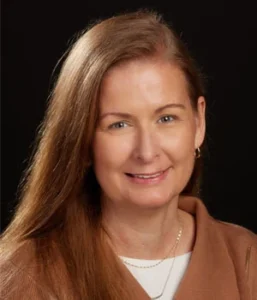
Chair, Chemistry & Biochemistry
This fall, we are happy to report yet another incredible increase in enrollment. We are up 16% from the previous fall semester and 18% for our 5-year average with a record number of students not seen since fall of 2019! I am certain that this is only due in small part to the new building, which is so supportive and welcoming for student learning, and in overwhelmingly due to our dedicated instructional team. Our faculty, staff and graduate students are the reason why so many students select to take chemistry and biochemistry, major in chemistry and biochemistry, and thrive in the environment our team provides! Truly a team effort and highly successful!
We welcomed new graduate students into our department family, while at the same time continue to celebrate so many graduations and accomplishments!
Our space and environment continue to be supportive of research as we are seeing amazing successes in our faculty and the innovative and creative approaches used in the labs by our student researchers and scientists.
It was with great sadness that saw the transfer of our very own Elise Nicks to the English Department. Even though we still visit often, it is simply not the same without her cheerful and sweet presence in our department. We also bade best wishes to Anna Benko as she returns to industry after her long tenure running our Mass Spec Laboratory. Truly we miss them both dearly!
Please mark your calendar for the Department at the Annual Awards Day and Research Symposium (scheduled for May 1st); more details will follow. Also, please come and visit the new building if you haven’t already done so – chemistry is on display for all to see.
Thank you for being part of the Department family and your continued support of our mission!
All my best,
Kristen Murphy
Chair, Chemistry & Biochemistry
Graduate Student News
New Graduate Student Welcome
We are happy to welcome six new graduate students for the spring semester, Amanda Captain, Uttam Gomes, Jhoanna Molina, Nethyanji Premananda, Nikole Tamayo, and Munisaa Younus.
We’re excited to have them join our Chemistry & Biochemistry Department and look forward to their contributions to the Department as well as research and discoveries during their time at UWM.
Amanda Captain received her bachelor’s degree from the University of Wisconsin-Madison in zoology (2004) and also completed the undergraduate chemistry major there (2008). Amanda completed a teaching license certification program in science education at University of Wisconsin- Milwaukee (MACSTEP) in 2005, with a major in biology and a minor in chemistry. Her master’s degree is from Edgewood University in Madison, Wisconsin in Marriage and Family Therapy (2015). Amanda is studying Chemical Education at UWM with the intent of teaching community college in the future. She is focused on helping students build confidence in science and math as they work towards their future career goals. She is looking forward to working with all the amazing people at UWM as she works on research aimed at creative supportive, inclusive learning environments for all students.
Uttam Gomes received his bachelor’s degree and master’s degree in applied chemistry and chemical technology at the University of Dhaka in Bangladesh. He earned his second in chemistry from the University of Minnesota – Duluth with research focused on analytical method development for the characterization and identification of microplastics from Lake Superior using fluorescent dye staining, flow cytometry, and pyrolysis gas chromatography–mass spectrometry. Uttam previously worked as a high school chemistry teacher in Dhaka, Bangladesh and a production scientist in the GMP manufacturing facility (Madison) under the Life Science division of MilliporeSigma, where he synthesized active pharmaceutical ingredients (APIs) used in cancer treatment medicines. Uttam’s goal is to build on his industry experience and broad applications of chemistry, along with the knowledge gained in his recent academic and professional roles. He aims to contribute to the field of organic chemistry with a strong focus on drug discovery and medicinal chemistry.
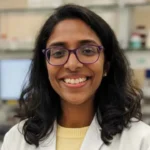
Nethyanji Premananda earned her BSc Honors in Chemistry, with concentrations in Biochemistry and Microbiology, from the University of Kelaniya, Sri Lanka. During her undergraduate studies, she conducted research in analytical chemistry, focusing on the analysis of heavy metals in a polluted estuary ecosystem. She has worked as a Teaching Assistant at the University of Kelaniya, the Institute of Chemistry Ceylon, and the Open University of Sri Lanka. Through her PhD at UWM, she aims to broaden her knowledge, enhance her research and teaching skills, and apply insights from chemistry to practical challenges, contributing to impactful scientific solutions.
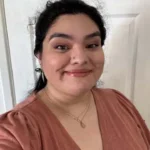
Nikole Tamayo completed her Bachelor of Science in Chemistry, ACS certified in Biochemistry, from Southern Oregon University. She then earned her Master of Science in Chemistry from the University of California, Davis for her research on DNA Glycosylase MutY. Nikole plans to pursue Chemical Education Research at the University of Wisconsin-Milwaukee. Her areas of research interest focus on the introductory general chemistry course sequence and include understanding how students apply algebra to solve stoichiometry problems and increasing persistence. Nikole is excited to learn about the chemical education field here at UWM and hopes her contributions will allow general chemistry to be more accessible to all students.
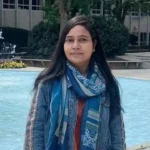
Munisaa Younus completed her bachelor’s and master’s degrees in chemistry in Pakistan, followed by a M.Phil. in chemistry. Throughout her academic career, she has developed a strong background in organic synthesis and characterization of biologically active compounds. In addition to organic synthesis, Munissa is also interested in analytical research, particularly in applying spectroscopic and chromatographic techniques for the identification, quantification, and characterization of chemical compounds. At the University of Wisconsin–Milwaukee (UWM), Munisaa looks forward to enhancing her research skills by combining organic and analytical chemistry approaches. Within the Chemistry Department at UWM, she is excited to collaborate with faculty engaged in synthetic, analytical, and interdisciplinary research, to expand her expertise, contribute to innovative studies, and explore chemistry’s role in solving real-world scientific challenges.
Graduate Degrees Conferred in Spring 2025
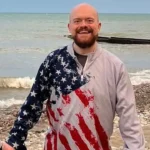
Alex Vincent graduated with his PhD in chemistry in the spring of 2025 under the supervision of Prof. Alexander “Leggy” Arnold. Since graduating from UW–Milwaukee, Alex has taken on the role of Director of Chemistry at Geneva Laboratories in Elkhorn, WI, where he leads a team of chemists providing analytical testing to ensure the safety and quality of pharmaceuticals and medical devices. One of the most rewarding aspects of this role is mentoring young scientists and helping them see how the skills we honed at UWM can directly shape real-world outcomes in patient health.
Alex’s UWM education gave him the foundation to build a career where science makes a daily impact. He is also excited to share some recent research accomplishments: their article, “Development of novel Alpha 2B adrenergic receptor ligands by using a palladium catalyzed Buchwald–Hartwig amination with a brominated benzodiazepine,” was published in the Royal Society of Chemistry – Medicinal Chemistry, and more recently, the Schwabacher group’s manuscript, “Structure-based designed β-strand mimic elucidates early protein-protein interactions in β-barrel assembly,” was accepted by Nature.