Doctor of Occupational Therapy OTD
The Post-Professional Doctor of Occupational Therapy (PP-OTD) program is designed for occupational therapists aiming to enhance their clinical expertise, leadership skills, and scholarly engagement. This flexible program requires a minimum of 33 graduate credits credits of which 16 are core credits and 17 are from electives tailored to student interest and capstone project design.
Students may transfer up to 12 graduate-level credits toward the degree, pending approval. The program can be completed 100% online, offering working professionals the flexibility to balance their academic and career goals. In-person elective course options are also available at UWM and affiliated institutions for those who prefer a hybrid experience
The program timeline of four semesters of coursework begins in the spring of each academic year. Students who choose to enroll in Summer or Fall semesters will be assigned an advisor and may begin enrolling in elective courses. All enrolled students complete their degree in a Spring semester.
Program Type
Doctoral
Program Format
Hybrid, Online
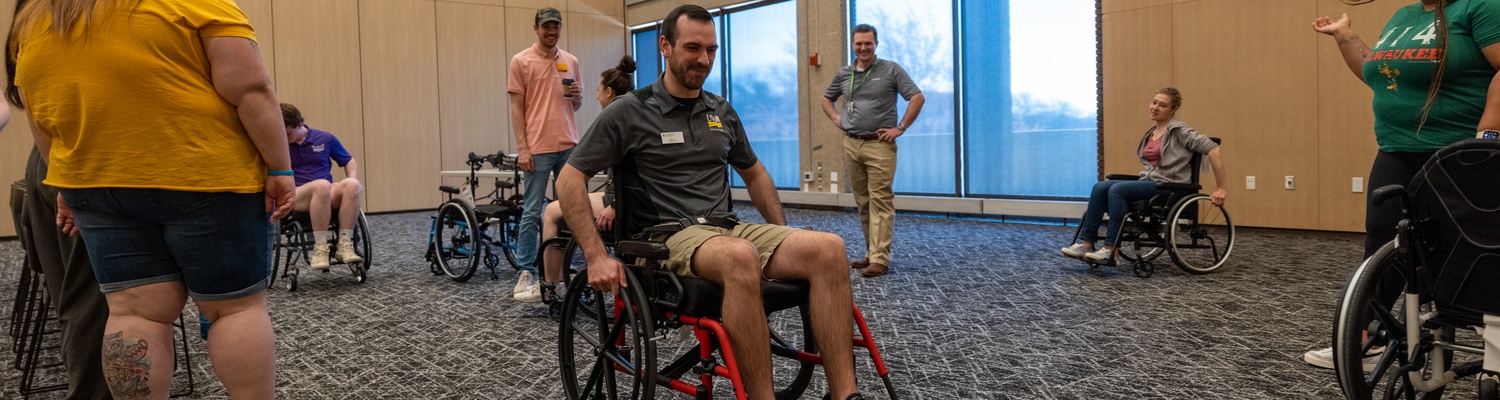
Occupational Therapy…
“helps people participate in the things they want and need to do through the therapeutic use of everyday activities (occupations).”
– American Occupational Therapy Association
Mission
The purpose of the PPOTD program is to educate bachelor’s and master’s trained occupational therapists to:
· become experts and leaders in clinical and community practice.
· meet the needs of expanding populations across their life span in health care, education and community settings.
· serve the needs of qualified occupational therapists who are seeking to advance their careers; and
· respond to the current shortage of experienced, doctoral-level occupational therapists qualified to teach in occupational therapy programs around the country.
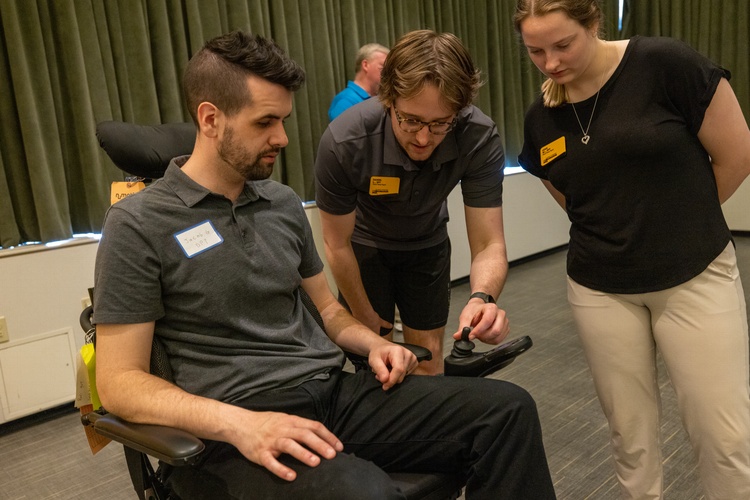
Advantages of the PP-OTD Degree Program:
- Flexible Formats: The program is fully online, with optional in-person courses for those who prefer hybrid learning.
- Transfer Credit Option: Students may transfer up to 12 graduate credits, accelerating degree completion and reducing costs.
- Customizable Curriculum with Elective Choices: Seventeen elective credits allow students, with the mentorship of a major advisor, to tailor the program and their capstone project to studies aligned with their intended career path..
- Supportive Faculty and Interdisciplinary Environment: Expert faculty serve as advisors, provide mentorship, and foster collaboration across disciplines.
Area of Elective Concentration (minimum of 17 credits)
Students work with faculty advisors to develop a statement of their proposed concentration area, their needed and desired knowledge and courses, a mentoring team, possible doctoral experience sites, and a doctoral project.
The Doctoral Experience and the Doctoral Project (minimum of 7 credits)
Students must deliver and show competence in an evidence-based intervention that will culminate in the defense of a Doctoral Portfolio. Like the MS thesis and PhD dissertations, the culminating doctoral capstone project must be written, publicly presented and defended.
Additional Requirements
Major Professor as Advisor
The Graduate School requires that each student have a major professor to advise, supervise, and approve the program of study. Students are assigned faculty advisors in the OTD program upon acceptance into the program.
Related Programs
Admission Requirements
To be considered for the Post-Professional Doctor of Occupational Therapy (PP-OTD) program, applicants must meet the admission requirements of the UWM Graduate School. In addition, the following departmental requirements must be satisfied:
- MSOT or MOT degree from an ACOTE-accredited program (or equivalent recognized by the World Federation of Occupational Therapists, WFOT).
- Occupational therapy licensure (or international equivalent approved by WFOT). Current master’s students may apply but cannot formally matriculate to the OTD program until they have achieved NBCOT initial certification and are licensed in at least one state. Graduate students may be provisionally admitted to the post-professional OTD program and accumulate credits toward graduation for one semester while required documentation is being prepared or approved.
- The admissions process also includes evaluation of GPA, prior coursework, professional experiences, and statement of personal interests.
Transfer Credits
- Students may transfer up to 12 graduate-level credits toward the PPOTD degree, subject to approval by the doctoral program.
- Graduate Coursework from UWM: Graduates of the UWM master’s students admitted to the PPOTD program may apply graduate credits from their UWM master’s degree toward the doctoral program. These credits must be approved by the program and may not exceed 50% of the total credits required for the degree.
- Graduate Coursework from Other Institutions: Students may transfer up to 12 graduate credits earned at other accredited institutions, provided the coursework was not applied to a previous graduate-level degree and meets the following Graduate School requirements: (1) Coursework must not have been used to fulfill requirements for another degree. (2) Courses must be at the graduate level. (3) Courses must be from an accredited institution. (4) A minimum grade of A or B is required (grades of B- are not accepted). (5) Courses must have been completed within five years prior to enrollment in the PP-OTD program. (6) Transferred credits cannot be used to meet the doctoral residency requirement.
All transfer credits are subject to final approval and must align with the goals of the PP-OTD curriculum.
Application Timeline
Application deadlines vary by program, please review the application deadline chart for specific programs. Other important dates and deadlines can be found by using the One Stop calendars.
How to Apply
To apply, please submit your application through the UWM Graduate School portal. All required materials must be received before your application can be reviewed.
For application-related questions, please contact:
Justin Almquist
almquisj@uwm.edu
414-229-5340
For curriculum or program structure-related questions, please contact:
Dr. Cindy August, Ph.D., OTR/L
Augustc@uwm.edu
The PPOTD in Occupational Therapy is a flexible 33-credit graduate program, consisting of core and elective courses.
For more details on course and credit requirements, please visit the course catalog: https://catalog.uwm.edu/health-professions-sciences/rehabilitation-sciences-technology/occupational-therapy-otd/#requirementstext
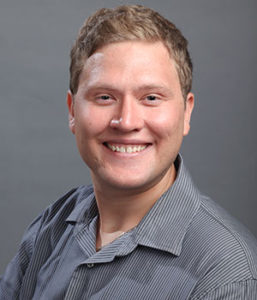
- University Services Program Assistant, Programs in Occupational Therapy, Science and Technology
- almquisj@uwm.edu
- 414-229-5340
- Enderis Hall 965

- Clinical Professor, Programs in Occupational Therapy, Science & Technology
- Occupational Therapy Program Director
- augustc@uwm.edu
- 414-251-8270
- Enderis Hall 989
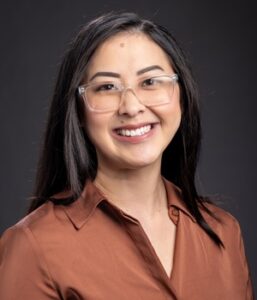
- Clinical Assistant Professor, Programs in Occupational Therapy, Science & Technology
- maulyher@uwm.edu
- 414-251-7881
- Enderis Hall 979

- Head of School, School of Rehabilitation Sciences & Technology
- Associate Dean for Academic Affairs, College of Health Professions & Sciences
- Professor, Programs in Occupational Therapy, Science &Technology
- kap@uwm.edu
- 414-229-5292
- Enderis Hall 819
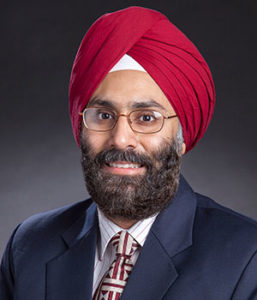
- Associate Professor, Programs in Occupational Therapy, Science & Technology
- sindhu@uwm.edu
- 414-251-7858
- Enderis Hall 929
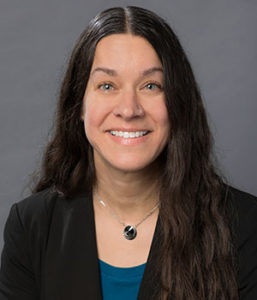
- Academic Program Specialist, Programs in Occupational Therapy, Science & Technology
- Assistant Academic Fieldwork Coordinator, Occupational Therapy
- thomasju@uwm.edu
- 414-251-6268
- Enderis Hall 933

- Professor, Programs in Occupational Therapy, Science & Technology
- Program Director, Post-Professional Doctor of Occupational Therapy
- Coordinator, Assistive Technology and Accessible Design (ATAD) Certificate
- wang52@uwm.edu
- 414-251-7936
- Enderis Hall 955
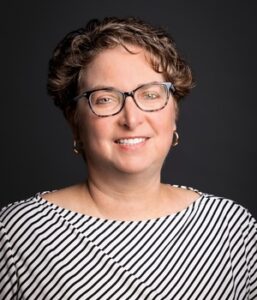
- Clinical Associate Professor, Programs in Occupational Therapy, Science & Technology
- washburd@uwm.edu
- 414-229-3592
- Enderis Hall 961
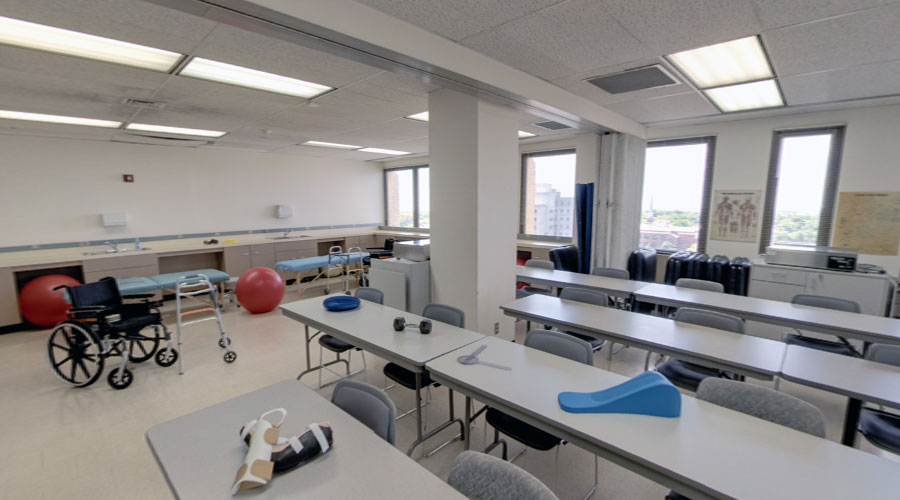
There are a lot of great things happening in the OTD Labs.
You may find your mentor or do research…
Academic Programs
Applications are reviewed in November and December for a spring semester start.
Program Director
Augustc@uwm.edu
Justin Almquist, MS
almquisj@uwm.edu
414-229-5340