• Freshwater Colloquium – Runoff on the Runway: How Airports Shape Our Streams

    School of Freshwater Sciences Ballroom, First Floor 600 E Greenfield Avenue, Milwaukee, WI

    Owen Stefaniak will present "Runoff on the Runway: How Airports Shape Our Streams" as part of the School of Freshwater Sciences Fall Colloquium Owen Stefaniak (left) and Kathryn Johncock collecting water samples during winter. Owen Stefaniak is a Physical Scientist …
  • The Search for Shackleton’s Lost Ice Ship Endurance

    Great Lakes Research Facility, Rm 3080 600 E Greenfield Avenue, Milwaukee, WI

    The Search for Shackleton's Lost Ice Ship Endurance with speaker Tim Jacob, Director of Traveler Programs at Reach the World. Hosted by Our Lake, Our Science at UWM School of Freshwater Sciences. Wednesday, September 17, 2025, Great Lakes Research Facility room …

  • Freshwater Colloquium – Agricultural Contamination in Groundwater: The Case of Nebraska

    School of Freshwater Sciences Ballroom, First Floor 600 E Greenfield Avenue, Milwaukee, WI

    Join the School of Freshwater Sciences for a Colloquium with guest speaker: Harshanee Jayasekera, PhD Agricultural production plays a central role in Nebraska’s economy but also poses persistent risks to groundwater quality, particularly through nitrate contamination. Because a large majority …

  • UWM School of Freshwater Sciences Networking & Career Fair

    Great Lakes Research Facility 600 E Greenfield Ave, Milwaukee, United States

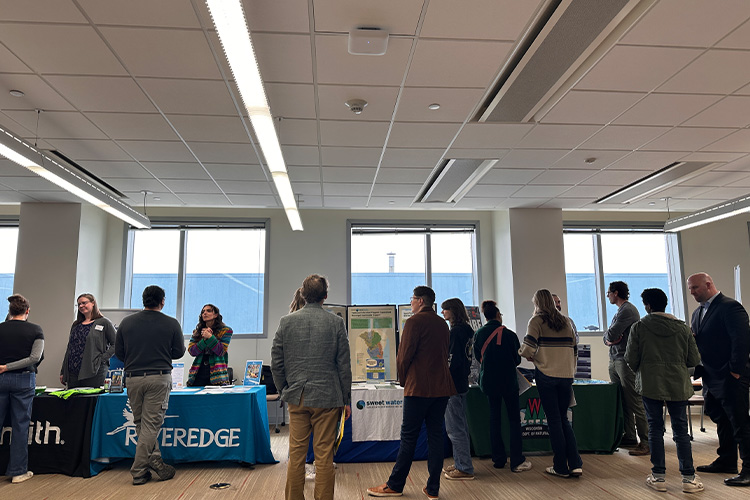
    Join us for the Spring 2026 Freshwater Sciences Networking & Career Fair! The event will be held on Friday, March 6 from 10:30am-2pm at the School of Freshwater Sciences, Great Lakes Research Facility in Milwaukee, WI. Why attend? Explore the vast …

  • Freshwater Colloquium – Social-ecological science to inform climate adaptation in recreational fisheries

    School of Freshwater Sciences Ballroom, First Floor 600 E Greenfield Avenue, Milwaukee, WI

    Join the School of Freshwater Sciences for a Colloquium with guest speaker: Dr. Zach Feiner Climate change is rapidly changing important recreational fisheries in the Upper Midwest. Combining insights about the ecological impacts of climate change on fish populations with …

  • Freshwater Colloquium – Restoration and Conservation of an Ancient Species, the American Paddlefish

    School of Freshwater Sciences Ballroom, First Floor 600 E Greenfield Avenue, Milwaukee, WI

    Join the School of Freshwater Sciences for a Colloquium with guest speaker: Dr. Jim Long Acipenseriformes, including American Paddlefish (Polyodontidae, Polyodon spathula) represents an ancient lineage of fish, with representatives found back approximately 200 MYA. American Paddlefish is the only remaining …

  • Freshwater Colloquium – From Weather to Paleo: Capturing the Continuum of Climate Variability

    School of Freshwater Sciences Ballroom, First Floor 600 E Greenfield Avenue, Milwaukee, WI

    Join the School of Freshwater Sciences for a Colloquium with guest speaker: Dr. Raphaël Hébert Weather and climate variability span a continuum of timescales, from day-to-day fluctuations to millennial-scale changes, yet these regimes are often studied separately. My work explores …

  • Freshwater Colloquium – Stock assessment and management of lake whitefish in Wisconsin waters of Green Bay and Lake Michigan

    School of Freshwater Sciences Ballroom, First Floor 600 E Greenfield Avenue, Milwaukee, WI

    Join the School of Freshwater Sciences for a Colloquium with guest speaker: Dr. Iyob Tsehaye Lake whitefish stocks in Wisconsin’s Lake Michigan waters have historically been managed as a single stock originating from North–Moonlight Bays. However, over the last couple …

  • Freshwater Colloquium – Small Organisms Big Impact: Microbial Insights from the Mississippi River to Caribbean Reefs

    School of Freshwater Sciences Ballroom, First Floor 600 E Greenfield Avenue, Milwaukee, WI

    Join the School of Freshwater Sciences for a Colloquium with guest speaker: Dr. Michael Henson Microorganisms drive nutrient cycling, regulate ecosystem productivity, and respond quickly to environmental change, making them strong indicators of ecosystem health. In this seminar, we will …