
- This event has passed.
Freshwater Colloquium – Toward a Unified Great Lakes Early Detection Network: Applying eDNA Metabarcoding Across Jurisdictions to Identify Emerging Aquatic Invaders
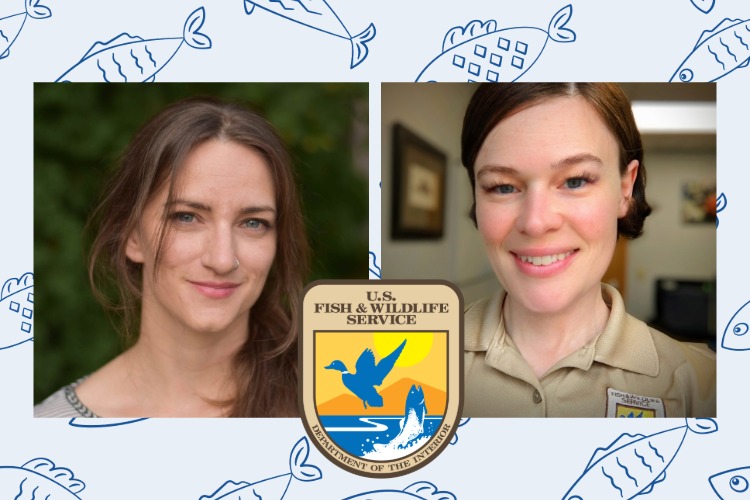
Early detection of aquatic invasive species (AIS) is essential for effective management and rapid response across the Great Lakes basin. To strengthen surveillance capacity, the U.S. Fish and Wildlife Service (USFWS) has expanded its Early Detection and Monitoring program to incorporate eDNA metabarcoding as a large-scale, multi‑jurisdictional tool for identifying emerging invaders and characterizing fish community diversity.
Since 2024, USFWS field offices—supported by two specialized USFWS genetics laboratories—have implemented coordinated eDNA surveys throughout the Great Lakes basin. This collaboration is producing one of the region’s most extensive metabarcoding datasets to date, revealing basin‑wide biodiversity patterns and highlighting potential indicators of newly arriving or expanding AIS. The program also emphasizes partnership with tribal, state, and federal natural resource agencies, creating a shared early detection network grounded in consistent methods and communication.
Integrating metabarcoding into a broad operational framework has generated key lessons for developing effective early detection networks. These include refinements to sampling design, improvements in laboratory workflows that increase throughput and reduce error, and approaches for ensuring consistent interpretation of metabarcoding data across organizations.
Preliminary results illustrate both the strengths and challenges of using metabarcoding at scale. The approach provides enhanced sensitivity for detecting low-abundance AIS signals, supports more complete characterization of fish communities across heterogeneous habitats, and highlights logistical and coordination challenges inherent in standardizing protocols across multiple agencies and jurisdictions.
Our work showcases how a coordinated, basin-wide eDNA metabarcoding framework can support AIS early detection and provide useful insights into best practices that may be transferable to other regions working to develop or expand molecular early detection networks.
Rachael Giglio is a geneticist with the U.S. Fish and Wildlife Whitney Genetics Lab located in Onalaska, WI. Broadly, her work focuses on using molecular tools to inform wildlife and fisheries management. In her current position, she serves as a bioinformatician and data analyst to help process genetic metabarcoding data, which involves identifying species present in environmental samples using DNA analysis. She earned her BS in Ecology and Conservation Biology from the University of Idaho, MS and PhD in Biology from the University of Wisconsin-Milwaukee, completed a postdoc at the Ohio State University, and served as a researcher at the USDA National Wildlife Research Center.
Dr. Rachel J. Brown is Deputy Project Leader at the U.S. Fish & Wildlife Service’s Whitney Genetics Laboratory in Onalaska, Wisconsin. She leads environmental DNA (eDNA) metabarcoding initiatives that support detection and monitoring of aquatic invasive species across the Great Lakes. She earned her Ph.D. (2014) and M.S. (2010) in Aquatic and Fishery Sciences from the University of Washington and previously served as Associate Director of the Salish Sea Research Center and faculty in the Native Environmental Science Program at Northwest Indian College. Her recent scholarship includes co‑authoring the MIEM Guidelines—Minimum Information for Reporting Environmental Metabarcoding Data (2024, Editor’s Choice)—and contributing to ongoing efforts to standardize eDNA methodologies (2025). Brown’s earlier work spans ichthyology and systematics, including the book Frogfishes: Biodiversity, Zoogeography, and Behavioral Ecology (Johns Hopkins University Press, 2020), recognized with the 2021 PROSE Award in Biological & Life Sciences. She serves the scientific community through editorial and review activities, professional society leadership, and outreach, and remains committed to partnering with Tribal, state, and federal stakeholders to translate genomics research into practical conservation action in the Great Lakes region.
The School of Freshwater Sciences’ Freshwater Colloquium creates a platform for students, faculty and scientists to discuss their research and emergent issues related to freshwater resources. Presentations are open to the public.
All events will take place on Mondays from 3:30-4:20 p.m. in-person in the GLRF Ballroom.
The School of Freshwater Sciences Great Lakes Research Facility, is located at 600 E. Greenfield Ave.