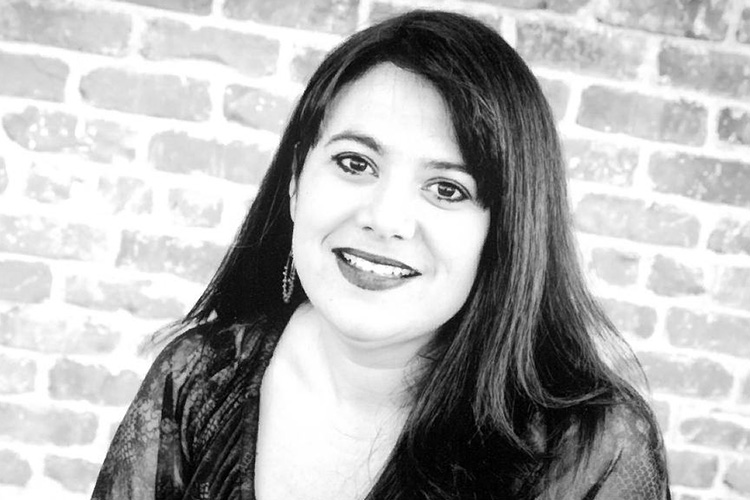
Marie LeJeune will join the University of Wisconsin-Milwaukee’s School of Education in June as associate dean and head of school. She replaces Hope Longwell-Grice who came out of retirement to fill the position on an interim basis.
LeJeune brings years of experience as a classroom teacher, researcher, college educator and administrator to the position.
“I was really drawn to the fact that UWM has this really strong research mission and also an access mission,” she said. Having spent the majority of her middle and high school teaching career in a large urban district in the Clark County school district in Las Vegas, “I was really intrigued by the School of Education’s mission to urban education,” she added.
Before joining UWM, she served as professor of literacy education and coordinator of graduate reading and literacy specialist programs at Western Oregon University. In her 18 years at WOU, she also coordinated the undergraduate licensure programs, several graduate programs and oversaw licensure and clinical programs.
A passion for teaching, literacy and research
LeJeune came to the field of education by an indirect path.
“I was always interested in education though I initially resisted it,” she said with a laugh. “I was the child who would line up my siblings and stuffed animals and teach them.” However, she started at Gonzaga University planning to major in journalism. While taking part in a service program there, her focus changed. “I was working with young people in high schools and realized that was actually what I wanted to do — be a teacher.”
After earning her undergraduate degree in English with minors in journalism and religious studies, she completed her master’s degree in teaching at Whitworth University. She was an English and journalism teacher for 15 years and loved the work, she said.
“You should think about getting a doctorate.”
But her classroom experiences led to another change. “I was teaching ninth grade, and I had a lot of students who were not reading,” she said. “I was prepared as a high school teacher and hadn’t taken many classes on reading.”
To help those struggling readers, she started taking classes to earn an endorsement as a reading intervention specialist and developed a passion for literacy. Then, one of her professors returned a paper to her with the note: “You should think about getting a doctorate.”
She earned her PhD at the University of Nevada in Las Vegas, with a focus on literacy, eventually joining the faculty at Western Oregon University. “When I was getting my doctorate, I didn’t think I was going to leave K-12 because I loved teaching so much, but when I was doing university teaching, I realized that preparing teachers was an extension of the work I loved teaching middle and high school.”
LeJeune has researched and written extensively about young adult literature and teacher preparation. Her literacy work has had a particular focus on diverse literature for young adults. In talking with students and teachers, she found many young adults didn’t enjoy reading because they didn’t see themselves in the books they were assigned. Often children whose first language is not English are not really represented in the literature or the curriculum, she said. “I want to be part of helping change that.”
Removing barriers for working adults
She has focused her teacher preparation efforts on encouraging aspiring teachers, in particular first generation and multilingual teachers, who are underrepresented in the profession.
LeJeune has focused her teacher preparation efforts on encouraging aspiring teachers, in particular first generation and multilingual teachers, who are underrepresented in the profession.
A key is removing barriers, she said. “I’ve been really passionate in my work over the last few years considering more flexible ways for working adults, especially paraprofessionals or others already working in the schools, to become licensed teachers.”
Student teaching/clinical practice is often another barrier. “I’ve personally seen many candidates that can’t figure out how they’re going to pay their rent and keep their families fed during student teaching,” she said.
Financial need is a continuing issue since student loan debt can discourage some who would like to teach. It’s critical to continue to advocate at the state and national level for scholarships, and grant programs, particularly for students going into urban schools, she said. Research funding, though currently challenged, is also vital.
Mentoring and induction into the profession are also important both for aspiring teachers and those who are early in their careers. Teaching can be fulfilling, but also depleting, she said. “I think communities of practice are so important so they realize they are not in it alone.”
LeJeune and her husband, Nathan Meyer, are looking forward to the move to Milwaukee. Three of their four children are young adults and either in college or on their own. Their youngest daughter is in high school so choosing a high school is a factor in the relocation.
She has friends and colleagues in Wisconsin and is a longtime Green Bay Packers fan (and a team owner) so is packing up her Packers jersey along with her thousands of young adult books for the move.
She is “incredibly excited and truly honored” to join the UWM School of Education, she said.
Faculty and staff at UWM “share many of the values and commitments I have to supporting students — a deep dedication to equity and access.”