
Freshwater Colloquium – Model Development and Forecasting Activities Using the Model for Prediction Across Scales for Future NOAA Operational Weather Prediction Systems
The School of Freshwater Sciences’ Freshwater Colloquium creates a platform for students, faculty and scientists to discuss their research and emergent issues related to freshwater resources. Presentations are open to the public.
All events will take place on Mondays from 3:30-4:20 p.m. in-person in the GLRF Ballroom.
The School of Freshwater Sciences Great Lakes Research Facility, is located at 600 E. Greenfield Ave.
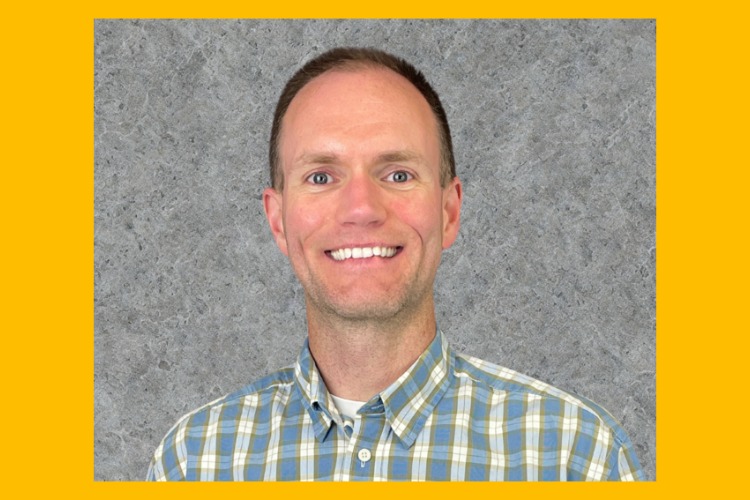
NOAA’s Global Systems Laboratory (GSL), part of the Office of Oceanic and Atmospheric Research, seeks to improve Earth-system prediction capabilities across all weather-related hazards including severe convective storms, intense rainfall, winter storms, tropical systems, and phenomena such as wildfire smoke, dust, and pollen. GSL has a rich legacy in developing modeling systems for NOAA operations, including the operational Rapid Refresh (RAP) and High-Resolution Rapid Refresh (HRRR) models, and in contributing to the development of Unified Forecast System (UFS) applications such as the first version of the Rapid Refresh Forecast System (RRFSv1) and the Global Forecast System (GFS). Given the increasing frequency of damaging high-impact weather events in recent years, there is an increasing need for high-resolution modeling systems that can accurately, faithfully, and explicitly resolve precipitating phenomena, fire-weather behavior, aerosol radiative and cloud feedbacks, and urbanization influences to improve forecast skill and inform improved end-user decision-making. Extensive development, testing, and evaluation at GSL and elsewhere over the last two years has indicated that the Model for Prediction Across Scales, or MPAS, can address these predictive needs. My presentation will provide a high-level overview of how the proverbial sauce is made: what is MPAS, how physics processes are represented within MPAS, the vital role of incorporating atmospheric observations to provide an accurate initial atmospheric representation, how extensive computational codebases are maintained, and the importance of rigorous testing and evaluation to guide our scientifically grounded, hypothesis-driven model development activities. I will also present the outcomes of multiple testing and evaluation activities, which demonstrate the substantial promise of MPAS-based weather prediction systems for future NOAA operational weather prediction systems to meet NOAA’s Numerical Weather Prediction Moonshot goal of world-leading skillful, reliable, and useful global, storm-scale, Earth-system model forecasts. Dr. Clark Evans is a Research Physical Scientist and the Physics Branch Chief with the Earth Prediction Advancement Division of NOAA’s Global Systems Laboratory (GSL) in Boulder, CO. Before joining GSL in 2024, he was a Professor of Atmospheric Sciences at the University of Wisconsin-Milwaukee (UWM). He joined UWM in 2011 after completing a postdoctoral fellowship at the National Center for Atmospheric Research in Boulder, CO. He received B.S., M.S., and Ph.D. degrees in Meteorology from Florida State University in 2004, 2006, and 2009, respectively.