Water Boatmen and Backswimmers Rerun

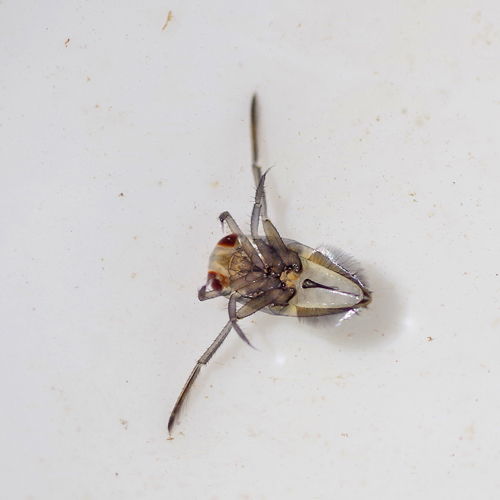
Life is busy, and besides, May is National Wetland Month, so here’s a rerun from ten years ago.  A few new words and pictures.  The BugLady will visit these guys together because even though they are, in a sense, photo-negatives of each other, they are often mistaken for one another.
Stories, not Atoms

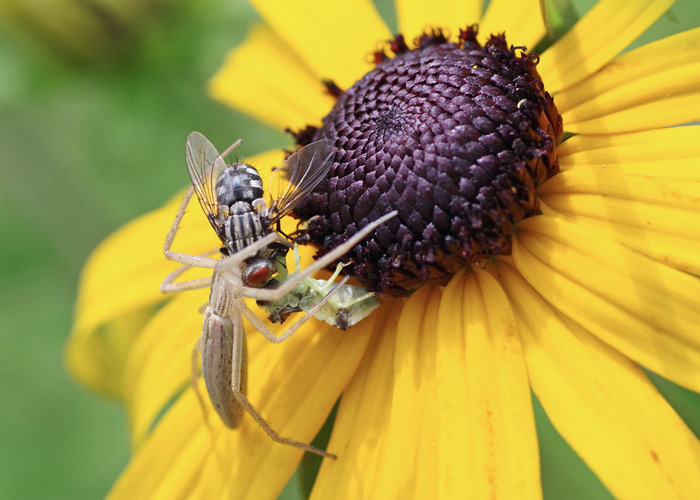
The poet Muriel Rukeyser once wrote, “The universe is made of stories, not of atoms.” The BugLady sees lots of tableaux unfolding as she ambles across the landscape. Because she was taught, at an impressionable age, by a professor who said “Don’t just tell them what it is, tell them ‘what about it,’” she tries to read the stories and understand the “what-about-its”

Two-striped Grasshopper

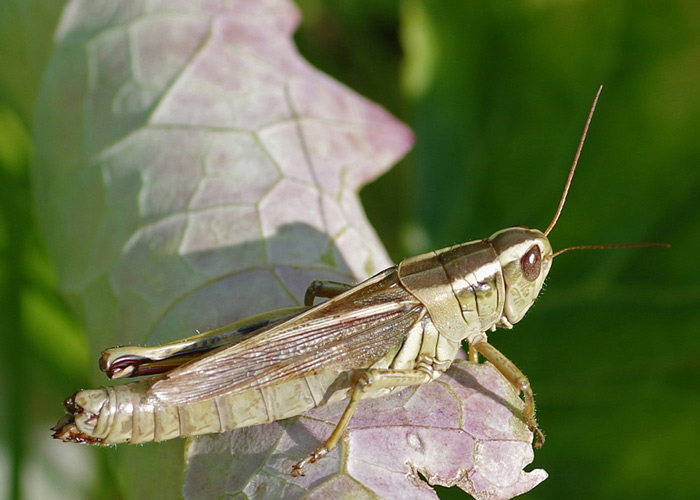
The BugLady always enjoys photographing these large, handsome grasshoppers as they ricochet off the prairie plants in late summer. She has danced around them in several episodes – in a generalized discussion of their genus, Melanoplus and as eye-candy in several summer insect picture collections – but they deserve their own biography.

Sculptors of Leaves

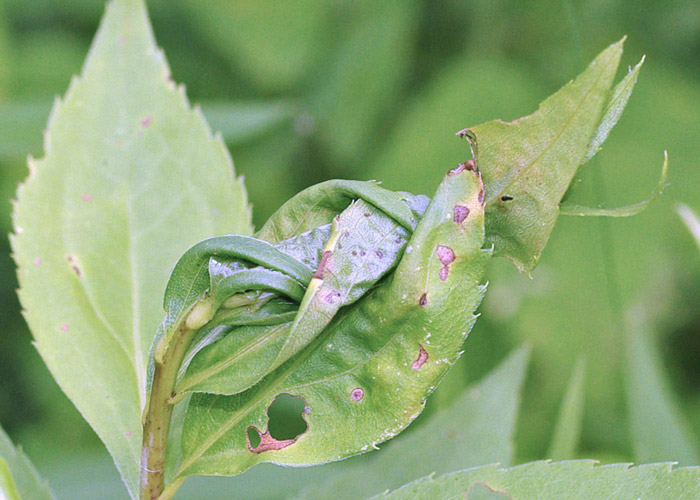
Leaves are coming. Promise! And soon after they emerge, we’ll see leaves that are folded, rolled, or otherwise harnessed by a variety of insects, for a variety of reasons.  The architects are mostly small moths- but there are also some skipper butterflies, beetles, sawflies, and spiders in the bunch, plus this cute little Carolina leaf roller cricket.

Three Spring Dragonflies Plus Two

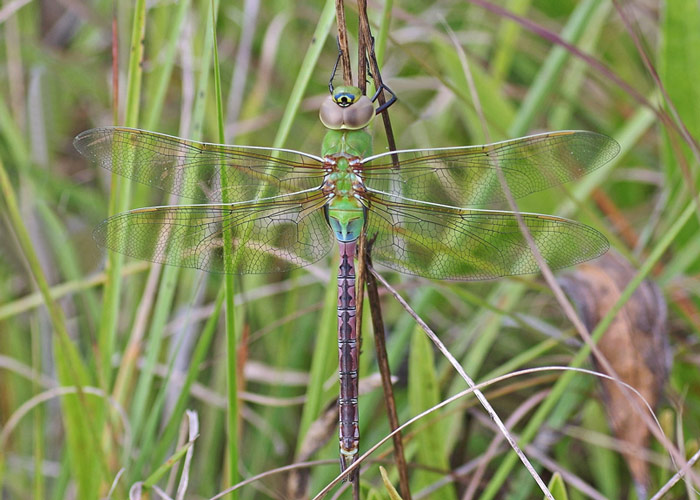
They’re big, they’re beautiful, and they’re back!  The BugLady has been out on the trail and has been enjoying the first butterflies and dragonflies of the season.  Anyway, this episode started out nine years ago as “Spring Dragonflies,” continued six years later as “Three Spring Dragonflies plus One,” and reappears today as “Three Spring Dragonflies plus Two.” 

Gray Hairstreak Butterfly

Gray Hairstreaks are the most widely distributed American hairstreak, and they spill over into Canada, Central America, and the northern edge of South America. They’ve been seen in more than half of Wisconsin counties. Why “hairstreak?” These small butterflies have one or two slim (hair-like) tails on the lower “corner” of each hindwing.

LeConte’s Haploa

The BugLady admits that she is ambivalent about moths. So many of them are small and gray/tan and the BugLady, with apologies, hasn’t developed the patience to hunker down and learn them. On the other hand, there are striking moths like the Haploas. The genus name Haploa used to be Callimorpha, which means “beautiful form.” The Haploas are sometimes called Crusader moths, because of their shield-like wing shape and markings.

Dark Fishing Spider

The Dark Fishing Spider is one BugLady’s favorite spiders (even though it isn’t even a crab spider). First of all, it’s beautiful. Second, it’s big, one of the biggest in North America – the leg-span of a large female can approach four inches! Third, it’s a challenge to sneak up on and photograph.

Dung beetle

“Dung beetle” refers to beetles whose lives are intertwined with dung, but the term is not exclusively a taxonomic one.  True, most of its practitioners belong to the beetle family Scarabaeidae and the subfamily Scarabaeinae, but the name is also applied loosely to any beetle that makes its living in dung. Researching the dung beetle is like researching a rock star.  There are True Facts, YouTube videos, Facebook, kids’ pages, and even a graphic novel or two!  Because they have Super Powers. 

Asian Multicolored Ladybug Redux

Multicolored Asian ladybugs need no introduction – they’ve been around for a century, and we know them by many names – Southern, Japanese, Harlequin, Halloween, and Pumpkin beetles, plus Aziatisch lieveheersbeestje (Holland), Asiatischer Marienkafer (Germany), and in Britain, jokingly, the Many-named ladybug.