And now for Something a Little Different V – To Sleep, Perchance to Dream

Winter is monochromatic and still, and then there are the flash-frozen fingers and feet. It’s a really tough period for wildlife to weather, too, and they emerge from it stressed, hungry, and at their lowest populations of the year. Animals deal with this harsh season in a variety of ways, such as migrating, hibernating, and diapause.

The 12 Bugs of Christmas

As always, we pause to celebrate (while humming seasonal songs and drinking eggy, adult beverages), the Twelve Bugs of Christmas (plus one) – a baker’s dozen of bugs, many of whom have already starred in their own BOTWs but who posed nicely for the BugLady this year.

And now for Something a Little Different IV – Life in the Pukak

The microclimate that forms between the snow and the ground is called the subnivean layer, but the Inuit call that zone the pukak. It’s the winter home of animals like mice, voles, moles, and, yes, red squirrels, plus hardy insects and other invertebrates.

Striped Saddlebags Dragonfly

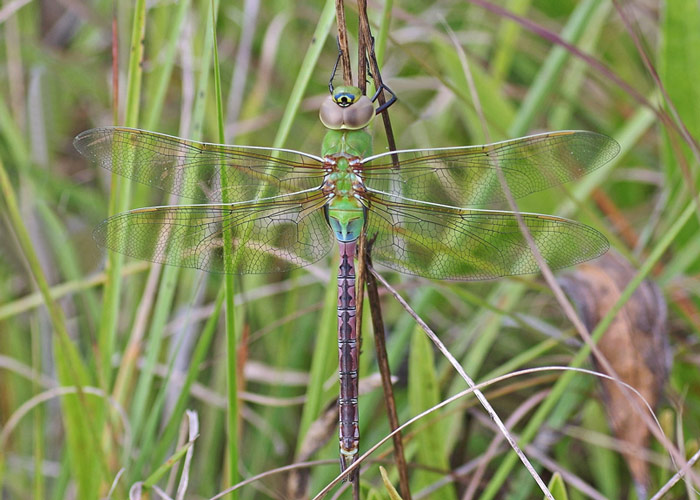
It should come as no surprise to seasoned BugFans to hear that the BugLady and her camera spend a fair amount of time in the warmer months cruising for dragonflies and damselflies. One of her haunts is Forest Beach Migratory Preserve, a reclaimed golf course in Ozaukee County. Fall is an exciting time to be at Forest Beach, because the big guys – the darners and saddlebags – rule.

European Earwig

People respond to insects intellectually, aesthetically, and viscerally. Intellectually, earwigs are fascinating insects; viscerally – Ick!! Earwigs are Stealth Insects, and it creeps the BugLady out when masses of earwigs scramble away as she picks up a flower pot or flips up the cover of the garage-door-opener keypad or opens her mailbox. This week, the BugLady takes a look at Earwigs, and more specifically, the European Earwig.

Red Cocklebur Weevil

The BugLady (who loves finding weevils) found this one in Ohio, but it does live here in God’s Country and throughout eastern North America. With about 83,000 species worldwide (3,000 in North America), the very-diverse weevil family, Curculionidae, is one of the largest animal (not just insect – animal!) families. Weevils can be recognized by their cute little snout (rostrum) and their “elbowed” antennae. Plant-chewing mouthparts are located at the end of the snout.

Speed-dating the Spiders III, the Orchard Spider

The BugLady photographed this pretty, little, spider in the wilds of Ohio in June, and then found more in Wisconsin in August. When BugFan Mike ID’d it for her, he said “I love it because it is one of the few WI spiders I can also see in Panama! It should get more common here with global warming.”

Buffalo Treehopper

Even though she’s never exactly sure which species she’s looking at, the BugLady is always tickled when she finds one of these pointy little bugs. Here’s what you need to know about the improbable-looking Buffalo Treehopper – that it can fly and hop as well as walk, and that in Germany it’s called the “Büffelzikade” (“buffalo cicada”). The rest is lagniappe.

Bugs in the News V

Thanks to all of you who send links to interesting articles about bugs (there have been a bunch, lately, about the dramatic decline of insect populations). This week we’re going to take a look at a selection of these articles and bugs.

Two-lined Spittlebug

Two-lined spittlebugs (Prosapia bicincta) are in the family Cercopidae, aka the Froghoppers. Why? Because their main mode of transportation is jumping, and they do it well – some can leap almost three inches straight up and more than 100 times their own body length in a single bound (that takes care of the “hopper” part, but the BugLady still doesn’t think they look very froggy – in fact, the adults are more reminiscent of cicadas).