
By Al Dickenson
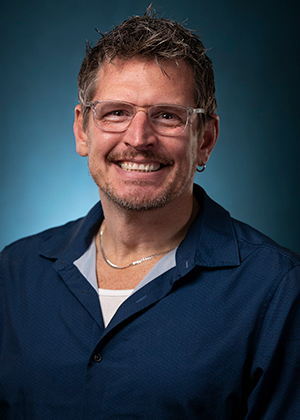
When Christopher Rawlings was appointed to the role of Director of the Wisconsin Department of Health Services – Office of Deaf and Hard of Hearing in 2022, he sought to implement his own vision for the organization, he worked diligently to create a supportive and sustainable environment for Deaf and Hard of Hearing individuals. Christopher is a graduate of UW-Milwaukee’s School of Education where he studied ASL interpreting. He shares his experiences as a student at UWM, how it prepared him for his career, and how the university can continue to support those with this specific set of abilities.
Office for the Deaf and Hard of Hearing
Please tell us about how you landed in your current role as Director of the Office for the Deaf and Hard of Hearing? What were some previous roles that led you here, and what have you done in the past to get you here?
My path to this position has been shaped by a combination of personal passion and professional experience. I have always been deeply committed to advocating for the Deaf and Hard of Hearing community. Prior to stepping into this role, I worked as a sign language specialist at Wisconsin Educational Service Program for the Deaf and Hard of Hearing at the Wisconsin School for the Deaf and as an outreach specialist for the Wisconsin Educational Services Program for the Deaf and Hard of Hearing, where I focused on enhancing accessibility for Deaf and Hard of Hearing youth. In this capacity, I built strong relationships with Deaf and Hard of Hearing’s community, interpreters, educators, and families, creating a supportive environment that emphasized collaboration and understanding. This experience reinforced my belief in the importance of education and the need to equip our people with hearing loss with the tools they require for success.
I hold a Bachelor of Science degree with a major in education, which has provided me with a solid foundation in teaching and learning methodologies. This educational background, combined with my practical experiences, allows me to advocate effectively for our community’s needs. I have been encouraged by community members to take on this role, as they believe it aligns with my commitment to improving information access and resources for all. The former director has also been a mentor, urging me to consider this position because of my dedication to education and my knowledge of the resources available through the Department of Human Services Office for the Deaf and Hard of Hearing. I feel a profound sense of responsibility to bridge the gap that often leaves our community unaware of the numerous resources that can support them.
Similarly, could you explain how attending UWM prepared you for this role?
In terms of my educational background, I have been connected with the University of Wisconsin-Milwaukee since around 2005. I graduated in 2012 and proudly continue my association with UWM as a professional while also teaching ASL classes. UWM has provided me with rich insights into Deaf culture and the critical role that education plays in our community. The programs offered, particularly those focused on interpreting and American Sign Language studies, have been instrumental in my development. I cherish the opportunity to share my knowledge and experiences, fostering an appreciation for our culture and language.
Are there things that UWM’s programming should include to better prepare students?
I also believe that UWM has the potential to further enhance its programming. I would love to see an expansion of ASL classes, which benefit not only Deaf and Hard of Hearing individuals but also hearing individuals in various fields such as health care, accessibility, architecture, and education. By fostering inclusivity, we can create a win-win situation for both the Deaf and hearing communities, broadening understanding and collaboration.
I believe there is a tremendous opportunity for the institution to further develop its programs in ways that prepare students for meaningful work with the Deaf, Hard of Hearing, and Deaf/Blind communities. By increasing awareness and acknowledgment of the unique challenges our students encounter, UWM can cultivate a more inclusive atmosphere. I envision more tailored workshops, mentorship programs, and hands-on experiences that empower students and build their confidence, ultimately preparing them to make a significant impact in our community upon graduation. It is crucial that students not only feel equipped but also inspired to advocate for and support the needs of Deaf, Hard of Hearing and Deaf/Blind individuals.
What were some of your favorite experiences being a UWM student?
Reflecting on my time as a UWM student, some of my favorite experiences include connecting with accomplished Deaf professionals who have inspired me along my journey. Serving as the president of the Sign Student Association for two years was particularly impactful, as it allowed us to organize workshops and training sessions that provided a safe space for students and community members to learn and grow. These interactions not only enriched my educational experience but also strengthened my commitment to supporting others in achieving their goals.
As you step into this new director role, how do you see yourself making an impact?
As I step into this new role as director, I envision making a significant impact by empowering my team and fostering a collaborative work environment. I firmly believe that leadership is about standing alongside my team rather than in front of them. Each member brings unique experiences and insights, and together, we can create meaningful change. I am committed to encouraging open communication, where mistakes are viewed as opportunities for growth and learning. By nurturing a culture of support, I hope to inspire my team to take the lead and drive initiatives that benefit our community.
Likewise, how do you see yourself grow in the role or into the role?
While there are many barriers I face, particularly regarding my language and the challenges of being a Deaf person, these experiences have shaped my leadership style and made me stronger. There are times when I encounter individuals who may not fully understand the importance of accessibility or who are unwilling to listen to the concerns of the Deaf community. This lack of awareness can be a significant barrier, both in terms of communication and in the implementation of necessary changes. However, these challenges motivate me to work even harder to demonstrate effective leadership. I want to show that inclusive practices can lead to positive outcomes for everyone involved.
These experiences have taught me the importance of persistence and resilience. I strive to be a role model for my team and the community, demonstrating that despite the barriers we may face, we can achieve meaningful change. By fostering an environment of open communication, I aim to create a culture where mistakes are viewed as opportunities for growth and learning, allowing us to support one another in overcoming obstacles together.
What are the day-to-day operations of going to work like for you? Tell us a little more about what your office does.
On a day-to-day basis, my office focuses on improving access to vital resources for the Deaf and Hard of Hearing community. I am particularly concerned about the alarming statistics related to mental health and employment among this demographic. Research shows that Deaf and Hard of Hearing individuals experience mood and anxiety disorders at rates two and a half times higher than the general population, and suicide attempts are five times more common. Additionally, trauma exposure is twice as high, and alcoholism occurs at rates three times that of the general population. Alarmingly, 22.7% of Deaf and Hard of Hearing individuals aged 16 to 24 are neither in school nor working. Another critical concern is that the risk of dementia is increased for those with hearing loss, making it essential that we prepare to make our resources accessible and improve support for this vulnerable population. I am dedicated to addressing these challenges head-on, advocating for increased awareness and support to help our community thrive.