Adam Hawk blends tradition and contemporary blacksmithing through sustained support and research

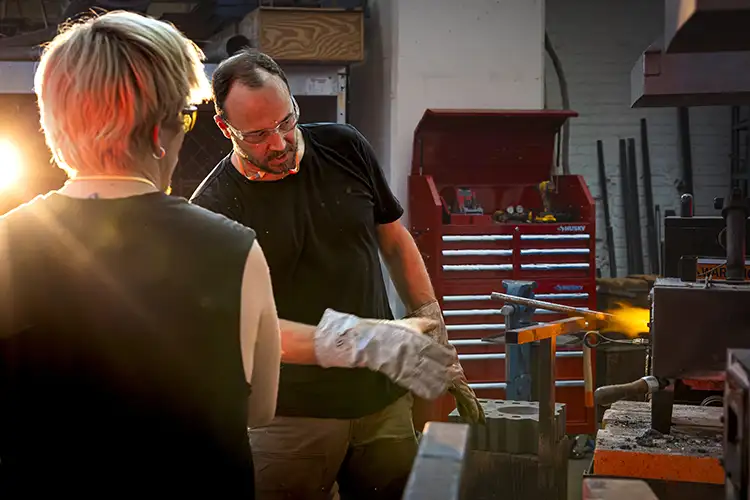
Adam Hawk wearing safety gloves and watching a glowing hot piece of metal. A student observes.

For Adam Hawk, contemporary blacksmithing is not a departure from tradition but a continuation of it. Moving back and forth between digital and analog, he strikes a balance where craft is expanded through new tools, sustained by material knowledge, and grounded in process.

 “I might start with a hand sketch, develop that into a digital model, and use processes like CNC machining, 3D printing, or CNC plasma cutting to create a starting form, then bring it back to the forge where the work is ultimately shaped and resolved through hand processes,” he explained.

Rather than seeing digital tools as competing with craft, he describes them as “an ongoing conversation or collaboration that allows contemporary tools to expand the discipline while still staying grounded in its core values.”

That perspective developed over time.

“Early on I struggled with whether certain technologies even belonged in a craft practice,” he said. “There was a moment when using digital tools honestly felt like cheating or stepping outside of tradition.”

Working through that tension, he came to see that the tools themselves are neutral, and it’s the intention behind their use that really matters. Forging remains central to that intention.

“Forging teaches patience, humility, and resilience,” he said. “Progress rarely happens in big jumps; it comes from repetition, failures, and thoughtful reflection.”

He describes the act of heating and reshaping iron as “deeply human,” a process that mirrors the gradual nature of growth in both craft and learning.

Building a Contemporary Craft Initiative

That commitment to sustaining and advancing craft found an institutional partner in the Windgate Foundation, which has awarded three grants to UWM’s Peck School of the Arts in support of the Contemporary Craft Initiative since 2019.

“Throughout my career I’ve seen the Windgate Foundation support contemporary craft through education, fellowships, and long-term investment in artists and institutions,” Hawk said. “Their focus on advancing craft practice while strengthening visual arts education has always felt closely aligned with what I have always wanted to build—spaces where blacksmithing could grow within a contemporary art and design context without losing its connection to material practice.”

When Hawk first arrived at UWM, his forging setup was limited.

“I had scaled down my personal studio to make the move to Wisconsin, and my new studio space didn’t allow for the same types of blacksmithing tools or processes that I had previously worked with,” he recalled.

“Windgate’s support allowed us to build a fully functioning blacksmithing research and teaching facility, and that changed what was possible almost immediately for both my own practice and for students.”

Each phase of funding built on the last, beginning with infrastructure upgrades, expanding into graduate research support, and now supporting program growth and a graduate fellowship.

“For the program, it transformed a very modest forging setup into a space where contemporary blacksmithing could really take root.”
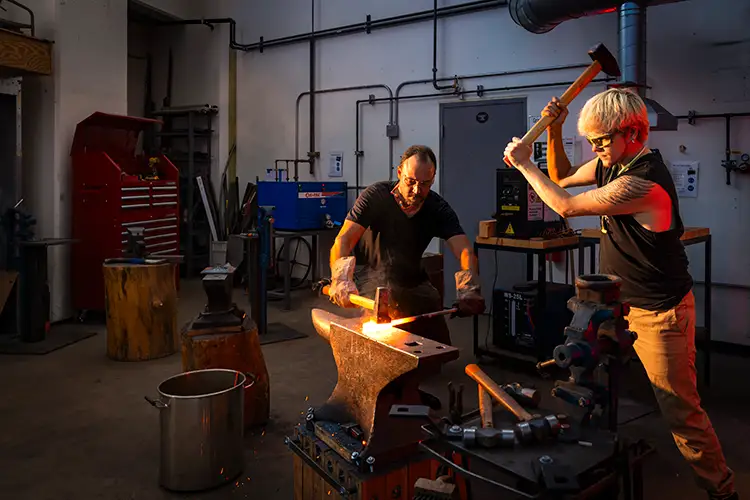
Faculty Adam Hawk and undergraduate Cole Lehto work on metalsmithing research.
Faculty researcher and mentor, Adam Hawk (left), and undergraduate researcher, Cole Lehto, work on their research exploring the integration of traditional craft practices of blacksmithing and metalsmithing with new technologies, such as 3D printing, laser cutting and other computer-controlled tools. | Photo by Elora Hennessey/UWM Photo

Expanding access and interdisciplinary community

The expanded facilities have introduced forging to students across Sculpture, Jewelry & Metalsmithing, and Digital Fabrication studio disciplines.

Students now share access to processes that encourage “a different relationship to material—one that is grounded in physical transformation and problem solving.”

Soon, a new blacksmithing certificate and expanded coursework will allow students to approach blacksmithing both as a focused craft discipline and as a place for interdisciplinary experimentation.

The most recent grant supports a graduate fellowship and continued program development. Graduate-level research, Hawk says, creates the time and space needed for deeper experimentation, which is essential for pushing contemporary blacksmithing forward.

The graduate fellow works closely with him in the blacksmithing area while pursuing their own creative research.

“I try to approach the fellowship as a collaboration in which we identify areas that align with the graduate fellow’s interests and building projects that support both the studio and their artistic investigation,” he explained.

“The goal is for their contributions to directly feed into their practice while strengthening the broader community.”

Sustaining the field

Working within a research university, Hawk sees a responsibility to contribute beyond campus.

“Working within a research university gives me the opportunity to explore ideas that many practicing smiths don’t always have the time or resources to pursue, and I’m very aware of that privilege,” he said. “It allows me to experiment, take risks, and develop approaches that I can then share through teaching, demonstrations, and public engagement.”

For Hawk, sustainability is ultimately about people and environments.

“Strong facilities, thoughtful curriculum, and collaborative networks help artists develop and grow over time,” he said.

“By integrating emerging tools with traditional forging practices and sharing those experiences outward, I hope to contribute to a broader ecosystem where contemporary blacksmithing continues to evolve while staying grounded in the values that define the craft.”


Story by Oliver J. Johnson

Grammy Award-nominated music alum recognized with GOLD Award by UWM Alumni Association

Headshot of Kathryn Henry

Kathryn Henry (BFA 2016, Music) received the Graduate of the Last Decade (GOLD) Award presented by the UWM Alumni Association at the 2026 Alumni Awards Evening. The awards recognize remarkable standouts who make new waves in the lives of countless people every day.

Currently, Kathryn is preparing for her European debut playing Desdemona in Verdi’s “Otello” at Theater Bonn in Germany. She has already earned a Grammy nomination for Best Opera Recording for her portrayal of Lucy Harker in “The Lord of Cries,” and she has been a finalist in the Paris Opera Competition. She’s performed with the Metropolitan Opera in New York, the Dallas Symphony Orchestra and the Lyric Opera of Chicago. She’s also appeared as a guest soloist with the Milwaukee Symphony Orchestra and was in the Milwaukee Florentine Opera’s production of Carmen. Henry is represented by IMG Artists.

While a student in 2015, she became the youngest singer to reach the finals of the Metropolitan Opera National Council Auditions. In her senior year, Kathryn was chosen to sing the national anthem at the Democratic presidential candidate’s debate between Bernie Sanders and Hillary Clinton, which took place on the UWM campus. Her performance, which had no instrumental accompaniment, was broadcast on national television. After graduating with her BFA, Kathryn completed a Master of Music in Vocal Performance as a Toullmin Foundation Scholar at the Julliard School in New York City.

“The fact that Kathryn Henry is working broadly at a national level and beginning to make her mark at an international level in a highly competitive field is notable and reflects well on both her excellent technical training begun at UWM and her hard work and determination,” music department chair Gillian Rodger said.

“The Music Department is hugely proud of her as an alumnus. We also appreciate that Kathryn has continued to maintain a strong and active connection to Milwaukee and to the Midwest, even as she has worked more and more widely at a national and international level.


UWM’s 2026 Alumni Awards Evening was held on Friday, Feb. 20, 2026, at the Pfister Hotel. Kathryn accepted the award by video from Germany, where she is currently in rehearsals. Read more about the full list of winners on UWM Report.

PSOA alum details what it is like to be a campus photographer 

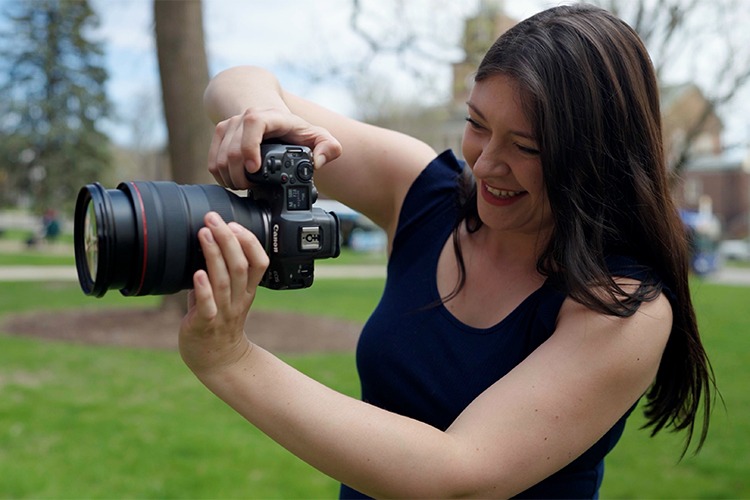
Elora holds a camera to her left while smiling on a sunny day.

The campus culture that UWM fosters leaves a lasting impression on students, so much so that many graduates may not want to leave. For alum Elora Hennessey (BFA 2017, Art), she didn’t need to. Hennessey has been a Staff Photographer for UWM’s Division of Marketing, Communications, and University Relations (MarComm) since graduating. 

What goes into campus photography 

Hennessey began working for UWM in 2016 as a student intern for MarComm. She was recommended by Joseph Mougel (Associate Professor and Area Head, Photography & Imaging), who helped her apply for the internship and eventual full-time role.  

Staying in the UWM world has been consistently fulfilling. 

“I love this community,” said Hennessey. “I was so supported, and a lot of people gave effort and time to me… Not a lot of places are you supported the way that I feel I am here… Why would I want to leave that?” 

Shooting campus photography is a varied role, as she is tasked to shoot a range of things depending on what is happening on campus. For Hennessey, this is part of what makes her role exciting.  

“As a university photographer, my role really varies,” said Hennessey. “I can be doing headshots for staff and faculty then photographing research, which is one of my favorites. I also photograph just beautiful campus, campus life, events—it’s different all the time.” 

Preparations from PSOA 

Being prepared to shoot a variety of subjects is a skill that Hennessey developed during her time as a PSOA student. Specifically, she feels that her time at the Peck School helped teach her how to be a storyteller with her photography. 

“The fact I got to do more storytelling as a photo student led me to do well in my job here because instead of just covering it, I like to dive deeper, and I think that shows in my photographs,” said Hennessey. 

According to Hennessey, storytelling in photography is all about knowing your subject.  

“I personally love to get to know our students on campus,” said Hennessey. “I’ll find out stories about them just from talking… It takes just not me just coming into the space but asking them what feels the most exciting part to them… It’s a collaboration between me and the subject.” 

While Hennessey was focused on photography as a student, she also took art classes in fibers, metalsmithing and more. 

Throughout her education, Hennessey felt supported by the PSOA faculty and staff, which created a lasting and positive influence. 

“I loved when I was a student here,” said Hennessey. “The faculty are so passionate, so supportive of their students, and it definitely led me to be ready for this job.” 


Story by Jason McCullum ’25 | Video by Cameron Wise ’26 (BFA Film)

UWM alums talk about their campus love story 

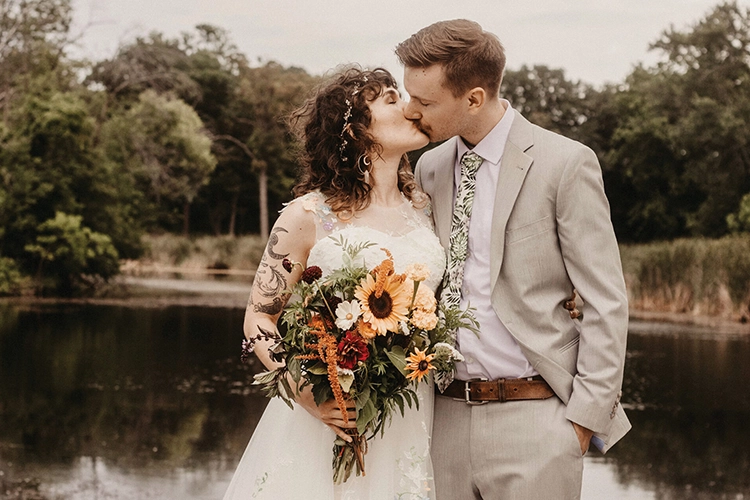
Cisneros and Peavy kiss in front of a lake. Cisneros is wearing a long, white wedding dress and is holding a bouquet of orange and red flowers. Peavy is wearing a grey suit.

A recent Milwaukee Magazine wedding guide featured UWM alums Gabriella Cisneros (BFA 2018, Film) and Caleb Peavy (BFA 2019, Film), who began their love story when the two met at PSOA’s Visual Arts & Film Equipment Room, where Peavy previously worked.  

In the Milwaukee Magazine article by Kristine Hansen, the happy couple recounts how their chance encounters in Mitchell Hall and how their time in the Film, Video, Animation, and New Genres program brought them closer together. 

“We ran into each other again a few months later at the Kenilworth building for a film class. We had a longer conversation about shoulder mounts for cameras, bands we like, and family members’ embarrassing posts on Facebook,” Cisneros recalls. “A little over six years later, I proposed to him on my birthday in the alley near the Kenilworth building.” 

To read the full article, visit Milwaukee Magazine.  

Multiple PSOA talents included in Artdose’s 10 Artists to Watch in 2026 

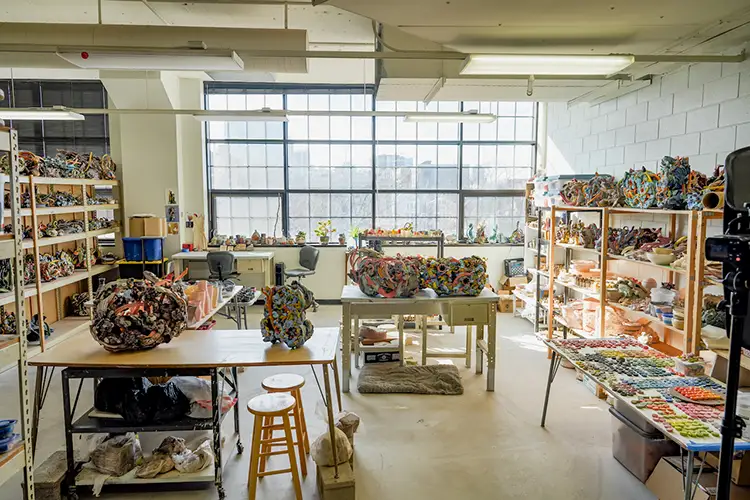
Michael Ware's workshop. A white brick room with large windows. Sculptures line the walls and fill the tables.

Regional art publication Artdose Magazine has released its annual 10 Artists to Watch list for 2026, featuring several artists connected to the Peck School of the Arts. Among those highlighted are ceramics faculty member Michael Ware, current MFA sculpture candidate Geornica Daniels, and alumni Kaden Van De Loo (BFA 2020, Painting & Drawing) and Melissa Scherrer Paré (BFA 1999, Photography). 

Each selected artist contributes a unique perspective and body of work, from Ware’s abstract ceramic forms to Van De Loo’s atmospheric paintings, and shares insights into their creative process and current projects. 

For full artist profiles and statements, read the complete list at Artdose Magazine.  

MOWA Wisconsin Artist Biennial features several UWM faculty, students and alumni

Peck School of the Arts is well represented at the Museum of Wisconsin Art’s (MOWA) 2026 Biennial. Artists with ties to PSOA include First Year Program lecturer and Studio Art MFA graduate Tanner MacArthur, Painting & Drawing faculty and alum Cynthia Hayes,  Art & Design graduate candidate Aaron Boyd, and Painting & Drawing associate professor and co-chair Angela Piehl. 

Alumni include Jacklyn Berta (BFA 2025, Painting & Drawing and Sculpture), Jennifer Bastion (MFA 2008, Art), Nina Ghanbarzadeh (BFA 2013, Art), Samuel Karow (BFA 2011, Film), and Robin Lauersdorf (BFA 1992, Sculpture). 

The exhibition is on view through April 19, 2026, at the Museum of Wisconsin Art in West Bend.

To view the full announcement, visit Wisconsin Virtual Artists.  

Design & Visual Communication student creates label design for 2025 edition of Panther Pale Ale 

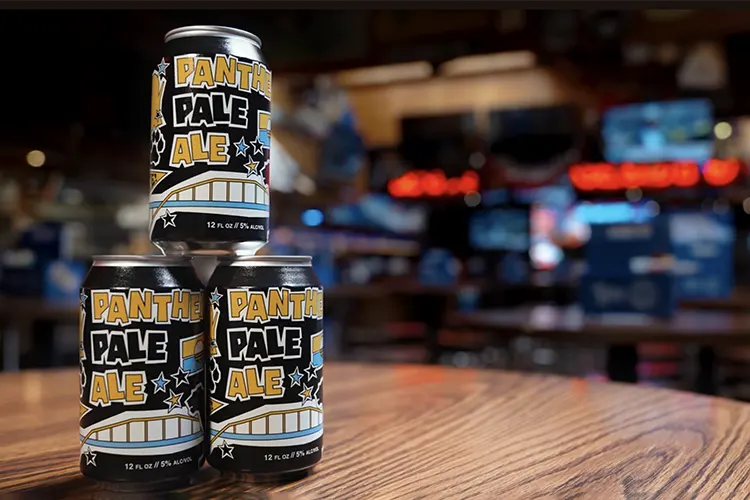
Three cans of Panther Pale Ale sit on a table at a local restaurant.

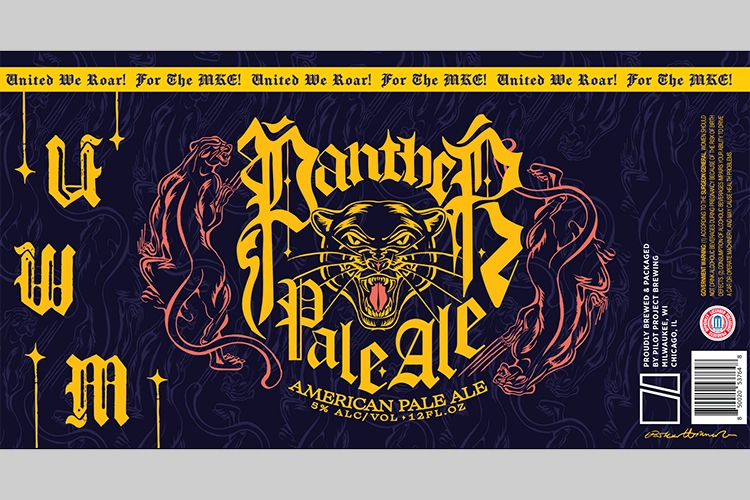
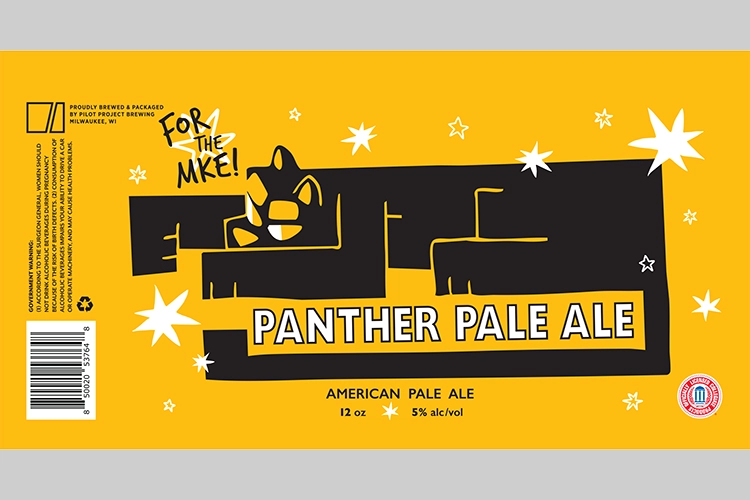
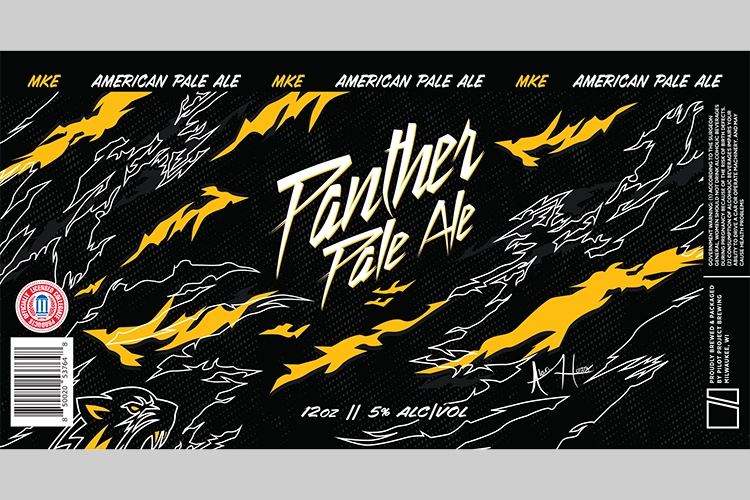
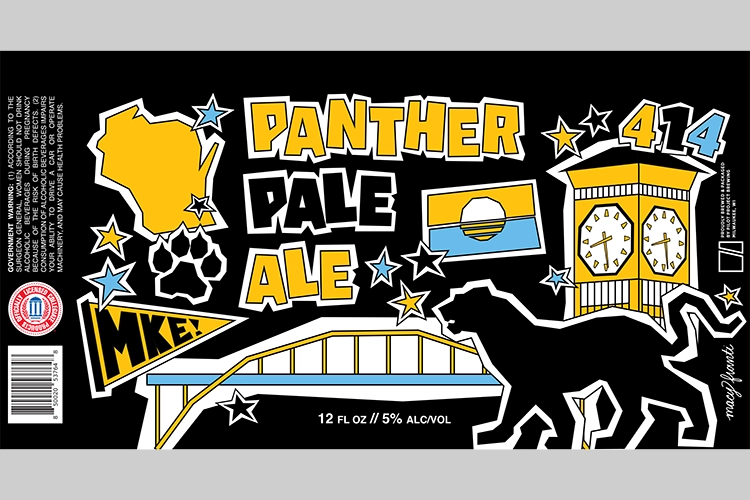
Macy Franti, a senior in PSOA’s Design & Visual Communication BFA program, is the artist behind the design of this year’s Panther Pale Ale can. Created by Pilot Project Brewing and Craft Beverage Warehouse, Panther Pale Ale is an annual collaboration with Milwaukee Athletics and the Peck School of the Arts.

This year marks the third consecutive year of the real-world design partnership. 

Franti learned about the opportunity from Robert Grame, associate professor and co-area head of Design & Visual Communication, who invited students in his package design class to participate in the project. 

“We are excited to once again have students in Art 329, Package Design, participate in this fantastic project activity,” Grame said in the official release. “This year’s selection, completed by Macy Franti, continues to build on the outstanding design work that has been on display over the last three years we have been a part of the project.” 

The assignment was optional, but Franti wanted to tackle the challenge. 

“It’s an amazing opportunity to make that kind of beverage label design and see how my work flows on a can,” Franti stated.  

The experience was highly collaborative, with Franti receiving critiques from her classmates throughout the process. These discussions helped her develop the concept from initial sketches to the final design. 

“We had our ideas, went through some sketches, and then broke loose for a couple of weeks to work on our label,” Franti explained. “After that, we went back and shared with each other to see how the design worked around the can.” 

Franti brought her interest in pop art into the project, incorporating notable elements of UWM’s campus through paper-cut typography. 

“My design shifted throughout the process, especially with color changes and moving around different elements to land my final design,” said Franti. “Once I brought my second or third iteration to the table, I was told, ‘Yes, keep going this direction.’” 

Designing the Panther Pale Ale label has been the highlight of Franti’s college experience. As graduation approaches, she sees the project as a meaningful step toward her future as a designer.  

Her favorite part of this experience was seeing the can debut. 

“It feels really awesome to see all of this come together,” Franti stated. “I got to see the can be presented for the first time at a basketball game, and it meant a lot to see people actually with the beer.”  

Panther Pale Ale is now available at local retailers, including Discount Liquor, Consumer Beverage, Beans & Barley, Major Goolsby’s, Ian’s Pizza, and more. A portion of the proceeds from Panther Pale Ale sales will support student scholarships and other student-centered programming at UWM. 

Artwork design with yellow text on purple background with dragons and a Panther in the middle.
Design by Design & Visual Communication Student Parker Hurkman
A stylized black Panther surrounds the text Panther Pale Ale. A yellow background is dotted with starbursts.
Design by Design & Visual Communication Student Ellie Oldenburg
A mostly black design with claw marks slashed through revealing yellow behind. Panther Pale Ale text is centered.
Design by Art & Design Minor Student Alan Hintz
Collage artwork depicting Milwaukee sites, such as the Panther statue on UWM's campus, the Clocktower in Walker's Point neighborhood, and the Hoan Bridge.
Selected Design by Design & Visual Communication Student Macy Franti

Story by Payton Murphy ’27 (BFA Film) | Video by Cameron Wise ’26 (BFA Film)

Alum and Milwaukee Film Black Lens curator announces Afrofuturism program series on Cinebuds podcast 

A headshot of Ty Williams

Ty Williams (BFA 2020, Film), alum and Black Lens curator for Milwaukee Film, spoke with Cinebuds hosts Kristopher Pollard and Dori Zori about the theme for his next program: “Afrofuturism: Fates Beyond Fiction.” 

The series includes four full-length films and two shorts that explore genres like comics, horror, sci-fi, and experimental. The program includes films like BladeSorry to Bother You, and Space is the Place

When it came to selecting the films his lineup, Williams said, “I focused on the concept of dreaming for a better future or a different world than the one we live in now.” 

To read the full article and listen to the segment, visit Radio Milwaukee

Film alum’s senior film to be featured in Door County Film Festival 

Alum Kiersten Hoff’s (BFA 2024, Film) senior film, Mindframe, is to be featured in the Door County Film Festival. Hoff’s film will screen in the Student Films category and will be showing February 12 at Fish Creek’s Northern Sky Gould Theatre.  

To read the full announcement, visit Door County Pulse.  

UWM alums win bronze at Olympic Art Festival snow sculpting competition

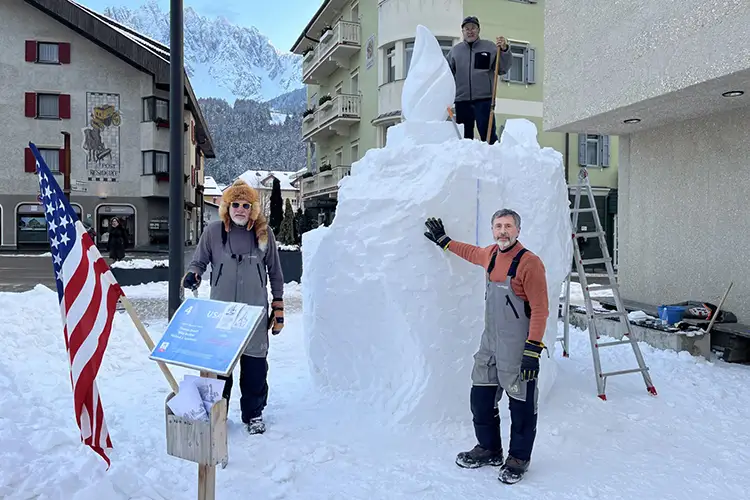
UWM alums Mike Martino, Mike Sponholtz and Tom Queoff work on their entry for the Olympic Art Festival’s 2026 International Snow Sculpture Competition in San Candido, Italy.

Over the past 40 years, UW-Milwaukee alumni Mike Martino, Mike Sponholtz and Tom Queoff have carved blocks of snow into everything from mythical beasts to Mount Rushmore. As the members of Team USA, they’ve won awards worldwide, using their fine art degrees to sculpt in a cold and cantankerous medium.

“We’ve been carving together since 1986,” said Queoff, a Milwaukee-based sculptor who earned a master of fine arts degree in 1977. “We’re like old musicians who just keep performing together.”

With help from Martino (’78, BFA) and Sponholtz (’79, BFA), Queoff created the 6-by-12-foot bronze panther that stands in front of UWM’s Enderis Hall. The sculpture, commissioned by the UWM Alumni Association, has become a beloved campus icon since it was unveiled in 2015 to commemorate the 50th anniversary of the university’s mascot.

A snow sculpture shows three figures holding an Olympic torch and laurel wreath.
“Zenith,” depicting three figures holding an Olympic torch and laurel wreath, earned a bronze medal. (Submitted photo)

This week Team USA competed in the Olympic Art Festival’s 2026 International Snow Sculpture Competition in San Candido, Italy, a mountain town about 25 miles from Cortina d’Ampezzo, where the mountain events will be held at the 2026 Winter Olympics.

The team was one of eight selected from more than 300 applicants worldwide. Their piece, “Zenith,” depicting three figures holding an Olympic torch and laurel wreath, earned a bronze medal.

“We’ve always treated snow as a serious artistic medium,” said Sponholtz, a Mishicot-based sculptor who works primarily in wood. Martino, a La Crosse-based artist who sculpts in wood and bronze, agrees. “We share a love for creating beautiful forms and being out in nature.”

The three friends have traveled thousands of miles to snow sculpture competitions from Canada to Japan, where they won a bronze medal at the 1998 Winter Olympics Art Festival near Nagano. Their luggage includes customized carving tools and a gridded plexiglass box containing a polyurethane scale model of their competition sculpture.

“It keeps us on the same page. An inch square on the model is a foot square in the snow,” Queoff said.

They’ve honed a system of defined roles. “I’ll be roughing in shapes on top of the block,” Sponholtz said, “and Tom will be working from the bottom. Mike will be clearing the snow. Once the form is roughed in, we all work to add the details.”

One more collaboration

After four decades and more than 250 snow sculptures, the members of Team USA will collaborate on their final piece together Feb. 14-15 at the Woodson Art Museum in Wausau, where they have created snow sculptures annually for 35 years. The museum featured a photo retrospective of their work in January, “Captured in Cold: Photographs from 35 Years of Team USA Snow Sculpture.”

“A 10-by-10 block of snow is 17 tons,” Sponholtz said. “We carve and clear all that by hand. We’re all in pretty good shape, but we don’t move like we used to. It’s a great feeling when you’re finished, but then you wake up hurting the next morning.”

Time may be catching up with the members of Team USA, but as all snow sculptors know, time is never on your side when using a material that melts.

“Snow sculpture is like performance art,” Martino said. “It’s here and gone. You have to appreciate it in the moment.”

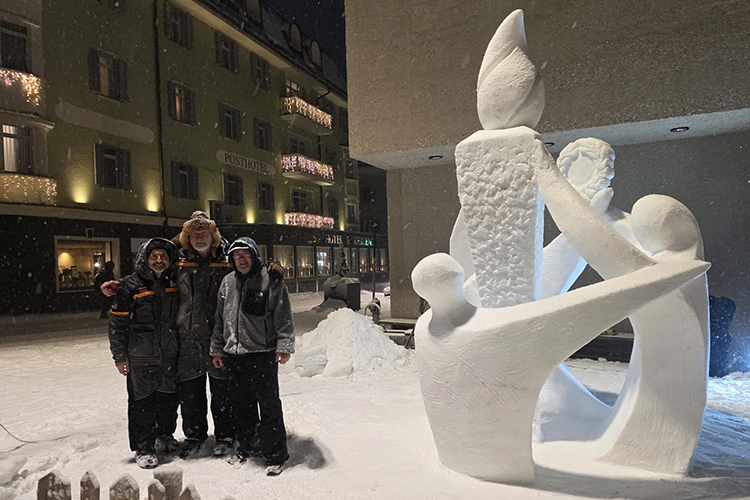
Three men in winter jackets stand next to a snow sculpture they built.
Mike Martino, Mike Sponholtz and Tom Queoff pose for a photo next to their completed snow sculpture. (Submitted photo)

Story by Maridel Allinder, originally published by UWM Report

Dutch textile art magazine TextielPlus profiles contemplative fiber work of Kyoung Ae Cho

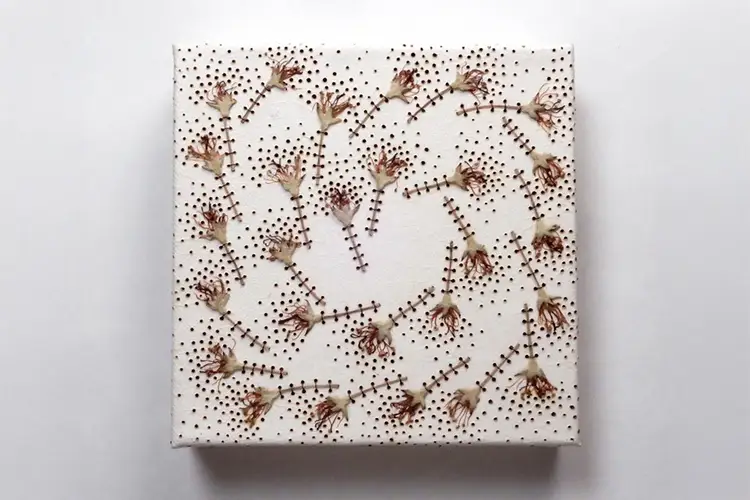
Square white textile artwork with dotted surface and stitched dried flowers forming a spiral pattern

Professor Kyoung Ae Cho, a fiber artist known for her meditative, nature-inspired practice, is featured in TextielPlus in a profile about her slow-art approach and material exploration. The article highlights her use of recycled and natural materials gathered and respectfully transformed into textile and mixed-media artworks.

Cho explains that her creative process begins with a collaboration with nature that informs the form, pattern, color, and texture of her pieces and that her work spans embroidery, quilting, weaving, sculpture, and installation. The profile illustrates Cho’s lifelong engagement with textiles, tracing her early interest in sewing to the depth of her contemporary art projects that merge environmental awareness with minimalist, contemplative practice.

Read the article on TextielPlus.

Milwaukee Magazine talks with Winterdances guest artist Roussève about choregraphic research

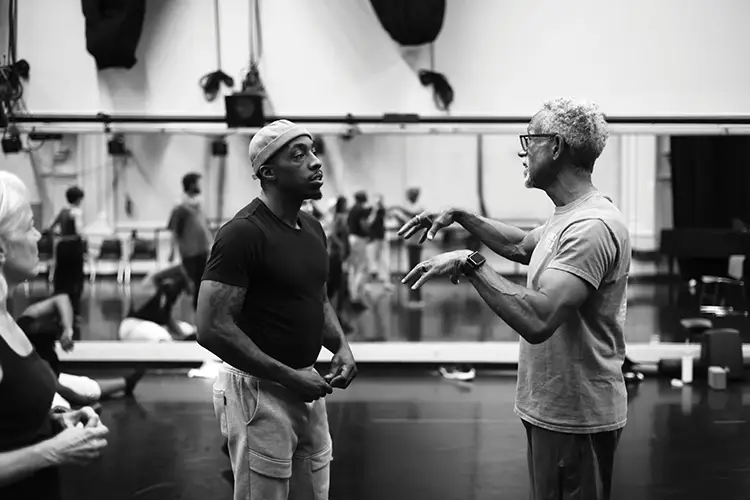
David Roussève and Richard “Buda” Brasfield preparing for the performance in a studio.

For Milwaukee Magazine’s Spring Arts Playbook, Lauren Warnecke spoke with acclaimed choreographer and guest artist David Roussève about his work with the UWM Dance Department and members of Milwaukee’s vogue and ballroom community on Care: Illuminating Milwaukee’s Queer and Trans Community, a community-based creative research process that culminates with a world premiere work at Winterdances.

As reported by Milwaukee Magazine, the project was shaped through workshops, conversations, and shared movement practices involving students, local performers, and community partners. The resulting choreography blends contemporary dance and vogue while foregrounding care, knowledge-sharing, and lived experience as forms of artistic research.

Read more in Milwaukee Magazine.

Dance faculty premiere new works in Winterdances: Resilence

Headshots of Mair Culbreth, Ishmael Konney, and Dawn Springer

Winterdances: Resilience is faculty concert featuring the original choreography by dance department faculty members Ishmael Konney, Dawn Springer, and Mair Culbreth, as well as guest artist David Roussève. Winterdances: Resilience presents dance works that uplift the human connection through storytelling, joy, and resilience. Here’s a preview of the world premiere works.

Mair W Culbreth Headshot

Be My Ground, When The World Lets Go

Dr. Mair Culbreth 

This work began with a kinesthetic investigation of vertigo—as both a bodily sensation and a condition of ambivalence. Drawing inspiration from filmmaker Catherine Yass’s Falling Away, the process explored verticality not only as a physical experience but as the unsettling sensation of slipping away from oneself, from certainty, from what is known. Vertigo, commonly understood as dizziness or disorientation, emerges here as a rift between subject and reality—an embodied manifestation of the human desire for balance amid instability.  

The sensation of high places and the existential anxiety provoked by the possibility of falling became a metaphor for moments of personal and socio-cultural upheaval. Through movement research with ropes, the dancers investigate how bodies navigate risk, dependence, and trust—how we create ground for one another when stability is no longer guaranteed. Suspended between falling and holding, the work imagines new modes of orientation and relationality in times of collective uncertainty.  

Engaging surrealist materials such as Salvador Dalí and Luis Buñuel’s Un Chien Andalou, the piece approaches surrealism not as escape, but as adaptation: a reorientation toward the strange, fractured, and off-kilter realities of the present moment.  


Ishmael Konney HEADSHOT

Ghana Must Go 

Ishmael Konney 

Inspired by the 1983 expulsion of Ghanaians from Nigeria, Ghana Must Go uses this historical event as a lens to examine the broader human story of movement: forced and unforced migration, relocation, and the search for belonging. Through the metaphor of the body as a bag, the piece explores what we carry with us: memory, identity, and the invisible weight of home.  

It also reflects on the human connections that emerge through migration, the encounters, relationships, and shared experiences that form as people move from place to place. In Ghana Must Go, movement becomes both burden and bridge, revealing how displacement can also create new forms of community and resilience.  


Dawn Springer headshot

Harps That Once  

Dawn Springer 

The creative process for this piece explored the maturation process of discovering that the structures we exist in (perhaps familial or societal) are often not fixed but constantly shifting.  During the choreographic research, I looked for symbols from other times and places that encapsulated those ideas. That included stories from the paternal side of my family history, Irish poetry, Catholic imagery and culture, and 80s-90s pop music. 

The title references Irish poet Thomas Moore’s 17th century poem, The Harp that Once Through Tara’s Halls, written while Ireland was under English rule. Considering similar themes of cultural inheritance and loss, Harps That Once reflects on what resonates after structures and ideals fracture — what remains and what is built when the illusion of permanence fades. 


David Roussève headshot

CARE 

David Roussève 

Roussève partnered with UWM Dance and community partners Diverse & Resilient and local dancers to create his work “CARE,” which serves as the final stage of Roussève’s dance and community-engaged research project, Care: Illuminating Milwaukee’s Queer and Trans Communities. Roussève’s piece features three local ballroom dancers who collaborated with him on the crucial vogue and ballroom section of the work. Richard Buda Brasfield, Jacques Infiniti Hall, and DaCosta Martín worked closely with Roussève to bring the authenticity and artistry of vogue to Roussève’s contemporary work. 


Winterdances: Resilience runs from February 5 – 8 at UWM’s Mainstage Theatre. Visit the PSOA Events calendar for more information and to purchase tickets. 


Story by Payton Murphy ’27 (BFA Film)

Two PSOA alums receive 2026 Nohl Fellowships

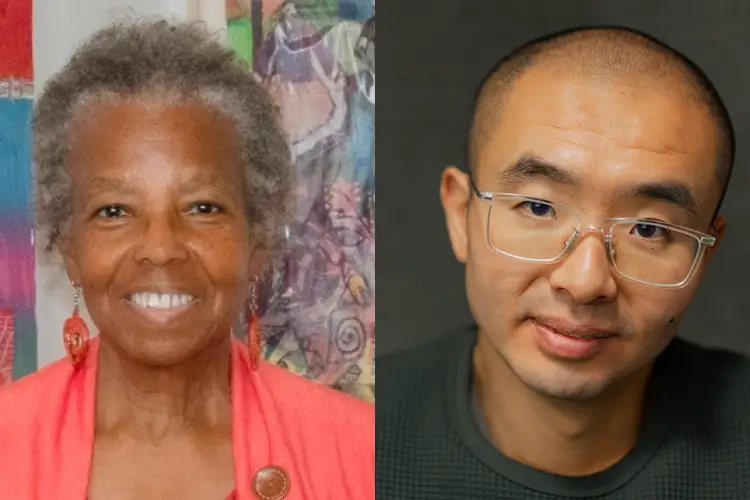
Headshots of Evelyn Patricia Terry and Yinan Wang

Alums Evelyn Patricia Terry (BFA 1970, Art; MS 1973, Art) and lecturer and alum Yinan Wang (BFA 2017, Film) were named among five recipients of the 2026 Mary L. Nohl Fellowship for Individual Artists. Terry was selected in the Established Artist category, and Wang was selected in the Emerging Artist category.

Established in honor of artist Mary L. Nohl following her death in 2001, the Mary L. Nohl Fellowship for Individual Artists provides unrestricted funds for Milwaukee-area artists to create new work or complete work in progress. FVANG Associate Professor Mike Gibisser was also named a finalist in the Emerging Artist category.

Evelyn Patricia Terry

Evelyn Patricia Terry is a full-time professional artist and the City of Milwaukee’s 2014 Artist of the Year. Her multidisciplinary practice includes printmaking, collage, mixed media, book arts, and works on paper. Her work has been exhibited locally, regionally, and internationally and is held in more than 500 public, private, and corporate collections.

Her recent site-specific commissioned installation at ThriveOn King, America’s Favor, America: Guests Who Came to Dinner and Stayed (2024), features a 16-foot table with recycled wood–turned legs, globally sourced ethnic dolls, a George Ray McCormick Sr. sculpture, and plates adorned with raw-food replicas. Together, these elements encourage healthy choices, thoughtful reflection, and a deeper understanding of America’s beginnings—how and why we are here.

She has exhibited locally, regionally, and internationally in Spain, Germany, Japan, and Russia, and has created public art projects for her neighborhood and for Mitchell International Airport.

As a recipient of the Mary L. Nohl Fellowship in the Established Artist category, Terry will receive a $20,000 fellowship along with an additional $5,000 stipend to support her practice.

Yinan Wang

Yinan Wang 王一男 is a filmmaker born and raised in Beijing and now based in Milwaukee. Working across personal, documentary, and nonfiction forms, his practice explores how memory, language, humor, ritual, and food shape our sense of home—following the shifting contours of cultural identity shaped as much by migration as by longing.

His recent work, 甜腻腻 Thick & Sweet, reconstructs both personal and collective memories of a local Chinese restaurant through cutouts, reenactments, found footage, and fragments of earlier films, quietly probing how images form—and deform—cultural identity.

His work has been shared across festivals, community programs, classrooms, and international venues. A 2022 Flaherty Fellow and 2020 University Film and Video Fellow, he has received the Cream City Cinema Jury Award and the Sikay Tang Critical Lens Award, and his practice has been supported by the Brico Forward Fund, the Harry L. Friedberg Award, and the Robert A. Nelson Scholarship.

As an Emerging Artist fellow, Wang will receive a $10,000 award, along with an additional $5,000 to support future work.


The panel of jurors included Anthony Graham, Senior Curator at Berkeley Art Museum and Pacific Film Archive, Berkeley, California; Mia Lopez, Curator of Latinx Art at the McNay Art Museum in San Antonio, Texas; and Eileen Jeng Lynch, Director of Curatorial Programs, The Bronx Museum, New York.

All of the 2026 fellows are based in Milwaukee. In addition to receiving an award, the Nohl Fellows will participate in professional development activities and studio visits, and in an exhibition at the Haggerty Museum of Art in the summer of 2027. An exhibition catalogue will be published and disseminated nationally.


Story by Payton Murphy ’27 (BFA Film)

Artist and engineer Stern’s new exhibit examines intersection of art and technology

Person standing in front of a sculptural installation made of broken white electronics and tangled wires.

What happens when artists create with artificial intelligence while also interrogating it? A new Milwaukee exhibit explores that question through sculptures, prints, interactive pieces and poetry, all born from creative collaboration with AI.

Nathaniel Stern teamed up with Sasha Stiles, who has a concurrent solo exhibit at the Museum of Modern Art in NYC to develop the exhibit “Generation to Generation: Conversing with Kindred Technologies.” Stern has degrees in both mechanical engineering and design and is a UWM professor of both mechanical engineering and visual art & design.

The exhibit invites viewers to consider the relationship and the “always-evolving dialogue” between humans and the tools we invent.

“Overall, we should neither approach with blind optimism nor crippling fear around new technologies,” Stern said. “We’re trying to nuance the conversations from a space of real understanding and use.”

Feb. 12 Opening Day Events
Kenilworth Square East Gallery
11 a.m. – noon
Language as Collaborator: Co-Creating with Thinking Machines | Workshop
 
2-3 p.m.
Gallery walkthrough
 
3-4:30 p.m.
Generations and Generativity: Post-AI Aesthetics in Practice | Panel Discussion

5-7 p.m.
Reception
More details

More than a theme

The answer is both, he said. The exhibit highlights human–technology interaction while also grappling with real concerns – like the environmental cost of running large AI systems.

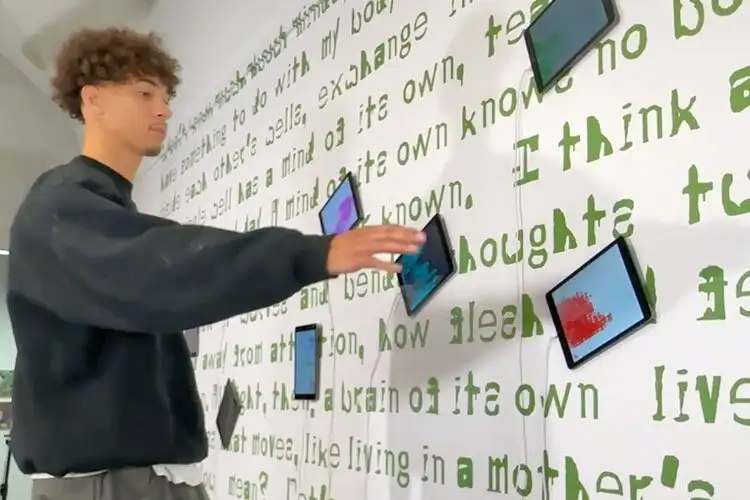
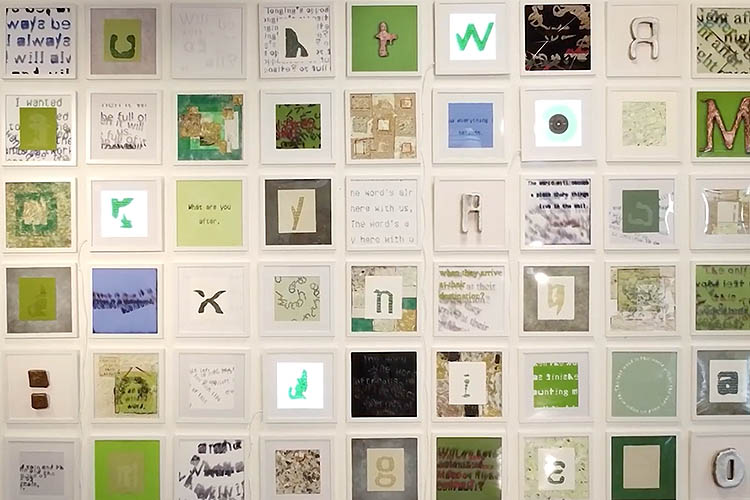
To reduce energy consumption, the artists used AI selectively and with small datasets. For example, they trained their own diffusion model on photos of letters to create a stylized alphabet. Because the model was given minimal data, the results resemble rough, childlike handwriting – an intentional artifact that underscores the trade-offs between creativity, technology, and resource use.

This environmental tension shows up thematically as well. “We’re balancing matters of technology vs. the environment,” Stern said, noting that pieces like the Mother Computer in the installation, Weighing, hint at “Mother Earth.”

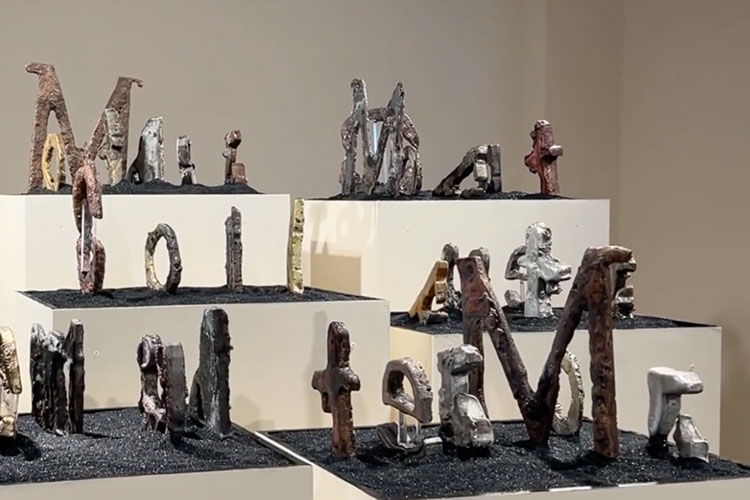
Not everything in the show was computer-driven. Some components rely on decidedly “old school” methods as a nod to technologies of the past. For Weighing, for instance, letters were cast at MetCovery Foundry in Menomonee Falls, Wisconsin, using recovered industrial waste metal. It continues the conversation around human and technology’s evolving side by side.

A student interacts with artwork in an exhibition.
Artwork on view in an exhibition
Artwork on view in the exhibition

Is AI really original?

Another question Stern is often asked to debunk: “Is this just artwork stitched together from other people’s creations?”

The creative process, he said, is intentional and transparent with manipulation of the AI tools in nonstandard ways, to invite strategic possibilities. Viewers can decide.

In the piece The E-Waste Land, AI is used only to extend Stern’s own experimental imagery, and all training data comes from owned sources. For this, he used Adobe Firefly’s stable diffusion –feeding in fragments of his abstract images and prompting the system to complete them.

Stiles, meanwhile, works with a large language model that she has fine-tuned on her own contemporary poetry. She treats AI as “a sounding board” – asking it for multiple sentence variations and iterating those until the results emerge in a way she is happy with.

Both artists began incorporating AI into their practices long before the current buzz. For example, Stern custom-built the motion-tracking algorithm used in the interactive installation Still Moving, predating today’s body-tracking tools such as MediaPipe.


The exhibit runs Feb. 12-20 at the Kenilworth Square East Gallery. This research was funded by UWM’s Office of Research. The Milwaukee exhibit was funded by Center for 21st Century Studies and the Lubar Entrepreneurship Center.


Story by Laura Otto