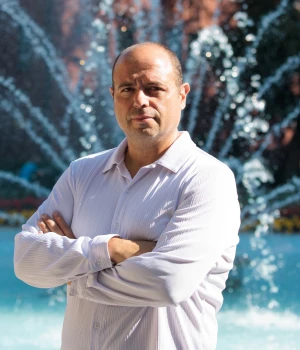
Gordon Gauchat
- Associate Professor, Sociology
Education
- Posdoctoral Fellow, Cecil Sheps Center for Health Services Research, University of North Carolina at Chapel Hill
- PhD, Sociology, University of Connecticut
- MA, Sociology, University of Connecticut
- BA, Sociology and Economics, University of Connecticut
Office Hours
- Bolton Hall, Office 742
- By appointment
Courses Taught
- SOCIOL 911: The Sociology of Institutions
- SOCIOL 715: Systematic Sociological Theory
- SOCIOL 375: Social Theory
- SOCIOL 304: Political Sociology
Teaching Interests
Teaching Interests: Science and Society; Sociology of Science; Public Understanding and Communication of Science; Social Theory; Sociology of Institutions; Political Sociology.
Methods Teaching Interests: Research Design; Quantitative Methods; Survey Research and Public Opinion; Computational Social Science; Historical Sociology and Documentary Analysis.
Research Interests
- Science and Democracy
- Sociology of Science
- Institutional Theory
- Public Understanding of Science
- Scientific legitimacy, Trust, and Expertise
- Science Communication
Related Activities
Gordon Gauchat. Keynote Address to Open the Conference. "Changing science culture: public perceptions of science in the US over the past 50 years." Science & You 2021. Université de Lorraine, France. Keynotes | science-and-you.com
National Academies of Sciences. 2017. “Public Perceptions of Science: A Social Scientific Approach.” Honorary Presenter. Examining the Mistrust of Science. Public Perceptions of Science: Social Science Approach (nationalacademies.org)
American Academy of Arts and Sciences. 2016 “Politics, Ideology, and Social Factors,” Honorary Presenter, The Public Face of Science: Exploring the Determinates of Public Trust in Science.
Department of Chemistry, Sydney University. 2014. Honorary Presenter: “The Cultural Authority of Science: Public Perceptions of Science in Society.”
Skepticism’s dark side: Sociologist identifies “legitimacy crisis” for science - Issuu
The Mistrust of Science | The New Yorker
Live Chat: The Political Brain | Science | AAAS
The politics of science funding | OUPblog (unc.edu)
Study: Conservatives' Trust In Science At Record Low : The Two-Way : NPR
Grants and Fellowships
Ash Center for Democratic Governance and Innovation, Harvard University. 2026. Visiting Fellowship (upcoming).
Discovery Innovation Grant (DIG), University of Wisconsin–Milwaukee. 2025. “The Institutional Model of Science.” $36,068.
Northwestern Mutual Data Science Institute Grant. 2025. “The AI Research Ethos: Institutional Safeguards for Scientific Integrity.” $2,500.
Research Assistance Fund, University of Wisconsin–Milwaukee. 2025. “Institutional Literacy: Measuring Public Understanding of Science.” $2,500.
Stanford–Elsevier World’s Top 2% Scientists (Career Impact), 2024. Recognized among the top 2% of researchers worldwide based on standardized citation metrics across disciplines.
Research and Creative Activities Support Award, University of Wisconsin–Milwaukee. 2017. “Democratic Values and the Cultural Authority of Science.” $10,855.
National Science Foundation. 2012–2014. “The Cultural Authority of Science in the Public Sphere.” Principal Investigator. $114,000.
Cecil G. Sheps Center for Health Services Research, University of North Carolina–Chapel Hill. 2010–2013. Postdoctoral Fellowship.
Biographical Sketch
Gordon Gauchat is Associate Professor of Sociology at the University of Wisconsin–Milwaukee and a 2026–27 Democracy Visiting Fellow at Harvard Kennedy School’s Ash Center for Democratic Governance and Innovation. His research examines how science gains or loses cultural legitimacy, how institutions shape public understanding, and what these processes mean for democratic life. His work combines survey research, public-opinion analysis, historical data, and institutional and cultural theory.
His publications appear in American Sociological Review, Nature, Annual Review of Sociology, Journal of Health and Social Behavior, Social Forces, and Public Understanding of Science. His recent work includes “Partisan Polarization and Public Trust in Vaccine Science” (Journal of Health and Social Behavior, 2025, OnlineFirst), “Why We Don’t Really Know What the Public Thinks About Science” (Nature, 2026), and “Reimagining Public Understanding: Toward an Institutional Model” (Public Understanding of Science, 2026).
Gauchat is completing The Legitimacy of Science: Institutional Knowledge and Democratic Life, a book about the institutional foundations of science’s legitimacy and its relationship to democracy. His research has been discussed in The New Yorker, The Guardian, The Washington Post, and other public outlets. He was included in the 2024 Stanford–Elsevier list of the world’s top 2% of scientists by citation impact.