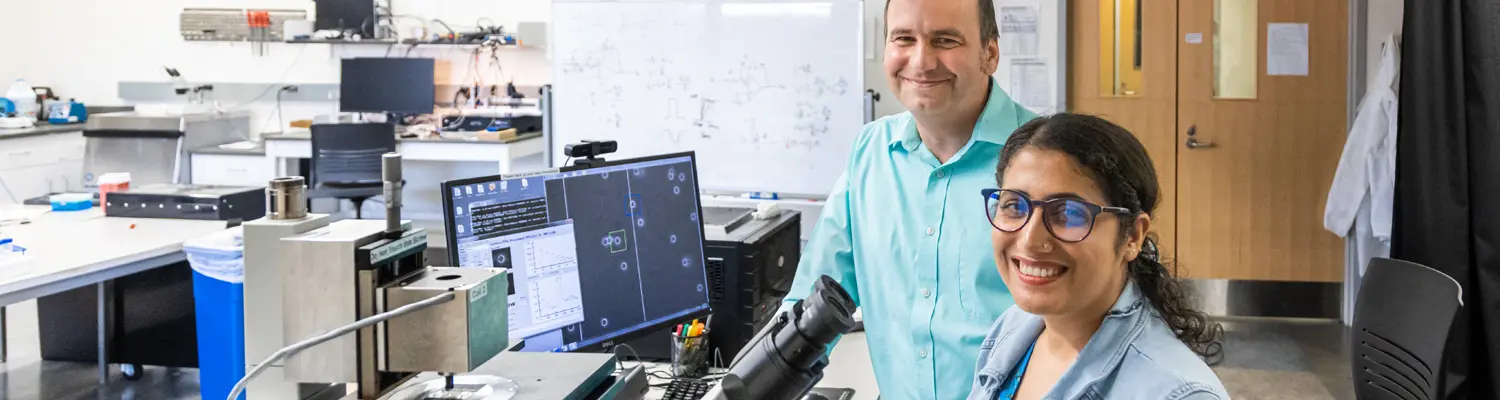
The physics faculty has expertise in astronomy and astrophysics, biophysics, condensed matter and surface physics, gravitation and cosmology, medical imaging, modern optics, and more. They are leaders in both theoretical and applied physics and are frequently honored with prestigious national grants and awards.
The department is also committed to the promotion of scholarly activities and excellence in research involving faculty and students. Each year, experts are invited to participate in colloquia, seminars, and guest lectures to share their knowledge and engage with our students.
There are opportunities to gain hands-on research experiences for both undergraduate and graduate students. In fact, in 2016, UWM scientists and students contributed to the discovery of the gravitational waves, predicted initially by Einstein over half a century earlier. This work was later awarded the 2017 Nobel Prize in Physics.
The department is also home to the campus Planetarium. The theater projects stars, planets, the sun, and the moon on its 30-foot dome! Special projects are also used for visual effects, such as a rotating Milky Way and the Aurora Borealis. The observatory deck on the roof of the Physics Building is used for telescopic observation and stargazing. Programs and shows are offered to the public, and students can get involved in the creation and production of new shows.