Choosing a Doctor of Nursing Practice (DNP) program is a major investment of your time, money, and energy. Before you commit, you should know exactly how a program will support you from admission through graduation and into practice.
As you compare DNP programs, ask these five questions directly to the program manager or advisor.
1. “Who is responsible for finding my clinical placements?”
If you are entering a nurse practitioner specialty, this should be one of your first questions.
Ask whether the program secures clinical sites and preceptors or whether students are expected to find their own. Then go one step further: What happens if a preceptor cancels? What if a site falls through? How far might you need to travel? What sites does the program currently use?
Clinical education is too important to leave to chance. Graduate education is already expensive enough without paying additional fees to individual preceptors you must find yourself. A strong program should have established clinical partnerships, a clear placement process, and dedicated people helping students get the experiences they need.
At UWM, we guarantee clinical placement and take full responsibility for the clinical education of our students. We have a 100% placement rate with zero delays in program progression due to lack of a clinical site.
2. “What are your board certification pass rates, and how many of your graduates are employed after graduation?”
Find out the certification pass rate for graduates in your specialty. Ask whether the program tracks graduate employment and, if so, how many graduates are working in the roles they were prepared for. You can also ask how quickly graduates typically find positions and where they are working. Certification and employment are not the only measures of a strong program, but they are important outcomes. A program should be able to tell you how well its graduates are doing after they leave.
UWM had 100% board certification pass rates for the Psychiatric Mental Health and Adult-Gerontology Acute Care Nurse Practitioner specialties and a 90% pass rate in the Family Nurse Practitioner specialty.* DNP graduates work in every major health system in the greater Milwaukee area and in many states throughout the country. Students routinely secure jobs from clinical placement sites and many walk the stage at graduation with job offer in hand!
*Method of calculation: All test takers in a calendar year.
3. “What support will I receive if I start struggling?”
Doctoral education is demanding, and nearly every student will hit a difficult stretch at some point. Ask what happens when a student is having trouble academically, clinically, or simply balancing school with the rest of life. How accessible are faculty? How often will you meet with an advisor? Are tutoring, writing support, academic coaching, or other resources available?
Look for a program where faculty know their students and intervene early rather than waiting until someone is already in serious difficulty.
In the UWM DNP Program, Graduate Program Manager Jennifer Carrera advises all early-program students. We have a robust Student Health and Wellness Center, Library Staff, a Writing Center and a very supportive Dean of Students Office. Our faculty are expected to have regular and substantive interaction with students and many become lifelong mentors for our graduates!
4. “Who will actually be teaching me, and how much interaction will I have with them?”
Ask whether your courses are taught by experienced advanced practice nurses, researchers, healthcare leaders, and other experts who understand the work you are preparing to do. If you are entering an NP program, ask whether faculty continue to practice clinically and who teaches your advanced assessment, pharmacology, diagnosis, specialty, simulation, and clinical courses.
For online programs, ask an additional question: How will faculty actually engage with me? There is a big difference between completing material posted online and being taught by faculty who regularly interact with students, provide meaningful feedback, and help them grow.
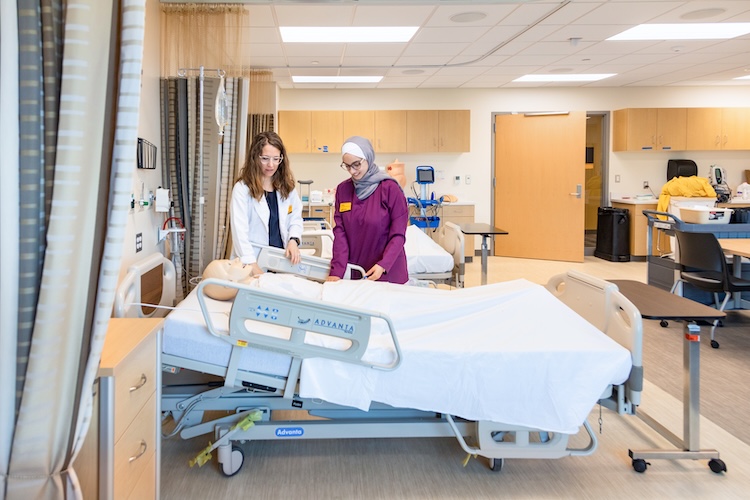
In the UWM DNP Program, real world application starts on day one. All specialty theory and clinical courses are taught by practicing nurse practitioners or clinical nurse specialists who are board certified in that specialty. All simulation-based learning is delivered in our accredited James and Yvonne Ziemer Clinical Simulation Center. Our core course faculty are startup founders, business owners, policy experts and more!
5. “How will this program prepare me for the job I want five years from now?”
Do not stop at asking whether the program can get you to graduation. Tell the program where you hope your DNP will take you and ask how the curriculum, clinical experiences, faculty mentorship, and professional connections will help you get there. Healthcare is changing quickly. DNP graduates need more than strong clinical knowledge. They also need to be prepared for changing technology, evidence-based practice, quality improvement, leadership, informatics, population health, and new models of care.
In the UWM DNP Program, you can use your time in the program to refine a business plan, pursue an innovative idea or explore fundamental leadership and management skills! A strong program should be able to explain how its graduates are being prepared not only for their first job after graduation, but for the careers they want to build.
The Bottom Line
When you are choosing a DNP program, you are interviewing the program too. Ask direct questions. Ask for specifics. Pay particular attention to clinical placement, certification outcomes, graduate employment, faculty engagement, and student support. The right DNP program should have a clear plan for helping you get from where you are now to the advanced nursing role you want next.
Ready to apply? Explore the University of Wisconsin-Milwaukee DNP Program and take the next step in your nursing career.