Volume 16, Number 3
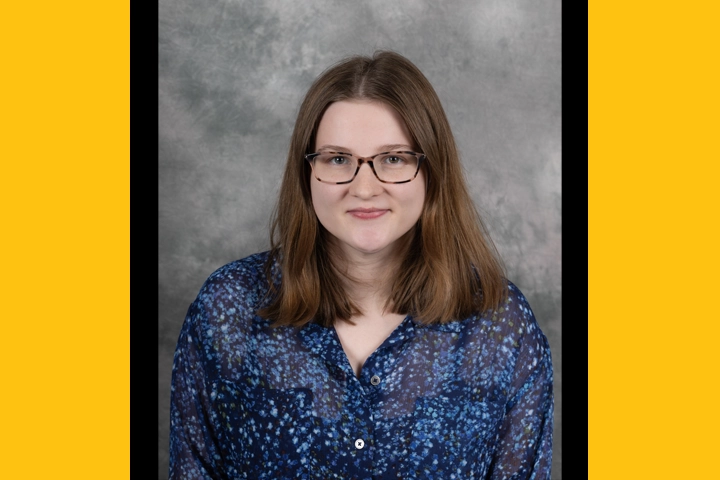
- How UW-Milwaukee helped Aleksandr pivot into data analyticsWhat’s it like to discover a new career path while you’re already in college? For Aleksandr Wellner, the University of Wisconsin-Milwaukee gave him the flexibility and real-world exposure to follow what interested him most – …
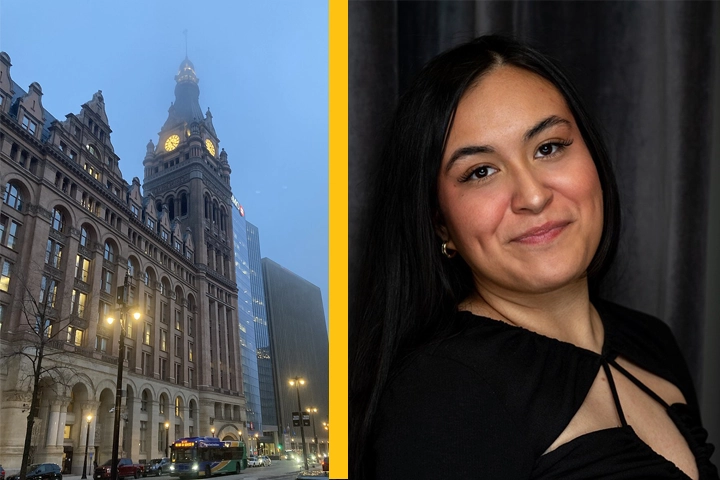
- Political science student rises through the ranks to be head intern in Milwaukee Mayor’s OfficeIf you have a concern for the Mayor’s Office, Viviana Lopez is happy to take your call. It is her job, after all. Lopez is a political science student at UW-Milwaukee, and she is also …
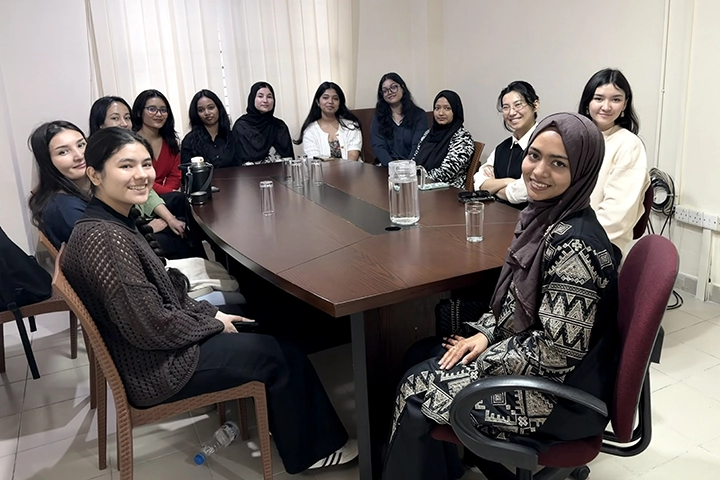
- Psychology prof’s mental health lab has a global humanitarian health missionThe word seva comes from a South Asian dialect and means “selfless service.” It’s the perfect name for Srishti Meera Sardana’s lab, because that’s exactly what she and her students try to provide for others …
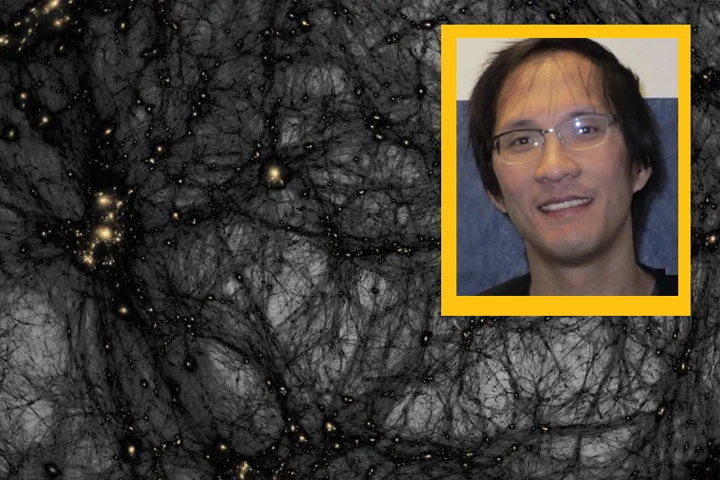
- UWM astronomer discovers probable dark matter sub-halo in the Milky WayNew research by Philip Chang suggests that there is a dark matter sub-halo lurking in our cosmic neighborhood. Chang, a professor in UWM’s Department of Physics & Astrophysics, is the co-author of a recent paper …
- What can you do with a French major?Every year, graduates from the College of Letters & Science enter the workforce and begin to contribute thousands of dollars to their local, state, and national economies. They bring the skills and knowledge they gained …
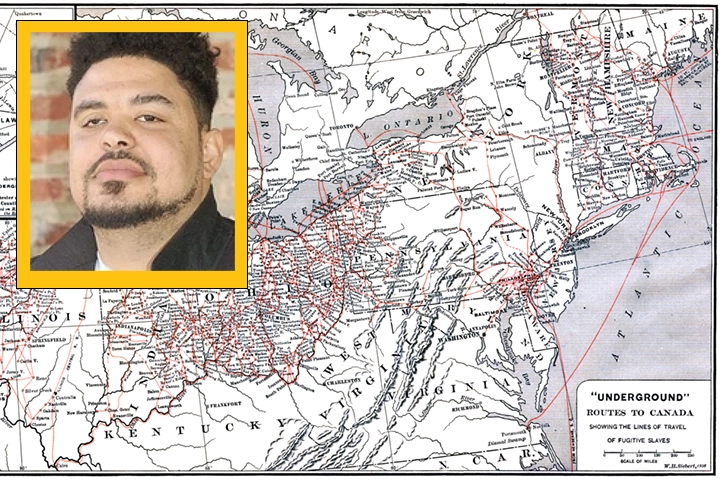
- Take a ride on Wisconsin’s Underground Railroad, with UWM faculty as your guideThe Underground Railroad was a network of safehouses and secret routes that ferried fugitive slaves from the south to safety in the northern U.S. and Canada in the years leading up to America’s Civil War. …

Please be aware that some publications require a subscription in order to view articles and most links below leave this site.
Alumni Accomplishments
Nicholas Owens (‘04, Master of Public Administration) was named the first-ever county administrator of Green County, Wisconsin. Owens has more than two decades of administrative experience in local government, most recently as the village administrator of Mount Horeb, Wisconsin, and previously as the village administrator of New Glarus, Wisconsin. Owens will serve as the county’s day-to-day operations and implement the policies set forth by the Green County Board of Supervisors.
Nyesha Stone (‘18, BA Journalism, Advertising, & Media Studies) is the founder of the positive news company Carvd N Stone, which was chosen to join Goldman Sachs’ One Million Black Women: Black in Business program. The program is a $10 billion investment commitment with $100 million in philanthropic capital that identifies opportunities to promote economic growth through investments. Stone told Madison365 that her business’ selection shows that Carvd N Stone is on the right track to grow and expand.
Patrick Baird (‘13, BA Journalism, Advertising, & Media Studies) debuted his latest crime novel, The Laszlo Pendulum, in February. The book, set in Door County, Wisconsin, is a Cold War thriller. Baird is a prolific author; this marks his 10th novel.
Nikkie Raney (‘24, MA Art History) was selected to be the new curator of the Cedarburg Art Museum. Her curatorial experience includes serving as a research assistant for the Milwaukee Art Museum’s landmark exhibition “The Bradley Collection of Modern Art.” She began her new job in February.
Dennis McBride (‘76, BA Journalism) is the author of the recently-released book A City on the Edge: Pandemic, Protest, and Polarization, which provides a retrospective look during his time as mayor of Wauwatosa, Wisconsin, in 2020. The book was chosen as the Milwaukee Journal Sentinel’s “Wisconsin Book of the Month” in February.
Laurels & Accolades
Undergraduate student Brooklyn Hess (Anthropology) was named executive director of Wausau Events in February. The organization aims to create community through public events. Hess joined the organization in 2023 as an event assistant and has been involved in the planning and operation of every event produced by Wausau Events since then. Hess is in her final semester at UWM.
Professor Amanda Seligman (History) was honored at the American Historical Association meeting in Chicago in January, where she presented with the award for best article on teaching history. Seligman’s article, titled “Staging Historical Reenactments on Twitter: History, Methods, and Ethics,” was co-written with Jaclyn Kelly (‘11, MA History). The article is based on Seligman’s work teaching History 450.
Distinguished Professor Ching-Hong Yang (Biological Sciences) has had his research paper titled, “RejuAgro A as a Novel Antimicrobial for Fire Blight Control of Pome Fruits and Beyond” accepted for publication in Nature Communications.
This study presents RejuAgro A (RAA), an antimicrobial compound from Pseudomonas soli. It is highly effective against Erwinia amylovora, the bacteria that causes fire blight in apples and pears, a disease of local importance in Wisconsin. Unlike traditional antibiotics like streptomycin, RAA works through a distinctive mechanism that helps prevent the development of resistance, offering a solution to the growing problem of antimicrobial resistance in agriculture. Field trials conducted across multiple regions further validate its efficacy, suggesting that RAA could become an essential tool for enhancing crop protection and sustainable farming practices.
In the Media and Around the Community
The Milwaukee Journal Sentinel remembered how the Harambee Shopper newspaper focused on increasingly literacy in Milwaukee’s young people. The paper was founded in part by Professor emeritus Belden Paulson (Political Science). UWM alumnus Clayborn Benson (‘24, MA Public History) spoke about the paper’s importance to Milwaukee’s Black community.
A study by UWM’s Center for Economic Development found that predominantly white areas have three times the number of supermarkets or grocery stores compared to predominantly Black areas, the Milwaukee Journal Sentinel reported.
The Morally Offensive Podcast, which features alumna Jess Sellin-Blanc (‘11, BA Art History and Film Studies; ‘14, MA English and Digital Studies; ‘23, PhD English and Digital Studies) as a contributor, explores films from the Condemned Film List, OnMilwaukee reported.
A new PBS documentary highlights Wisconsin’s role in the Underground Railroad. Associate Lecturer Robert “Biko” Baker (African & African Diaspora Studies) contributed to the documentary as a local expert and talked about his role on WUWM Radio’s Lake Effect show and WTMJ Radio.
February was Black history month, but the effects of historical racism are still felt every day of the year. Spectrum 1 News featured Professor Anne Bonds (Geography) and Associate Professor Derek Handley (English) and their project “Mapping Racism and Resistance,” which traces the impact of racial housing covenants in Milwaukee. Bonds and Handley were also quoted in an article by Civic Media and Wisconsin Watch detailing civil rights activists’ push to desegregate Milwaukee’s public schools.
Professor Jeffrey Sommers (African & African Diaspora Studies and Global Studies program) gave an invited presentation to the Wisconsin Assembly and Senate Democratic Caucus on the Minimum Wage on Feb. 2. He also was featured guest for WXRX radio’s weekly program “The Grass is Greener” on geopolitics on Feb. 17.
It was a chilly day, but that didn’t stop the Friends of the Cedarburg Bog from enjoying their annual winter hike near UWM’s Field Station, the Milwaukee Journal Sentinel reported.
Director Jean Creighton (Planetarium) appeared on WUWM Radio’s Lake Effect show to talk about the Planetarium’s “Stars, Stories, & Rhythms of Africa” show in honor of Black History Month.
Associate Professor Jocelyn Szczepaniak-Gillece (Film Studies) discussed her new horror novel, Poltergeist, at Boswell Books in February.
Wisconsin Public Radio took a step back in time by touring UWM’s Retrocomputing Lab with Professor Thomas Haigh (History), who created the space to showcase historical computing technologies.
Senior Teaching Faculty Jessica McBride (Journalism, Advertising, & Media Studies) spoke in support of proposed anti-SLAPP legislation in a public hearing in January, Isthmus reported. Anti-SLAPP legislation is designed to protect journalists and news outlets from litigation meant to silence their reporting.
Associate Professor Maria Novotny (English) was invited by the National Council of Jewish Women in Milwaukee to speak about the intersections of art, advocacy, and reproductive justice. The “Repro Shabbat” event focused on Novotny’s work with her ART of Infertility project and involvement with the Building Families Alliance of WI.
People in Print
Associate Professor Gordon Gauchat (Sociology). 2026. Why we don’t know what the public thinks about science. Nature, 650 (8102): 551-553.
Professor Blain Neufeld (Philosophy). 2026. Oil and Water: Why Schouten’s Political Liberal Anatomy Cannot Accommodate Luck Egalitarianism. Analysis, anaf117.
Teaching Assistant Glenn Starr (Linguistics) and Greta Mazzaggio. 2026. The semantics behind the inference: How first language quantifier systems shape scalar reasoning in second language learners. Journal of Memory and Language, 148, 104727.