

The mission of the Institute for Child and Family Well-Being is to improve the lives of children and families with complex challenges by implementing effective programs, conducting cutting-edge research, engaging communities, and promoting systems change.
The Institute for Child and Family Well-Being is a collaboration between Children’s Wisconsin and the Helen Bader School of Social Welfare at the University of Wisconsin-Milwaukee. The shared values and strengths of this academic-community partnership are reflected in the Institute’s three core service areas: Program Design and Implementation, Research and Evaluation, and Community Engagement and Systems Change.
In This Issue:
- Meet the ICFW
- Research and Evaluation
- Community Engagement and Systems Change
- Title IV-E Scholars and Community Partners Conference: Parental Substance Misuse in Child Welfare
- Strong Families, Thriving Children, Connected Communities Initiative: Advancing Scenario Planning to Transform Mandated Reporting
- Shifting the Child Welfare Narrative: Understanding the Costs of Unsubstantiated Neglect
- Overloaded: Understanding Neglect Season 3
- Milwaukee Independent Column
- Recent and Upcoming Events
Meet the ICFW
Meet Our New Research Assistants

Isa Hernández-White is a research assistant with the Institute for Child and Family Wellbeing. She is working on IV-E, Families and Children Thriving (FACT), and Strong and Stable Families.
Isa is a social work student pursuing clinical licensure and a trauma-informed certification at UW-Milwaukee. Her interests include mental health, healthcare systems, working with Spanish-speaking communities, and community-engaged program evaluation. In her undergrad, Isa worked as a research assistant for a relationship violence lab and guaranteed income project.
Isa holds a BA in Psychology and Chicano/a/e and Latino/a/e Studies from UW-Madison.
Yessra Sankari is a research assistant with the Institute for Child and Family Wellbeing. She is working on the Family Foundations Home Visiting (FFHV) program, Nurturing Hope project, and the Strong and Stable Families (SSF) project.
Yessra is a doctoral student in Social Welfare at the University of Wisconsin Milwaukee. She graduated from Ripon College with a B.A. in Chemistry-Biology. Despite her love for the natural sciences, she found herself gravitating towards advocacy and community involvement. She moved on to receive her master’s in Public Administration (MPA) at the University of Wisconsin Oshkosh. During her MPA studies, she worked at the Oshkosh Area School District as a grant manager for programs targeting students with refugee backgrounds. The majority of her time was spent advocating for inclusion of the students, along with implementing programs that benefit the integration of the refugee students. Later, she worked for the Wisconsin Department of Children and Families (DCF) as a Refugee Program Coordinator, impacting a wider array of refugee community members throughout the state. Her initial interests lie in better understanding the trauma that refugee and immigrant families experience and how it can affect their integration.
Research and Evaluation
The Institute accelerates the process of translating knowledge into direct practices, programs and policies that promote health and well-being, and provides analytic, data management and grant-writing support.
The Institute for Child and Family Well-being is at the forefront of research that explores new frontiers related to adverse childhood experiences (ACEs).
Below are examples of seminal work that explores disparities in the experience and impact of life course adversity:
- Linking adverse experiences to pregnancy and birth outcomes: A life course analysis of racial and ethnic disparities among low-income women
- Adverse childhood experiences and sexual orientation: An intersectional analysis of nationally representative data
- Adverse adult experiences and health outcomes: Racial and ethnic differences in a low-income sample
Here are recent examples of ACE research that advances our understanding of intergenerational transmission:
- The long arm of maternal incarceration: Indirect associations with children’s social-emotional development
- Intergenerational transmission of child protective services involvement: Exploring the role of ACEs and domestic violence among families who receive home visiting services
- Intergenerational pathways linking mothers’ adverse childhood experiences and children’s social-emotional problems
- Intergenerational transmission of parental adverse childhood experiences and children’s outcomes: A scoping review
Community Engagement & Systems Change
The Institute develops community-university partnerships to promote systems change that increases the accessibility of evidence-based and evidence-informed practices.
Title IV-E Scholars and Community Partners Conference: Parental Substance Misuse in Child Welfare
On October 4, 2024, the University of Wisconsin – Milwaukee Title IV-E Public Child Welfare Training Program hosted the Title IV-E Scholars & Community Partners Conference: Parental Substance Misuse in Child Welfare. A keynote address from Robyn Ellis and Judge Mary Triggiano and a community panel of child welfare professionals shared about efforts underway to address parental substance misuse in Southeastern Wisconsin, highlighting Family Drug Treatment Courts, drug affected infants, and the amazing work of our Title IV-E Scholars and community partners. More details and a recording of the event are available here.

Strong Families, Thriving Children, Connected Communities Initiative: Advancing Scenario Planning to Transform Mandated Reporting
In our ongoing journey to reimagine mandated reporting within Wisconsin, the Strong Families, Thriving Children, Connected Communities (SFTCCC) Initiative is stepping towards a critical new phase—transformative scenario planning (TSP). This phase aims to envision and explore a variety of plausible futures for how mandated reporting could evolve, supporting a vision that better meets the needs of families while acknowledging the complex realities we face.
In our last update, we shared our commitment to rethink mandated reporting and highlighted the ways that systemic change can reduce unnecessary involvement in the child welfare system, ultimately improving family well-being. Since then, the SFTCCC Initiative has made strides in creating a foundation for transformative scenario planning—an approach originally used to navigate significant societal changes in post-apartheid South Africa and civil war-torn Colombia.
Transformative Scenario Planning: Building a Shared Vision
Transformative Scenario Planning (TSP) is a collaborative method that brings together stakeholders from various backgrounds, even those with differing viewpoints, to imagine and strategize for multiple future scenarios. This approach allows us to create a shared understanding of the possibilities that lie ahead, focusing on key challenges, drivers, and strategies to transform complex issues. Through recent stakeholder meetings, we’ve emphasized the importance of including a wide variety of perspectives in this process. Our team is actively building relationships with professionals across different fields—educators, healthcare providers, legal experts, law enforcement, child welfare abolitionists, and others—as well as those with lived experience in the child welfare system. Their insights are instrumental in envisioning futures that are equitable and responsive to community needs.
Leah Cerwin, one of our project team members, has been diligently curating resources and literature shared across our meetings. We’ve developed a thematic literature review capturing insights from Colorado, California, New York, and even the upEND movement in Texas, which challenges conventional child welfare frameworks. This knowledge base will support our scenario planning discussions, giving us a rich landscape of ideas and best practices from which to draw inspiration.
Expanding Inclusion: Diverse Voices at the Table
One of the foundational aspects of TSP is bringing together stakeholders who may not always see eye to eye—those who view mandated reporting in vastly different ways. Recent conversations have underscored the value of adding voices from law enforcement, legal representatives, and professionals resistant to change. These perspectives are crucial to understand both the opportunities for transformation and the potential resistance we may encounter. We’re also working to amplify the voices of those directly impacted by the child welfare system. Parent leaders and individuals with lived experience have been instrumental in shaping our understanding of the current system’s impact, and we are exploring ways to ensure their experiences are included in scenario planning. By involving these voices, we aim to build an inclusive and just approach to family support that moves beyond the “one-size-fits-all” method.
Looking Forward: Imagining Future Scenarios

The next few months are about creating the conditions to support meaningful scenario planning sessions—including developing partnerships, engaging in one-on-one conversations with new stakeholders, and expanding our collective understanding of what change might look like. Our hope is to convene an in-person event where these scenarios can be explored fully, with a diverse array of participants who bring both their expertise and their humanity to the process. We recognize that the current system of mandated reporting often serves to react rather than prevent. With TSP, we hope to move toward a more proactive, supportive framework that keeps children safe while empowering families with the resources they need before crisis strikes. Together, we’re building the scaffolding to reshape how we understand family well-being in Wisconsin—not just through policy, but through the relationships and shared vision we create as a community.
Stay Engaged
We’re committed to keeping you informed and involved as this work unfolds. If you’re interested in participating, contributing resources, or simply learning more, please reach out to us. Your voice is a vital part of shaping the future of child and family well-being. Keep an eye out for our next update, where we will share insights from our first round of scenario planning and the emerging visions for mandated reporting in Wisconsin.
FAQ: Strong Families, Thriving Children, Connected Communities Initiative
- What is SFTCCC?
- What is Transformative Scenario Planning (TSP)?
- A collaborative process that gathers diverse stakeholders to envision multiple future scenarios and plan for change.
- Who is involved in the planning process?
- Stakeholders including educators, healthcare providers, law enforcement, legal experts, those with lived experience, and child welfare reform advocates.
- Why focus on mandated reporting reform?
- To move from a reactive to a proactive system that prevents crises by supporting families before issues escalate.
- What’s next for SFTCCC?
- Preparing for in-person scenario planning by expanding partnerships and including more diverse perspectives.
- How can I get involved?
- Participate, contribute resources, or stay informed. Reach out to the SFTCCC team to learn more.
Shifting the Child Welfare Narrative: Understanding the Costs of Unsubstantiated Neglect
The Cost Analysis project, part of the Strong Families, Thriving Children, Connected Communities (SFTCCC) initiative, aims to explore the use of resources allocated to unsubstantiated neglect investigations. Far too often, families in distress are subjected to investigations that yield no substantiated findings, leaving a lasting impact by eroding trust between communities and the systems meant to support them. In collaboration with our partner counties and UWM, this project aims to pilot a model to shed light on the financial toll these investigations take on our communities and generate questions about how we might better allocate resources to truly support overloaded families.
Why Focusing on the Cost of Unsubstantiated Neglect Is Important

Child Protective Services (CPS) investigations are incredibly common, more than a third of children will experience a CPS investigation before they turn 18, yet only a fraction of these investigations end in substantiated maltreatment. In Wisconsin neglect is the most common form of maltreatment investigated. Over the past five years there have been approximately 114,289 investigations into neglect allegations. Over that same period, those neglect substantiations have only been substantiated 13% of the time, leaving 99,158 cases that were ultimately unsubstantiated. These unsubstantiated cases require staff time and resources, often without leading to concrete outcomes for families. These repeated, unsubstantiated investigations not only consume limited resources but also contribute to a breakdown in trust between families and community supports that could be essential in supporting those same families.
By understanding the cost of the current state, we can better consider what a shift toward prevention and early support might look like. The Cost Analysis project seeks to create a model to quantify these expenses and to demonstrate the opportunities for more preventive, supportive interventions in the current approach.
The progress of the Cost Analysis project is driven by the commitment of our partners. Brown, Dane, Rock, and Waukesha counties have each stepped forward to play an essential role in piloting this work. Their contributions in co-designing this project will be critical to uncovering the cost of unsubstantiated neglect and identifying better ways to support families. Along with our ICFW UWM research partner, this collaboration ensures that we are not only gathering data but also working collaboratively to build a system that is reflective of the needs and realities of the communities we serve. By partnering with these counties, we are laying the groundwork for meaningful change that will make a difference both locally and across the state. This data-driven approach will offer:

- Detailed Insights into the financial resources dedicated to unsubstantiated investigations;
- Strategic Resource Allocation to invest where our efforts will have the most impact;
- Evidence-Based Advocacy to strengthen our case for policy change and funding towards prevention;
- Practical insights from staff feedback on practice implications.
The Cost Analysis project began in the summer of 2024, with our partner counties stepping up to develop a comprehensive framework for understanding these costs. Together, we are building a data collection system that ensures effectiveness without overwhelming our staff on the ground. As we launch this pilot in January 2025, we anticipate uncovering insights that will inform not only our understanding of financial inefficiencies but also guide future strategies for more empathetic and effective responses to families’ needs.
Stay tuned as we share findings that we believe will provide a clearer path to reshaping child welfare—a path that prioritizes family well-being, reduces unnecessary investigations, and supports strong, resilient communities.
Frequently Asked Questions (FAQ)
- What is the Cost Analysis project? The Cost Analysis project is an initiative under the SFTCCC framework to understand the financial costs of unsubstantiated child neglect investigations and explore better resource allocation.
- Why is focusing on unsubstantiated neglect important? It helps identify inefficiencies and find ways to better support families before crises occur.
- How common are CPS investigations for neglect? More than a third of children experience a CPS investigation before 18; in Wisconsin, only 13% of 114,289 neglect investigations were substantiated.
- What role do community partners play? Dane, Rock, Waukesha, and Brown counties are piloting this project, helping with data collection and co-designing solutions.
- What outcomes are expected? Insights into financial costs, better resource allocation, and strengthened advocacy for preventive policies.
- How will this project contribute to child welfare reform? By providing data to support a shift from reactive measures to proactive, prevention-focused strategies.
- When does the pilot begin? The pilot phase will start in January 2025.
- How can I stay updated? Updates will be shared through newsletters and reports—stay tuned for insights and progress.
Milwaukee Independent Column Featuring Strong Families, Thriving Children, Connected Communities Initiative
By Luke Waldo

Beginning in January of this year, I was given the honor to share the work that we are doing in Milwaukee and across our state with our Strong Families, Thriving Children, Connected Communities initiative through a monthly column in the Milwaukee Independent. Read my latest columns below.
May’s column: Why Mandated Reporting is not Supporting Children and Families in Wisconsin
June’s column: Why Reimagining the Workforce Across Wisconsin Will Better Support Overloaded Families
August column: The Promise of a Guaranteed Income for the Economic Stability of Milwaukee Families
October column: A Reunion In Spain with Lifelong Friends Shows the Essential Nature of Social Connectedness
Overloaded: Understanding Neglect Season 3 Coming Soon!
By Luke Waldo
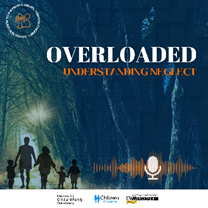
In season 3 of Overloaded: Understanding Neglect, we will be exploring how we might transform systems and change the conditions for overloaded families. Informed and inspired by our Strong Families, Thriving Children, Connected Communities’ initiative and the first two seasons of this podcast series, we now shift from the underlying root causes of neglect and the system challenges and failures that hold them in place to the systems transformation, primary prevention ecosystems, and integration of lived expertise to guide us towards meaningful and sustainable change in the conditions that overload families.
Join me, Luke Waldo, as I explore how we might transform systems and change the conditions for children and families with research and policy, practice, and lived experience experts Samantha Copus (Jefferson County Parents Supporting Parents), Jennifer Jones (Prevent Child Abuse America), Kate Luster (Rock County Department of Human Services), Marlo Nash (Children’s Home Society of America), Blake Roberts Crall (Madison Forward Fund), Bryan Samuels (Chapin Hall), and Allison Thompson (Center for Guaranteed Income Research at University of Pennsylvania).
We also have the honor this season of highlighting the many changemakers that presented at this year’s Wicked Problems Institute hosted by Children’s Home Society of America and the Jordan Institute for Families at the University of North Carolina. Anthony Barrows (Project Evident), Bryn Fortune (Nurture Connection Family Network Collaborative), and Sixto Cancel (Think of Us) present their powerful lived experience and frameworks to Unlock the Power of Lived Experience through True Collaboration.
We believe neglect is preventable. Take a journey with us through systems transformation and primary prevention ecosystems to discover some of the strategies that can help us change the conditions and make that belief a reality for our families and communities. The conversations begin on Wednesday, January 8th when we premiere the first episode of season 3 of Overloaded: Understanding Neglect wherever you listen to your podcasts. Then come back each week on Wednesday to listen to the rest of the series. And if you haven’t already, listen to seasons 1 and 2 to better understand neglect, its root causes, and the critical pathways to change the conditions for overloaded families.
Recent and Upcoming Events
The Institute provides training, consultation and technical assistance to help human service agencies implement and replicate best practices. If you are interested in training or technical assistance, please complete our speaker request form.
Upcoming Events
- Building Brains with Relationships Workshops with WCWPDS
- Overloaded: Understanding Neglect Season 3 – Coming January 2025!
Recent Events
- PCIT International Convention 2024 – September 4th-6th
- Together for Children Conference: Virtual Series – September 17th
- Connecting the Dots: Wisconsin Public Child Welfare Conference (PDF) – September 23rd-25th
- Wicked Problems Institute: Virtual Child Welfare Convening – October 1st
- Title IV-E Scholars & Community Partners Conference: Parental Substance Misuse in Child Welfare – October 4th