Slow Media
As an interdisciplinary humanities center within a public university, C21 aims to support ongoing scholarship and community-engaged work across digital platforms and a range of media. We recognize that academic research, community expertise, lived experience, and artistic practice all contribute to the production of knowledge. Our media is created, often collaboratively, by diverse contributors, with the goal of expanding modes of engagement with C21 events and areas of inquiry.
Slow Digest
Edited by C21 Graduate Fellow Jamee N. Pritchard, Slow Digest was our weekly digital publication that celebrated and supplemented slow care, C21’s 2025-2026 theme. Slow Digest featured essays, insights, and annotations from C21 staff and stakeholders.
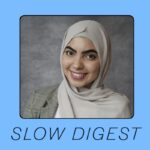
- Slow Digest: Amelia BaderOnce a month throughout the 2025-26 academic year, Slow Digestwill feature an episode of C21's 6.5 Minutes With…C21 podcast series, produced by C21 Graduate Fellows Jamee N. Pritchard and Yuchen Zhao. In this episode of 6.5 Minutes with C21, multimedia artist Amelia Bader reflects on art as a practice of identity, resistance, and community care. …
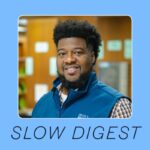
- Slow Digest: Kitonga AlexanderOnce a month throughout the 2025-26 academic year, Slow Digest will feature an episode of C21's 6.5 Minutes With…C21 podcast series, produced by C21 Graduate Fellows Jamee N. Pritchard and Yuchen Zhao. In this episode of 6.5 Minutes with C21, Jamee Pritchard speaks with Dr. Kitonga Alexander, a Milwaukee-based historian, educator, and community organizer. Dr. …
- Slow Digest: In the Wake of Slow CareThis week’s edition of Slow Digest is written by C21 Graduate Fellow Jamee N. Pritchard. It is a reflection and introduction to this year's theme of Slow Care. At 3:56pm on September 27, 2024, my mother took her last breath. In the 5 hours that preceded that breath, I brushed and braided her hair, cleansed her face …
- Slow Digest: Mich DillonOnce a month throughout the 2025-26 academic year, Slow Digest will feature an episode of C21's 6.5 Minutes With…C21 podcast series, produced by C21 Graduate Fellows Jamee N. Pritchard and Yuchen Zhao. In this episode of 6.5 Minutes with C21, graduate fellow Jamee Pritchard interviews Milwaukee-based sculptor and UW-Milwaukee Peck School of the Arts lecturer …
6.5 Minutes With…C21
Our small podcast showcasing BIG ideas. 6.5 Minutes With…C21 was produced, edited, and hosted by C21 Graduate Fellows Jamee Pritchard and Yuchen Zhao. Episodes for our Slow Care series are available via the player below.
Digital Ephemera
C21 produced, commissioned, and supported digital ephemera that served to augment the impact of our Slow Care programming. Browse our 2025-26 zines, reports, and other offerings below.
Our attention activism toolkits, created by Ladasia Bryant, feature instructions for completing the attention exercises crafted by our Story Fellows, and introduce readers to attention activism, a practice that pushes back against the fragmentation of attention by cultivating deeper, more intentional ways of noticing. With these toolkits, you can practice radical attention at any time, in any place, by yourself or with friends.
Inside Volume 1, readers will find guided activities like sound-based listening exercises (Madeleine Doelker-Berlin, “The Listening/Soundbath of the Ordinary”), neighborhood attention walks (Madeleine Doelker-Berlin, “Open Attention Walk”), beach-based storytelling prompts (Adam Carr, “Beach Class”), and memory activation practices that use personal photographs as portals into lived experience (Symphony Swan, “Memory Activation”).
Our attention activism toolkits, created by Ladasia Bryant, feature instructions for completing the attention exercises crafted by our Story Fellows, and introduce readers to attention activism, a practice that pushes back against the fragmentation of attention by cultivating deeper, more intentional ways of noticing. Within their pages are series of creative, community-based exercises designed to help us notice, more deeply and more intentionally, the worlds we move through every day. These exercises are rooted in the idea that attention shapes how we experience ourselves and others and offer simple, grounded practices that reconnect attention to memory, place, and collective experience.
With these toolkits, you can practice radical attention at any time, in any place, by yourself or with friends. Volume 2 includes instructions for the Story Cart: Attention pop-ups that took place from February to May 2026, including Adam Carr’s “Crystal Quest” and “Skyward Ho!,” Madeleine Doelker-Berlin’s “Open Attention Protest,” and Symphony Swan’s “(W)rites of Spring” and “Stills of Milwaukee: Listening as Archive.”
C21 selected Isabella Fincher’s Envision: Toward a Queer Ethics of Slow Care for the inaugural graduate-led public humanities program. The Envision collaborative community zine project, explored creative practices and embodied experiences of slow care for individuals living with chronic illness and impairments. Creative oversight was provided by Isabella Fincher, with editorial support from Carly Davis and Ali Nowaccover, and cover art by Houa S. Vang.
Harlem Masimba, a Milwaukee memory worker and sonic griot, produced a digital soundbath to accompany (W)rites of Spring, a Story Cart: Attention workshop produced by Symphony Swan and led by guest artist Mia Rimmer.
W(rites) of Spring called participants to communicate at the speed of a flower’s unfurling. Rooted in the implosion work central to Mia Rimmer’s interdisciplinary practice, the activation invited all to notice the changing of season as both external and internal ritual. The project halted the urgency of technological correspondence, asking participants to instead transcribe emotion to paper in three forms: long form letter writing, found object collage, and postcards. The open and close of the space gathered participants together to reflect upon the weight and shape of words left unsaid — to a loved one, a lost one, and/or the self. In between, each person explored the grounds of Havenwoods State Forest and let their messages surface in conjunction with the forest’s reawakening.
In October of 2025, the Center for 21st Century Studies hosted a panel on the current state of the humanities in Milwaukee. The panel, moderated by C21’s Director Jennifer Johung, consisted of four humanities advocates: Michael Carriere from the Milwaukee School of Engineering, Arthur Derse from the Medical College of Wisconsin, Jodi Eastberg from the Milwaukee Institute of Art and Design, and Maggie Hoffmann from Marquette University. These panelists offered a multifaceted view of how the humanities are being challenged and reimagined in the contemporary political landscape.
C21 Graduate Fellows Chloe Kwiatkowski and Jamee N. Pritchard distilled the topics and questions discussed during the panel discussion, breakout sessions, and audience survey responses into a single report. Two key insights cut across all three sources: first, the current crisis facing the humanities is political, and second, the humanities are essential for survival, joy, and collective meaning, and not just economic outcomes.