A UW System Center of Excellence, C21 builds a community of scholars to address the pressing issues of our time. Each year, C21 offers fellowships that provide the time, space, and collegial support to generate new knowledge and ideas. C21 centers the humanities in its belief that groundbreaking ideas come from diversity of opinions, disciplines, and experiences.
Our annual call for research fellows is typically published in late September/early October. Applications are accepted through November, and decisions are announced in December for the following academic year.
Research Fellows 2025-2026
Sharity L. Bassett is Assistant Professor of Women’s and Gender Studies and Executive Manager of the Electa Quinney Institute for American Indian Education (EQI) at UWM. Sharity earned her PhD in global gender studies at the State University of New York at Buffalo and has been involved in collaborative research with Haudenosaunee communities since 2011. Her book, Haudenosaunee Women Lacrosse Players: Making Meaning through Rematriation, came out October 1, 2024, through Michigan State University Press. For EQI, she created and directs the Indigenous Kinship & Responsibility Scholarship – which focuses on undergraduate research opportunities across multiple academic disciplines – as well as the Indigenous Felt Knowledge Festival and Artist in Residency program. During this fellowship, Sharity will be working on multivocal and collaborative autofiction, a project she began in summer 2025 with EQI/MMSD interns and a workshop series at Ring Lake Ranch in Wyoming. With this project, she seeks to engage a methodological innovation that brings together three components: (1) a method of co-laboring across difference that integrates intergenerational stories, (2) fiction as a tool of building empathy across difference, and (3) autofiction as developing stronger articulations of why and how we work across difference. This work is focused on creating connected futures by engaging with difficult stories, fostering empathy, and facilitating productive conversations.


Katharine Beutner is an associate professor in the Department of English at the University of Wisconsin-Milwaukee. Previously, she taught at the College of Wooster and the University of Hawai`i at Mānoa. Her second novel, Killingly, won the Edna Ferber Fiction Book Award from the Wisconsin Writers Awards and an Ohio Arts Council Individual Excellence Award. Her first novel, Alcestis, won the Edmund White Debut Fiction Award and was a finalist for other awards, and her writing has appeared in Tinfish, The Los Angeles Review of Books, Public Books, TriQuarterly, The Toast, and other publications. She is a fiction editor at The Dodge, a magazine of eco-writing and translation. In the 2025-2026 fellowship year, she will be completing a revision of the follow-up novel to Killingly and beginning work on a new environmental writing project.


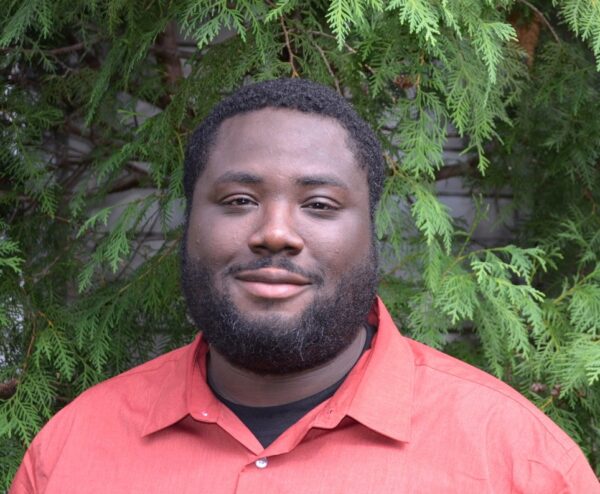
Kidiocus King-Carroll is an Assistant Professor of African & African Diaspora Studies. A native of Milwaukee, he earned his PhD in American Studies from the University of Minnesota, Twin Cities. His scholarly and public work has appeared in Rhizomes, AGITATE!, and the Gender Policy Report, among others. He is also the co-editor of the 2024 anthology Seditious Acts: Graduate Students of Color Critique the Neoliberal University. A scholar of Black Midwestern urban history and Black Queer Studies, King-Carroll is a founding member of the Black Midwest Initiative.
Lynn has been a full-time faculty member of the UW-Superior Social Work Program for over 13 years, primarily teaching the social welfare policy and macro practice courses.
Her expertise is in policy advocacy, community and organizational evaluation and change. She just published an open-source education textbook, Macro Skills for Community and Organizational Change.
She has also worked as a human services consultant in Duluth for 17 years, leading program evaluation, needs assessment and grant writing projects. In this capacity, she has worked with numerous local non-profits and supported the expansion of community mental health services in Northeast Minnesota. This included a regional needs assessment for the Region 3 Adult Mental Health Initiative (2011, 2017, 2024), and the establishment of two Mental Health Local Advisory Councils (LACs) for St. Louis County (2020).
In Superior, she is an active member of the Douglas County Behavioral Health Coordinated Community Response and assisted in the writing of a successful crisis response systems change grant. She is a lead for the Live Well initiative of the UW-Superior’s Pruitt Center for Mindfulness and Well-Being, which focused on connecting people with each other and with themselves and the outdoors.
Lynn has her Master’s in Social Work and Doctor of Education degrees. She also enjoys spending time with friends and family, walking or biking, traveling and doing anything on or near water.
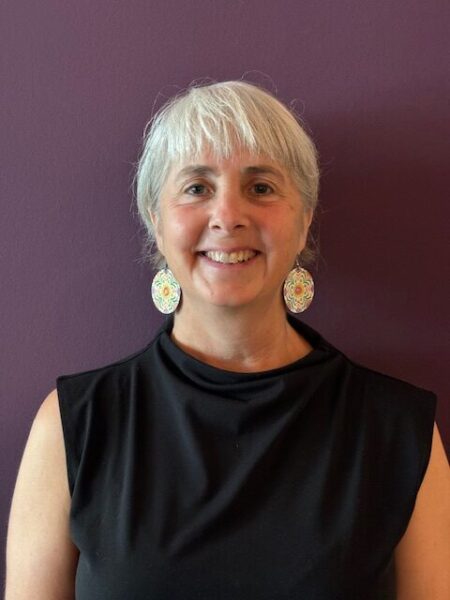
Yevgeniya Kaganovich is a Belarus born, Milwaukee, Wisconsin based artist, whose hybrid practice encompasses durational projects, wearable objects, sculpture and installation. Yevgeniya has received a Masters of Fine Arts form the State University of New York at New Paltz and a Bachelors of Fine Arts in Metal/Jewelry from the University of Illinois at Urbana-Champaign. Yevgeniya has been an active art practitioner since 1992, exhibiting her work nationally and internationally. Her work has received a number of awards and has been published widely.
Yevgeniya’s interests in craft scholarship and pedagogy lead her to undertake curatorial projects, panel and symposium organizing, and other contributions to contemporary craft discourse. Yevgeniya has worked as a Designer/Goldsmith at Peggie Robinson Designs, Studio of Handcrafted Jewelry in Evanston, Illinois and has taught Metalsmithing at Chicago State University, Chicago, Illinois, and Lill Street Studios, Chicago Illinois. Currently Yevgeniya is a Professor in the Department of Art and Design, Peck School of the Arts, at the University of Wisconsin-Milwaukee, where she has been heading a thriving Jewelry and Metalsmithing Area with a graduate and undergraduate programs since 2002.
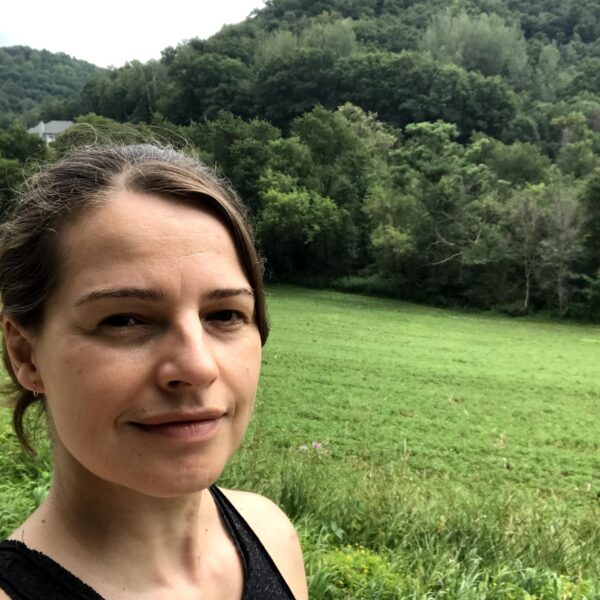
Nan Kim is Associate Professor of History and Affiliated Professor of Anthropology at the University of Wisconsin-Milwaukee, where she teaches as part of the core faculty for programs in Public History, Museum Studies, and Digital Cultures. An interdisciplinary scholar of contemporary history with formal training as a cultural anthropologist, she is the faculty lead for the Science & Technology Studies Working Group at UWM’s Center for 21st Century Studies, and she currently serves on the editorial board of Critical Asian Studies and the executive board of the Society for East Asian Anthropology. She is the author of the award-winning book Memory, Reconciliation, and Reunions in South Korea: Crossing the Divide (Lexington, 2017), and her work has appeared in several publications, including Forces of Nature: New Perspectives on Korean Environments (Cornell University Press, 2023),The Routledge Handbook on Trauma in East Asia (Routledge, 2023), The Journal of Asian Studies, and Arte Internacional (Museo de Arte Moderno de Bogotá). Her research interests include historical trauma, protest memory, visual and material culture, scientific dissent, political ecology, and the nuclear Anthropocene.

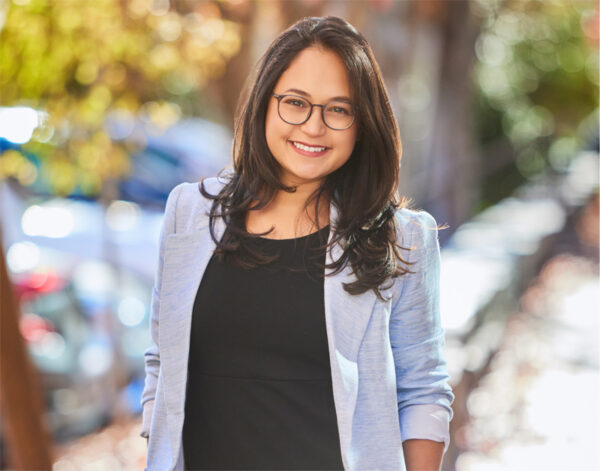
Dr. Gabriela Nagy is a clinician-scientist working at the intersection of psychology and public health. She earned a Bachelor of Science in Psychology from the University of Colorado-Boulder, followed by a Master’s and PhD in Clinical Psychology at the University of Wisconsin-Milwaukee (UWM). She then pursued her clinical internship and postdoctoral fellowship at the Duke University School of Medicine. Dr. Nagy returned to UWM in 2022 as an Assistant Professor in the Department of Psychology.
Dr. Nagy’s research focuses on improving mental health care access and outcomes, particularly for individuals facing systemic barriers to care. Her research lab investigates the social and structural factors influencing mental health, develops and tests psychosocial interventions, and works to implement effective strategies that enhance care delivery. In this way, her work straddles intervention science and implementation science. She utilizes community-based research methods, mixed-methods approaches, and human-centered design. Most recently, her work has been supported by National Institutes of Health and Advancing Healthier Wisconsin and has been published in leading academic journals. Dr. Nagy is an Associate Editor for the Journal of Health Service Psychology as well as the Journal of Latinx Psychology.
In addition to her research, Dr. Nagy teaches and mentors undergraduate and graduate students, training the next generation of psychologists and public health researchers. She also collaborates with community organizations to ensure that her work has a real-world impact.
Outside of work, Dr. Nagy enjoys creating art with different media, running, practicing meditation and yoga, and reading.
Graduate Fellows 2025-2026

Chloe Kwiatkowski is a doctoral student in English with a focus on media, cinema, and digital studies at the University of Wisconsin-Milwaukee. Her research examines the intersections of film history and the history of drugs and pharmaceuticals, with an emphasis on pharmaceutical advertising and the medical field’s utilization of moving images. At UW-Milwaukee, she teaches first-year composition, English 100 and English 102, and serves as a teaching assistant for film history courses. Beyond her academic work, Chloe is passionate about her Milwaukee community, especially when it comes to sharing her love for the humanities, particularly film. Off campus, she can be found wherever the projector hums or speakers pulse, from the historic Oriental Theater to the many music venues across Milwaukee.
Ceceilia Loeschmann is a master’s degree candidate in the coordinated M.L.I.S. and Art History program at the University of Wisconsin-Milwaukee. Her research examines the work of Christo and Jeanne-Claude’s impact on contemporary art and architecture through the lens of performance art. Exploring the relationship between the artists sustained negotiations, public interaction with the built environment, and architectural reimagining. Her other research interests broadly include design and visual culture, interface design, and the activation of archives and collections.
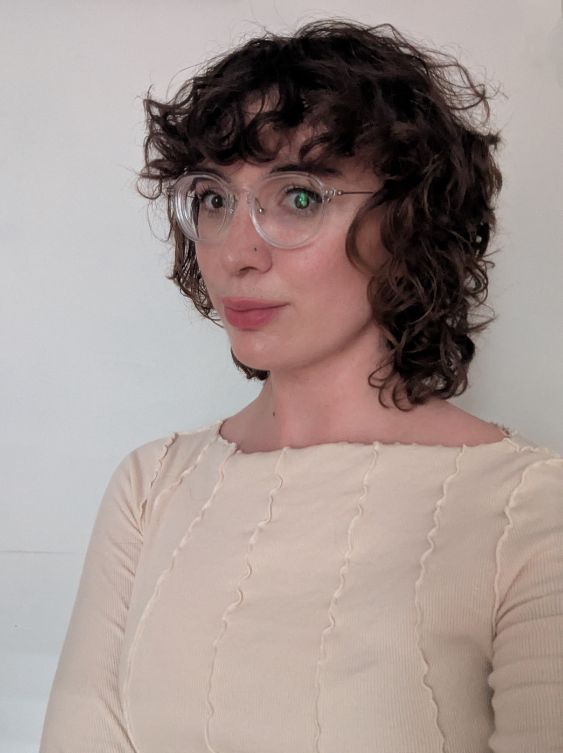
Jamee Pritchard is a doctoral candidate in African and African Diaspora Studies at the University of Wisconsin-Milwaukee. Her educational and professional background is in library and information science (MLIS, 2017) and public history (MA, 2020), focusing on the research, organization, and curation of archives and special collections that center the histories and cultures of women and girls from Black, Indigenous, and People of Color (BIPOC) communities. Other research interests include Black women’s writing and literary activism and Black readerships of popular romance and speculative literatures. Ms. Pritchard is currently working on her dissertation project that examines Black girls’ engagement with speculative fiction (e.g. science fiction, fantasy, and horror novels) and considers the potential of Black women’s speculative fiction storytelling as an alternative archive for the study of Black girlhood.

Yuchen Zhao is a PhD Candidate from Urban Studies Program at UWM. His general interest lies in exploring the ways of seeing, describing, interpreting, and speculating on how everyday built environments have given shape and meaning to social life. He is also interested in how food culture, food traditions, and food-related practices both shape, and are shaped by, the nature of the landscape and people’s relationship with it.
