
- sternn@uwm.edu
- 414-251-6004
- Kenilworth Square East 535
- He / Him
Nathaniel Stern
- Professor, Creative Technologies / Mechanical Engineering
- Co-Chair, Department of Art & Design
- Director, Academic Engagement and Creative Impact
- Executive Director, Autism Brilliance Lab for Entrepreneurship
Education
- PhD, Electronic and Electrical Engineering, Trinity College Dublin, Ireland, 2009
- MPS, Interactive Telecommunications Program (Computer Art), Tisch School of the Arts, New York University, 2001
- BSc, Design, Cornell University, 1999
Biography
Nathaniel Stern is an interdisciplinary artist, engineer, and researcher whose work explores how humans co-evolve with technology—especially artificial intelligence. His recent work focuses on how art can support thinking, creating, and making meaning with and about AI. Stern is a Professor of Art & Design (Creative Technologies) at the University of Wisconsin–Milwaukee (UWM), with a joint appointment in Mechanical Engineering. He is also Director of Academic Engagement and Creative Impact at UWM’s Lubar Entrepreneurship Center (LEC).
Stern’s primary research centers on post-AI art and design. His practice-based approach examines agency, aesthetics, creativity, and power as new technologies become embedded in everyday life. Through interactive installations, generative media, sculpture, computational artworks, and hybrid forms that include print and video, his work advances conversations around human–AI creative collaboration. He asks how authorship, responsibility, and decision-making shift when artists and others work with intelligent systems rather than simply using them as tools.
A central thread in Stern’s current research is ecological and material thinking in AI-driven art. Rather than treating artificial intelligence as invisible software, his projects make datasets, models, and computational processes visible and tangible. This approach foregrounds the environmental, ethical, and cultural costs of computation while emphasizing intention over automation and friction over polish. His most recent exhibition, created in collaboration with poet Sasha Stiles, explores historical technologies—from language to photography—alongside computational and ecological art, placing contemporary AI systems within longer trajectories of human–technology evolution. New projects investigate the AI gaze, and the aesthetics of systems that learn, degrade, and evolve over time.
Stern’s research is deeply collaborative and regularly crosses disciplinary boundaries. He works with engineers, data scientists, designers, artists, and students to build creative AI systems, interactive tools, and experimental platforms that support both artistic inquiry and public engagement. These collaborations extend into teaching and curriculum development, where he integrates experiential learning, design thinking, and entrepreneurship into studio-based and research-driven courses.
His work has been exhibited internationally and supported by grants and fellowships across the arts, sciences, and humanities. This includes leadership as Executive Director of the NEA-funded Autism Brilliance Lab for Entrepreneurship and participation in NSF-funded climate research. In addition to his studio practice, Stern is actively involved in building research infrastructure around AI and creativity, including initiatives that examine the cultural futures of artificial intelligence and the role of artists in shaping them.
Through exhibitions, publications, and public scholarship, Stern aims to make emerging technologies legible, critical, and creatively generative—inviting broader audiences to consider not only what AI can do, but how we choose to guide, live and create with it.
Links
Recent & Selected Works
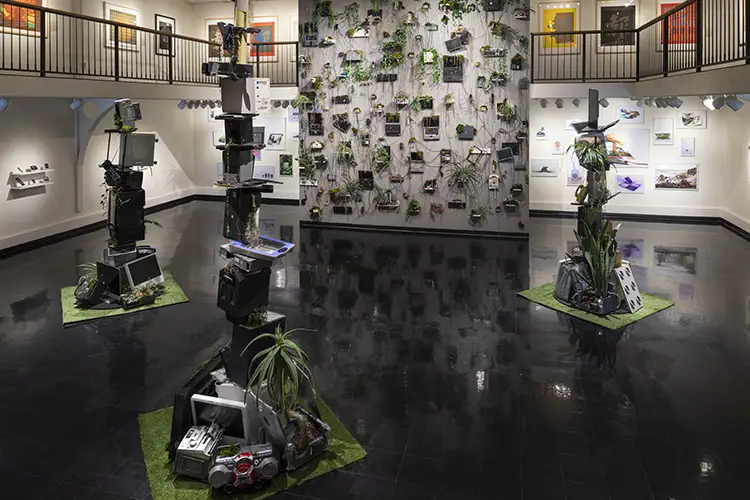

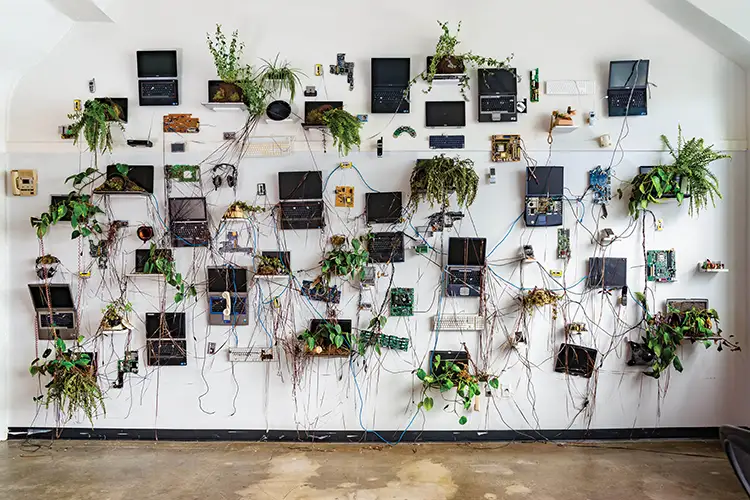
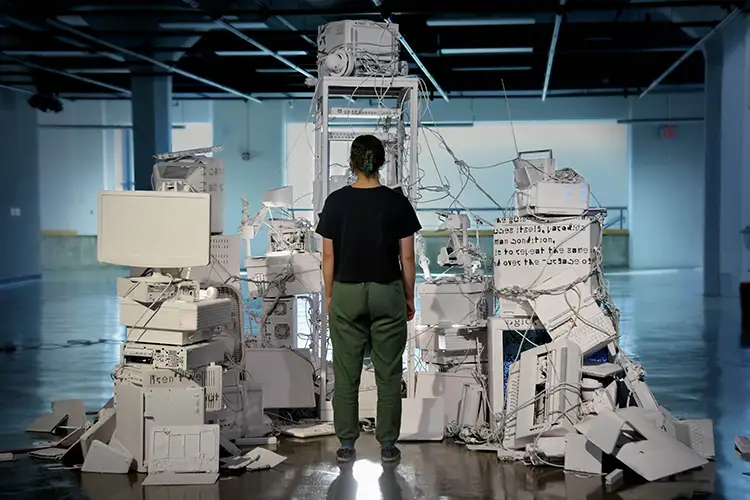
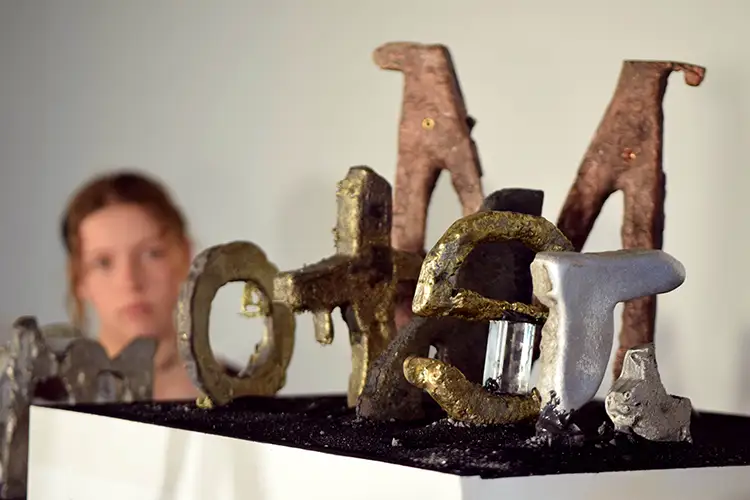
Artistic Exhibitions & Artwork
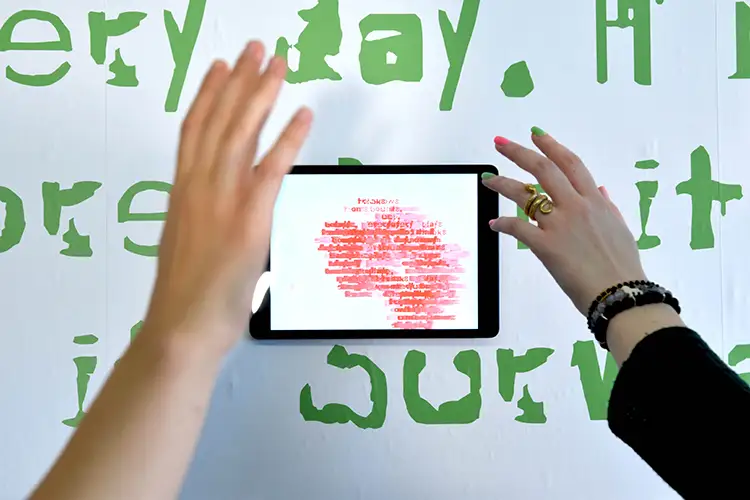
- Stern, Nathaniel; Stiles, Sasha. Generation to Generation: Conversing with Kindred Technologies. 2025–2027, Krasl Art Center (St. Joseph, MI); Kenilworth Gallery, University of Wisconsin–Milwaukee (Milwaukee, WI); Museum of Art and Light (Manhattan, KS); ongoing.
- Stern, Nathaniel. The World After Us: Imaging Techno-Aesthetic Futures. 2020–2023, Museum of Wisconsin Art Downtown at Saint Kate – The Arts Hotel (Milwaukee, WI); Binghamton University Art Museum (Binghamton, NY); Krasl Art Center (St. Joseph, MI).
- Stern, Nathaniel. Circuit Boardwalk. 2022, IBM commissioned public artwork at Binghamton University, Engineering Building Plaza (Binghamton, NY).
- Stern, Nathaniel. Selected exhibitions at the International Symposium on Electronic Art (ISEA), including ISEA2012 (Albuquerque, NM); ISEA2015 (Vancouver, Canada); and ISEA2018 (Durban, South Africa).
- Stern, Nathaniel; Kildall, Scott. Made Real. 2011, Furtherfield Gallery (London, UK).
Awards
- Lumen Prize Finalist (twice), 2024 and 2025.
- Transmediale Award Finalist, Berlin, Germany, 2015.
- Fulbright Specialist Grant, University of Johannesburg, South Africa, 2013.
- Leonardo Abstracts (MIT Press), Best Dissertation Award, 2012.
- Artist-in-Residence, Cornell University, Ithaca, NY, 2002.
Books
- Stern, Nathaniel. Ecological Aesthetics: artful tactics for humans, nature, and politics. Dartmouth College Press, 2018.
- Stern, Nathaniel. Interactive Art and Embodiment: The Implicit Body as Performance. Gylphi, 2013.
Grants/Funded Research
- Autism Brilliance Lab for Entrepreneurship (ABLE). National Endowment for the Arts (NEA, Federal), 2019–2026. Principal Investigator and Executive Director. Three competitive federal awards totaling approximately $400,000 supporting research, creative production, and entrepreneurship for neurodivergent artists and innovators.
- NSF I-Corps Customer Discovery Grant. National Science Foundation (NSF, Federal), 2022–2023. Principal Investigator. $50,000 supporting customer discovery and commercialization research for climate action.