
The Department of Art History of the College of Letters and Science at the University of Wisconsin-Milwaukee offers a graduate program leading to the Master of Arts degree in art history.
The program is designed to provide students with a solid academic foundation upon which to base a career in the arts or to prepare for PhD-level work at other universities. The University of Wisconsin-Milwaukee has earned the highest rating for a research institution from the Carnegie Classification of Institutions of Higher Education, and the Department of Art History plays an integral role in the university’s broader research mission.
Incoming students are required to take a methodology course in their first fall semester. After completion of nine credits of course work, students must demonstrate proficiency in a foreign language by passing a written translation examination. In general course work, students will develop breadth by taking courses in at least four different art-historical areas. Course offerings cover the full range of Western art, from ancient to contemporary, as well as Asian, Islamic, African, and Pre-Columbian art.
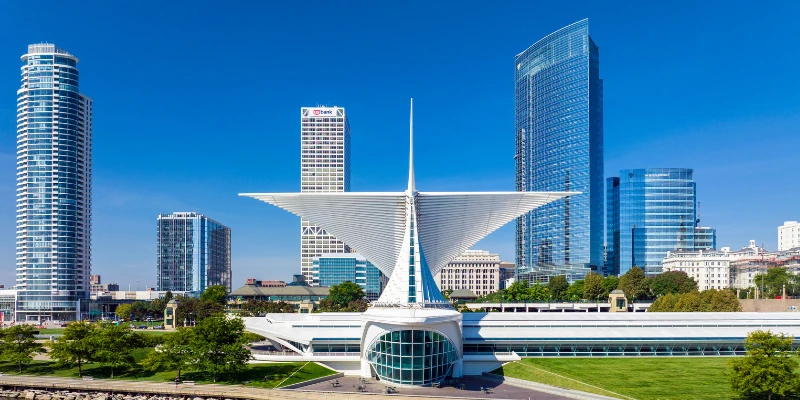
Internships are required for students pursuing both the Thesis and Curatorial Tracks. Students usually serve internships in Milwaukee area museums and other local institutions for course credit. Students have held internships at the Emile H. Mathis Gallery, Milwaukee Art Museum, the Haggerty Museum of Art at Marquette University, the Chipstone Foundation, the Museum of Wisconsin Art, the Kohler Foundation, the Museum Public Museum, and a variety of local galleries.
To qualify for graduation, students will produce either a thesis on a scholarly problem or a thesis exhibition with a scholarly catalogue. Students must complete all degree requirements within five years of initial enrollment. It is expected that a full-time student will complete all requirements for the degree within two to three years.
Prospective Graduate Students
Questions regarding the application or the application process should be directed to the UWM Graduate School at gradschool@uwm.edu or 414-229-6569.
Current Graduate Students
Questions about research opportunities, department funding opportunities, or issues specific to the discipline should be directed to Derek Counts.
Graduate Programs

Ready to Apply?
Select the program that’s right for you, and you will find more instructions on how to apply and what to expect.
Graduate Student Resources



Campus Resources
Enhance your college experience and unlock even more opportunities on campus. Start career planning, participate in wellness activities, conduct cutting-edge research and more.