
Rehabilitation Science & Technology: Sport and Performance Psychology (SPP) MS
The world of sport and performance (e.g., performing arts, and military) is increasingly embracing the importance of psychology and mental skills as instrumental for optimal performance. Appropriately trained and credentialed sport and performance psychology professionals are instrumental in helping athletes and performers to reach their full potential.
The MS Rehabilitation Science and Technology (MS-RST) Sport and Performance Psychology (SPP) track is designed for students who wish to help various performers (e.g., sport, performing arts, and military) to develop and use various mental, life, and self-regulatory skills with a goal to optimize performance, enjoyment, and personal development..
Depending on the student’s career goal, the SPP track can prepare the student for a path to (a) a graduate professional degree program, (b) advanced research-based graduate studies, and/or (c) obtaining the CMPC® credential through the Association for Applied Sport Psychology (AASP).
Program Type
Master’s
Program Format
On Campus
Sport and Performance Psychology is
“a proficiency that uses psychological knowledge and skills to address optimal performance and well-being of athletes, developmental and social aspects of sports participation, and systemic issues associated with sports settings and organizations.” (American Psychological Association, 2024)

- MS-RST SPP track provides students opportunities to study specialized knowledge in the eight knowledge areas (K1–K8) identified by the Association for Applied Sport Psychology (AASP).
- Depending on the student’s chosen sport and performance psychology path, the curriculum can also provide students opportunities to complete mentored experience hours with AASP Approved Mentors.
- All students have the opportunity to participate in research, either through a thesis or capstone project experience, by working closely with a faculty advisor.
- Faculty has wide range of international and national experiences in teaching, research, and applied sport and performance psychology practice.
Employment Outlook
The U.S. Bureau of Labor Statistics (BLS) does not track sport and performance psychology specifically, but estimates an overall demand for psychology to increase 6% from 2022 to 2032.
How to Become a Sport Psychologist: Salary, Education Requirements and Job Growth
Association for Applied Sport Psychology Featured Jobs
Successful Alumni
Graduate programs in sport and performance psychology at UWM has many successful alumni. You can find out more of their career paths from the Sport and Performance Psychology Laboratory pages.
Related Programs
To apply for the Master of Science in Rehabilitation Science & Technology: Sport and Performance Psychology (MS-RST SPP), all application materials must be submitted through the UWM Graduate Application Portal. The MS-RST SPP seeks to admit highly qualified students interested in a career in sport and performance psychology.
Application Deadline
MS-RST SPP accepts rolling admissions.
Admission Criteria
Students must meet the general requirements of admission to a graduate program at UWM. As stated by the Graduate School, these requirements include:
- a baccalaureate degree, or its equivalent as determined by the UWM Center on International Education, from a regionally accredited institution, completed before the first term of enrollment in the Graduate School;
- proficiency in the English language, and;
- a minimum cumulative undergraduate grade point average (GPA) of 2.75 on a 4.0 scale, or an equivalent measure on a grading system that does not use a 4.0 scale.
Additional admission requirements include:
- transcripts from all university degrees/coursework;
- reasons statement that include a rationale and career goals;
- current resume or curriculum vitae, and;
- two letters of recommendation from persons most knowledgeable about the applicant’s recent academic and relevant work experiences.
- The MS-RST SPP encourages submission of GRE scores.
- The general test of the GRE should have been taken within the last five years. Applicants are encouraged to complete the GRE approximately six months before application submission, if not sooner. This allows an applicant to repeat the test to increase scores if desired. Applicants are encouraged to prepare in advance for the test. Additional information (including preparation materials) is available on the GRE’s website. UWM’s institutional GRE Code is 1473.
Prerequisites
Students applying to the MS-RST SPP must have completed the following undergraduate prerequisites:
- statistics (3 credits);
- laboratory-based natural sciences (4 credits), and;
- psychology.
A grade of B- or better must have been obtained in each prerequisite course. Prerequisites will be verified through transcript review at the time of application. Students deemed not to have satisfied one or more of the prerequisites may be admitted on probation and complete the prerequisite(s) as deficiency credits within their first two semesters. Deficiency coursework will not count towards the MS-RST degree.
Additional Requirements
- The Graduate School requires that each student have a major professor to advise, supervise, and approve the program of study.
- Students are assigned a faculty advisor upon acceptance to the program.
- The student must complete all degree requirements within seven (7) years of initial enrollment.
The MS in Rehabilitation Science and Technology is a flexible 30-credit graduate program, consisting of core, foundation, and specialization courses. For more details on course and credit requirements, please visit the course catalog:
https://catalog.uwm.edu/health-professions-sciences/rehabilitation-sciences-technology/rehabilitation-science-technology-ms/#requirementstext
Prospective Students
If you have questions about pursuing a career in sport and performance psychology, reach out to:
Dr. Monna Arvinen-Barrow
Associate Professor
Program Director
Email: arvinenb@uwm.edu
Office: PAV370
Curriculum Vitae
Dr. Barbara B. Meyer
Professor
Director, Sport and Performance Psychology Laboratory
Email: bbmeyer@uwm.edu
Office: PAV369
Curriculum Vitae
For more information on graduate programs in sport and performance psychology at UWM, please visit the Sport and Performance Psychology Laboratory website.
To learn more information about typical educational and licensure/certification requirements in the United States, please read Paths to a Career in Sport and Performance Psychology.
Students
At UWM, students in MS programs are assigned a Faculty Advisor upon admission. Depending on the MS-RST program track you are enrolled in, and your program of study, you will also be assigned a Capstone Project Chair or a MS Thesis Chair. For students in SPP track, you might also be assigned a Mentored Experience Supervisor. It is possible that one person may serve in various roles. To avoid confusion, below you will find brief explanations of various faculty roles at UWM related to MS-RST.
Capstone Project Chair is a UWM faculty, who is also a member of the School of RST Graduate Faculty, responsible for supervising your capstone experience.
Mentored Experience Supervisor is a UWM faculty with Approved Mentor status by Association for Applied Sport Psychology (AASP), and assigned for students on SPP track. They are responsible for managing clinical placement, managing, planning, preparing, evaluating, and assessment of Mentored Experience hours, including Direct Client Contact, Support Activities, Mentoring and Direct Knowledge of Services.
Course Instructor is a member of the UWM faculty responsible for course delivery. Depending on your program of study, your course instructors may belong to other UWM schools and colleges (e.g., counseling, engineering, kinesiology, psychology, social work).
Faculty Advisor is a UWM faculty, who is also a member of the School of RST Graduate Faculty, and typically responsible in assisting and guiding you throughout your studies.
MS Thesis Chair is a UWM faculty, who is also a member of the School of RST Graduate Faculty, and responsible for guiding your independent study courses and thesis courses.
MS Thesis Committee Member is a UWM faculty, who is also a member of the School of RST Graduate Faculty, chosen by you and your Thesis Chair to be a member of your Thesis Committee.
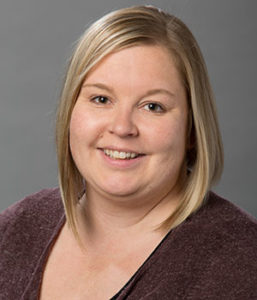
- Associate Professor, Athletic Training & Sport Psychology
- Program Coordinator, MS, Rehabilitation Science & Technology
- Program Director, PhD, Health Sciences
- arvinenb@uwm.edu
- 414-251-7428
- Pavilion 370