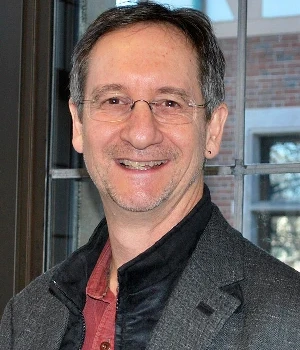
Photo of David Osmon

David Osmon

  • Professor Emeritus, Psychological & Brain Sciences

Education

Ph.D., University of South Dakota, 1979

Courses Taught

  • PSYCH 205 - Introduction to Personality
  • PSYCH 550 - History of Psychology
  • PSYCH 570 - History of Psychology
  • PSYCH 831 - Assessment I
  • PSYCH 833 - Neuropsychology
  • PSYCH 911 - Neuropsychological Assessment

Teaching Interests

Dr. Osmon's teaching and research interests encompass the general area of medical psychology with an emphasis on neuropsychology.

Research Interests

The structure of cognition is the central focus of our research with three current approaches to this issue. The first involves using fMRI to map cortical activation associated with orthographic deficits in people with dyslexia. The second involves determining processing disorders associated with learning disability in general using neuropsychological data collected from the Learning Disability Clinic and typically consists of multivariate statistical manipulations (e.g., cluster analysis, factor-analysis, and structural equation modeling of large data sets). The third approach involves experimentally developed chronometric measures (e.g., simple and choice reaction time, local/global, negative priming, Stroop, etc.) that fractionate cognitive functions into their component elements. This work is carried out on various populations, including psychiatric, neurologic, and learning disabled and non-disabled college students and is preclinical in nature, seeking to provide a basis for clinical test development.

Selected Publications

Mahoney, E. J., Kapur, N., Osmon, D. C., & Hannula, D. E. (2018) Eye tracking as a tool for the detection of simulated memory impairment. Journal of Applied Research in Memory and Cognition.
Gracian, E. I., Osmon, D. C., & Mosack, K. E. (2016) Transverse patterning, aging, and neuropsychological correlates in humans. Hippocampus/Wiley Periodical, 26(12), 1633-1640.
Mano, Q. R., Williamson, B. J., Pae, H. K., & Osmon, D. C. (2016) Stroop interference associated with efficient reading fluency and prelexical orthographic processing. Journal of Clinical and Experimental Neuropsychology, 38(3), 275-283.
Santos, O. A., Kazkov, D. , Reamer, M. K., Park, S. E., & Osmon, D. C. (2014) Effort in College Undergraduates Is Sufficient on the Word Memory Test. Oxford University Press, 29(7), 609-613.
Mano, Q. R., Humphries, C. , H, D. R., Seidenberg, M. S., Osmon, D. C., & Binder, J. R.(2013) The role of left occipitotemporal cortex in reading: Reconciling stimulus, task, and lexicality effects.Osmon, D. C.(Ed). Cerebral Cortex, Oxford Journals, 23(4), 988-1001.

UWM Land Acknowledgement: We acknowledge in Milwaukee that we are on traditional Potawatomi, Ho-Chunk and Menominee homeland along the southwest shores of Michigami, North America’s largest system of freshwater lakes, where the Milwaukee, Menominee and Kinnickinnic rivers meet and the people of Wisconsin’s sovereign Anishinaabe, Ho-Chunk, Menominee, Oneida and Mohican nations remain present.   |   To learn more, visit the Electa Quinney Institute website.