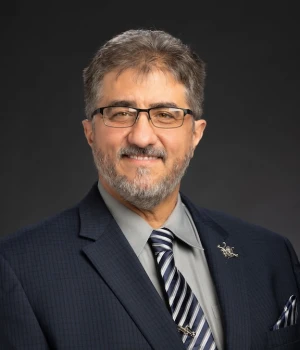
Photo of Peter Lenz

Peter Lenz

  • Associate Teaching Professor, Department of Psychological and Brain Sciences

Education

  • PhD, Psychology, University of Wisconsin - Milwaukee, 2005
  • MS, Psychology, University of Wisconsin - Milwaukee, 1998
  • BS, Psychology, Salem State University, Salem, MA, 1995

Office Hours

Fall 2025:

  • MW 8.00 - 9.00 AM
  • T 11.30 AM - 1.00 PM

or by appointment;

in person or via Zoom

Teaching Schedule

Course Num Title Meets
PSYCH 325-202 Research Methods in Psychology No Meeting Pattern
PSYCH 325-401 Research Methods in Psychology MW 10am-11:15am
PSYCH 325-801 Research Methods in Psychology W 11:30am-12:20pm
PSYCH 325-802 Research Methods in Psychology W 4:30pm-5:20pm
PSYCH 325-803 Research Methods in Psychology F 11:30am-12:20pm
PSYCH 325-901 Research Methods in Psychology No Meeting Pattern
PSYCH 325-902 Research Methods in Psychology No Meeting Pattern
PSYCH 325-903 Research Methods in Psychology No Meeting Pattern
PSYCH 325-904 Research Methods in Psychology No Meeting Pattern
PSYCH 503-201 Perception No Meeting Pattern
PSYCH 503G-201 Perception No Meeting Pattern
PSYCH 692-001 Field Placement in Psychology No Meeting Pattern

Courses Taught

  • PSYCH 101 - Introduction to Psychology
  • PSYCH 325 - Research Methods in Psychology
  • PSYCH 503 - Perception
  • PSYCH 623 - Perceptual Processes
  • PSYCH 692 - Field Placement in Psychology

Research Interests

The research that Dr. Lenz has been engaged in with the Auditory Perception Laboratory at UWM involves the use of high order filtering of speech and noise. The research is actively exploring the ability to use noise to mitigate the impact of amplitude "rollover of intelligibility" for degraded speech signals. Such rollover of intelligibility can cause problems for users of hearing assistive devices: by the time the amplitude of the auditory signal is high enough for the hearing impaired to "hear" it, the rollover of intelligibility cause by the amplitude itself can impair the usefulness of the device.  Recent research in this lab has illustrated that the intelligibility of high amplitude filtered speech can be enhanced by the use of interpolated noise. This appears to be due to a reduction in the spread of activation that causes the rollover effect.

Selected Publications

Warren, R. M., Bashford Jr, J. A., & Lenz, P. W. (2018). Arrays of rectangular subcritical speech bands: Intelligibility improved by noise-vocoding and expanding to critical bandwidths. The Journal of the Acoustical Society of America, 143(4), EL305-EL310.
Bashford, J. A., Jr., Warren, R. M., & Lenz, P. W. (2017). Maintaining intelligibility at high intensities with arrays of subcritical width speech bands and interpolated noise. Journal of the Acoustical Society of America, 142(3), EL299-EL305.
Warren, R. M., Bashford, J. A., Jr., & Lenz, P. W. (2017). Critical bandwidth speech: Arrays of subcritical band speech maintain near-ceiling intelligibility at high amplitudes. Journal of the Acoustical Society of America, 141(3), EL222-EL227.
Lenz, P. W. & Bashford, J. A. (2015). Arrays of subcritical width rectangular speech bands with interpolated noise maintain intelligibility at high intensities. The Journal of the Acoustical Society of America, 138(3), 1781-1781.
Warren, R. M., Bashford, J. A., Jr., & Lenz, P. W. (2015). How broadband speech may avoid neural firing rate saturation at high intensities and maintain intelligibility. Journal of the Acoustical Society of America, 137(4), EL340-EL346.
Warren, R. M., & Lenz, P. W. (2015). Maintaining speech intelligibility at 100 dB using arrays of subcritical width rectangular bands. The Journal of the Acoustical Society of America, 138(3), 1781-1781.
Warren, R. M., Bashford, J. A., Jr., & Lenz, P. W. (2014). Arrays of subcritical width rectangular speech bands maintain intelligibility at high intensities. Proceedings of Meetings on Acoustics, 21. 060004.
Bashford, J. A., Jr., Warren, R. M., & Lenz, P. W. (2013). Maintaining intelligibility at high speech intensities: Evidence of lateral inhibition in the lower auditory pathway. Journal of the Acoustical Society of America, 134(1), EL119 – 25.
Warren, R. M., Bashford, J. A., Jr., & Lenz, P. W. (2011). An alternative to the computational Speech Intelligibility Index estimates: Direct measurement of rectangular passband intelligibilities. Journal of Experimental Psychology: Human Perception and Performance, 37, 296 – 302.

UWM Land Acknowledgement: We acknowledge in Milwaukee that we are on traditional Potawatomi, Ho-Chunk and Menominee homeland along the southwest shores of Michigami, North America’s largest system of freshwater lakes, where the Milwaukee, Menominee and Kinnickinnic rivers meet and the people of Wisconsin’s sovereign Anishinaabe, Ho-Chunk, Menominee, Oneida and Mohican nations remain present.   |   To learn more, visit the Electa Quinney Institute website.