Global Health Certificate
Paired with a related major, the global health certificate prepares students to work in changing environments and with more diverse populations. Students will be able to respond to the challenges presented by permeable geographic and cultural boundaries.
Why Global Health Matters: The world is economically, politically, culturally, and technologically connected and interdependent. Increasingly mobile populations seeking economic opportunity, security and safety. They are often displaced by civil unrest, regional conflicts, diminished natural resources, poverty and disease. Some health issues remain isolated and contained to locations or populations, but health matters increasingly transcend geographic boundaries. This means the approaches and solutions to such issues must involve a global approach, and graduates who can do so will be in high demand.
Program Type
Undergraduate Certificate
Program Format
Hybrid, On Campus, Online
Study Abroad with UWM School of Nursing
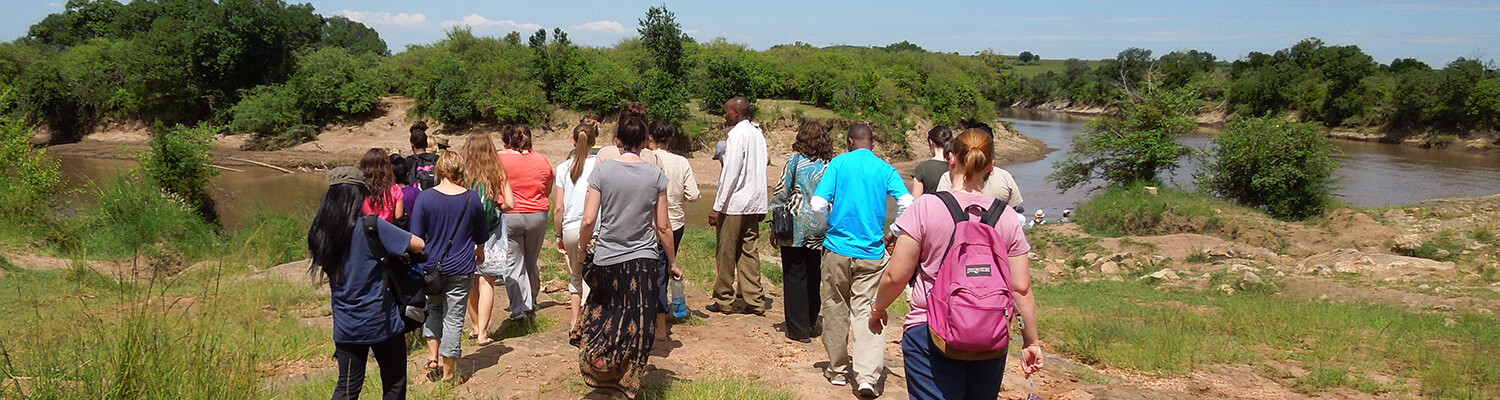
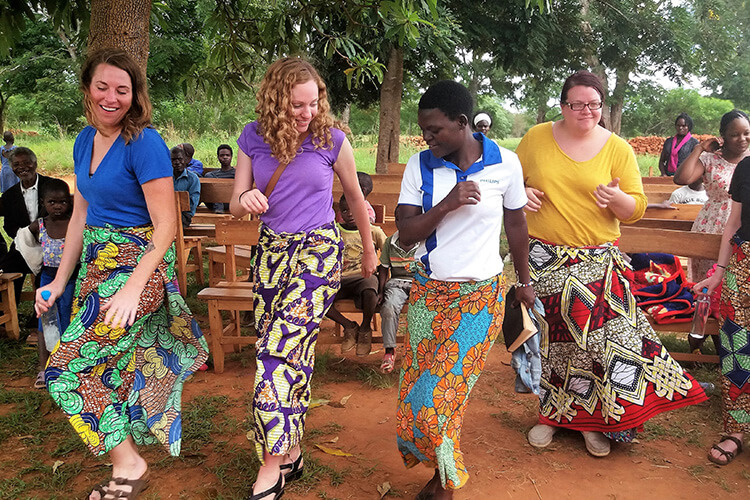
Immerse yourself in cultures and customs all over the world. UW-Milwaukee nursing students can practice their skills with life-changing study abroad trips in Kenya and Thailand that expose students to a wide variety of health traditions.
A newly revised and streamlined undergraduate certificate in global health provides students with knowledge of:
- the global burden of disease
- the social determinants of health in a global context
- the principles, language and measurement tools used in global health
- ethics and global health
- the global cultural, religious, environmental and historical contexts of health, disease and health care
There are many complementary majors to the global health certificate, including nursing, and the health sciences, public health, biology or biochemistry on a pre-med track, conservation and environmental science, geography, global studies, political science, religious studies and many more.
The global health certificate is open to both undergraduates or graduate students and may be earned in conjunction with any UWM degree program. Nondegree seeking students are also welcome, including those who previously earned a bachelor’s degree and those who do not hold a bachelor’s degree but who have a strong interest in the subject matter.
Students must complete, with a minimum grade point average of 2.50, at least 15 credits in approved global health courses.
Credits earned at other institutions equivalent to courses in the certificate program may be accepted in partial fulfillment of the program requirements, subject to review by the Certificate Program advisor.
A maximum of 3 credits of independent study may count toward program requirements. Courses for the certificate may not be taken on a credit/no credit basis. The following are required:
Two required core courses (6 credits)
| Course | Course Number | Credits |
|---|---|---|
| Introduction to Public Health | PH 101 | 3 |
| Introduction to Global Health | NURS 301 | 3 |
| Choose one of the following: Cultural Diversity in Health Care Lifeways in Different Cultures: A Survey of World Societies The World: Peoples and Regions World History since 1500 Politics of the World’s Nations World Society | CHPS101 ANTHRO 104 GEOG 110 HIST 132 POL SCI 106 SOC 103 | 3 |
| Electives: Select at least two courses (minimum of 6 credits) from the list below) | 6 | |
| Total Credits | 15 |
Electives: Select at least two courses (minimum of 6 credits) from the following:
| Course | Course Number | Credits |
|---|---|---|
| Economic Growth and Sustainable Development in Africa | AFRICOL 329 | 3 |
| Sex, Marriage, and Health Care in the Afroworld | AFRICOL 351 | 3 |
| Introduction to Anthropology: Culture and Society | ANTHRO 102 | 3 |
| Lifeways in Different Cultures: A Survey of World Societies | ANTHRO 104 | |
| Medical Anthropology | ANTHRO 440 | 3 |
| Medicine and Pharmaceuticals in the Golden Age | ANTHRO/GLOBAL 443 | 3 |
| The Global Politics of Human Rights | ANTHRO 447 | 3 |
| Multicultural America | ART 150 | |
| Plagues, Pandemics, and Epidemics | BMS 204 | 3 |
| Introduction to Conservation and Environmental Science | CES 210 | 3 |
| Economic Development | ECON 353 | 3 |
| Global Violence, Disease, and Death | ETHNIC 375 | 3 |
| Multicultural America | FILM 150 | 3 |
| Multicultural America | HIST 150 | 3 |
| Global Maternal/Child Health: From Evidence to Action | NURS 204 | 3 |
| Honors Seminar | NURS 380 | 3 |
| Global Patterns of Disease | NURS 401 | 3 |
| Study Abroad | NURS 297/497 | 3 |
| Global Health: Ethics and Human Rights | NURS 575 | 3 |
| Global Food Security and Systems | NURS 620 | 3 |
| Global Health Governance: Frameworks, Key Players, Financing, 3 Challenges, and Innovations | NURS 690 | 3 |
| Climate Change, the Environment, and Human Health | PH 303 | 3 |
| Comparative Health Systems: A Social Determinants Approach | PH 408 | |
| Health, Wealth and Democracy | POL SCI 374 | 3 |
| Population and Society | SOCIOL 472 | 3 |
| Health Issues in the Hispanic World | SPANISH 388 | 3 |
Other courses not on this list but relevant to the study of global health may be accepted with the approval of the UG Global Health Certificate Program Advisor or Director.
A global health certificate applies to careers not only in health care, but also government, nonprofits, education or international business.
Careers in global health require skills for working internationally as well as within globally focused organizations based in the United States.
Certificate students gain competence in identifying and analyzing the factors that generate disparities in health status, health resources and access to health information and health services. In particular, certificate holders have an understanding of how global health issues impact ethnic minorities and other marginalized and vulnerable population groups.
Depending on their major, students with this skill set will find varied opportunities to act as agents of change for disease prevention and health initiatives domestically and abroad in developing nations. Students with a medical-oriented major may work for government or nonprofit agencies developing programs and providing on-the-ground access for areas dealing with infectious and tropical diseases.
Students with a major in the social sciences may find work with organizations dedicated to mental illness and the health consequences of war or instability. A strong background in different cultural and religious practices combined with this certificate can prepare students for work in preventive maternal and child health care programs, a high priority need in the developing world. Business-oriented majors might enjoy the essential financial and management work needed to establish a strong health care infrastructure where one currently does not exist.
For more information about this certificate, please work with your program advisor in addition to Connor Sampson.
