By Kathleen Quirk
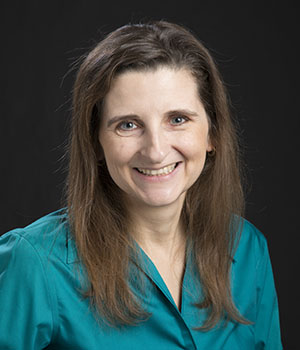
Nadine I. Kozak will become the associate dean and head of school for the University of Wisconsin-Milwaukee School of Information Studies May 25.
Kozak, associate professor of information studies, is excited about the new role.
“I really look forward to helping students succeed and figuring out what I, and the faculty and staff, can do to help. It’s such a very cool opportunity.”
Kozak brings a blend of teaching, research and administration experience to the position.
Her academic background was interdisciplinary, but eventually led her to UWM and a focus on information policy.
“I started as a history major in college,” she said. Then she turned to media studies to learn more about the history of telephones, radios, the Internet, and other communication devices.
Her undergraduate degree in history is from the University of Calgary; her master’s degree in communications from Carleton University, and her Ph.D. in communication and science studies at the University of California, San Diego.
“I really look forward to helping students succeed and figuring out what I, and the faculty and staff, can do to help. It’s such a very cool opportunity.”
Her work in communications led to policy research and information studies. She came to UWM in 2011 for her post-doctoral fellowship in information policy. She joined the faculty as an assistant professor in the 2012-2013 academic year and became an associate professor in 2019.
Shortly before Dietmar Wolfram, the previous associate dean and head of school, retired in 2024, Kozak was asked to take on more administrative responsibilities. She found out she liked it. She said, “It’s definitely a shift. I love the classroom, but it’s a nice change. I can serve students differently now and that’s really appealing.”
Her role as head of school will give her the opportunity to start and continue work on issues the school is facing.
Enrollment is a key concern. Like most other universities and programs, SOIS faces a “demographic cliff,” she said. The overall number of traditional college age students is declining, and young people are choosing other career and education options.
UWM and SOIS have been successful in attracting nontraditional age students, many already in the workforce, which counters some of this demographic shift, according to Kozak. SOIS needs to continue to support these students as well as traditional students, she said.
“There are a lot of learners, not just traditional college learners,” she said. “That’s been something SOIS has done an amazing job at since I’ve been here and before I got here.”
Options she’d like to continue and build on include certificate programs, micro credentials and pathways for library paraprofessionals to complete degrees.
Integrating AI into SOIS and university coursework is another ongoing challenge as students prepare themselves for future opportunities and worry about the impact of new technology on their careers.
“We’ve done a lot of work in the last couple years around developing courses that are centered on AI tools and literacy,” Kozak said. That means not just developing stand-alone AI courses but integrating it into existing courses where appropriate.
Employers are going to expect information systems and library science graduates to be comfortable with AI, she said.
Kozak looks forward to continuing to collaborate with the other schools in the College of Community Engagement & Professions (CCEP) — the Helen Bader School of Social Welfare and the School of Education. While the schools maintain their own identities, they can benefit from continued collaboration in research, teaching and community service, she said. A faculty member at SOIS, for example, worked with Helen Bader to develop a course on trauma-informed librarianship. Another possibility, Kozak said, might be a course on research methodology for doctoral students across all three schools.
“One of the things that is amazing here is seeing how college education changes lives in real tangible ways for our students and their families.”
In the meantime, Kozak faces the challenge of continuing her own research and writing while becoming more involved with administration. She’s currently working on a book about public-private partnerships in information services and technology.
In general, her research has explored how individuals, communities, and organizations understand, adopt, contest, and reject the information regulations, policies, and laws created by local, regional, and national governments.
The book, however, looks more specifically at how corporations provided information to their employees and clients in the first half of the 20th century. Growing up in Canada, she became fascinated by the interplay between the public and private in a mixed economy. These partnerships have captured her interest throughout her academic career, she said.
One journal article she wrote about how U.S. and British department stores once offered information bureaus contributed to her interest in doing the book, she said. That article was inspired by Agatha Christie mysteries that mentioned using the information bureau at London’s Selfridges Department store to do research.
While she plans to carve out time to finish writing the book, her main focus will be on helping students through her new role, Kozak said.
“I just love being at UWM. I have such tremendous respect for our students,” she added, with many working full-time or raising families. A large number also come from underrepresented minorities or are the first in their families to go to college.
As a first-generation student herself, she recognizes the special challenges and rewards.
That’s why she likes to attend commencements and recognition ceremonies, Kozak said. “College changed my life. One of the things that is amazing here is seeing how college education changes lives in real tangible ways for our students and their families.”