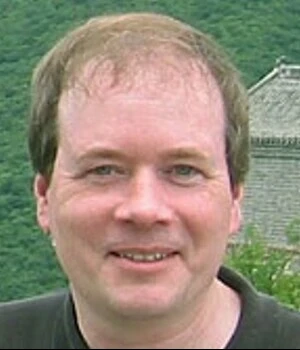
Mark Dietz
- Professor, Chemistry & Biochemistry
Education
Ph.D., University of Arizona
Teaching Schedule
| Course Num | Title | Meets |
|---|---|---|
| CHEM 221-401 | Elementary Quantitative Analysis | TR 11:30am-12:20pm |
| CHEM 221-801 | Elementary Quantitative Analysis | MW 9:30am-12:20pm |
| CHEM 221-803 | Elementary Quantitative Analysis | TR 12:30pm-3:20pm |
| CHEM 524-001 | Instrumental Analysis | TR 1:30pm-2:45pm |
| CHEM 524G-001 | Instrumental Analysis | TR 1:30pm-2:45pm |
| CHEM 931-001 | Advanced Seminar in Analytical Chemistry | No Meeting Pattern |
Research Interests
Few analytical methods are truly specific for a single species. As a result, problems in chemical analysis frequently involve a preliminary separation step to isolate the species of interest from matrix constituents and from potential interferents. Chemical separations play an equally important role in many preparative and process-scale applications, the preparation of high-purity radiopharmaceuticals and the reprocessing of spent nuclear fuel representing just two of many possible examples.\nIn general terms, the goal of our research is to devise improved reagents, media, and processes for the separation and preconcentration of metal ions and organic molecules, and to explore the fundamental chemistry underlying their use. Of particular interest is the development of environmentally benign approaches to chemical separations. Within this broad framework lie two specific areas of study: room-temperature ionic liquids (RTILs) and supercritical fluids (SCFs). Supercritical fluids comprise a unique class of solvents with properties intermediate between those of a liquid and a gas.
Ionic liquids, unlike SCFs or conventional molecular solvents, consist entirely of ions, and as a result, exhibit a wide variety of interesting and useful properties.
Both classes of solvents show enormous potential as replacements for the toxic and volatile organic solvents employed in many separation processes, in part a result of their extraordinary tunabililty. In the case of SCFs, simply changing the temperature or pressure can significantly alter the solvent properties of the fluid. Similarly, for RTILs, minor changes in the nature of the cation or anion comprising the solvent can lead to dramatic changes in its behavior. It is this tunability that we seek to exploit in developing improved methods of separation.\nOur recent work in this area has focused on three topics:
-
- Preparation and characterization of "inorganic liquids", a novel sub-class of ionic liquids incorporating at least one inorganic component (e.g., a polyoxometalate anion), and evaluation of their potential utility in separations.
-
- Elucidation of the factors (e.g., RTIL cation and anion structure) determining the mode of metal ion transfer from aqueous solution into an ionic liquid in the presence of various types of ligands (e.g., crown ethers).
-
- Development of alternatives to fluorination as a means of improving the compatibility of organic extractants with supercritical carbon dioxide.
Progress in these areas is expected to provide the basis of efficient and selective "green" approaches to the separation of metal ions and organic molecules from a variety of complex matrices.