Biological Sciences is the most popular science major at UWM. The undergraduate major provides excellent preparation for professional schools in medicine, dentistry, pharmacy, and veterinary science, as well as graduate studies in any of the life sciences.
It also appeals to students who think analytically and want opportunities to prepare for careers in a wide variety of sectors including healthcare, agriculture, natural resources and environmental sciences, food management, bioremediation, as well as the biomedical and biotechnology fields.
Biologists study the living world including, animals, plants, microbes and viruses at various levels ranging from molecules and cells to organisms and populations. They also study how organisms interact with each other and with their environment.
The Biological Sciences Department offers three majors: Microbiology, Biological Sciences (options shown below for specialization), and Neuroscience.
- The major in Microbiology (Micro) is for those interested in studying the genetics and molecular biology of microorganisms (such as bacteria, archaea, fungi) and viruses, and the roles they play in human, animal, and plant health and disease, as well as in biotechnology.
- The General Biology Option in the Biological Sciences major is for those who find all areas of Biology exciting and want to explore diverse interests in multiple areas of study.
- The Cellular and Molecular Biology (CMB) option in the Biological Sciences major is for those interested in studying the structure and function of organisms and biological processes at the level of cells and the macromolecules that define them (DNA, RNA, protein, lipid, and carbohydrates).
- The Ecology, Evolution, and Behavioral Biology (EEB) option in the Biological Sciences major is for those interested in studying the mechanisms governing interactions among organisms and between organisms and their environment.
- The major in Neuroscience is for those interested in the interdisciplinary study of the brain and nervous system — the biological foundation of thought, emotion, behavior, and learning.
Undergraduate Research
Undergraduates can do research as early as their freshman year and become a part of amazing scientific discoveries.
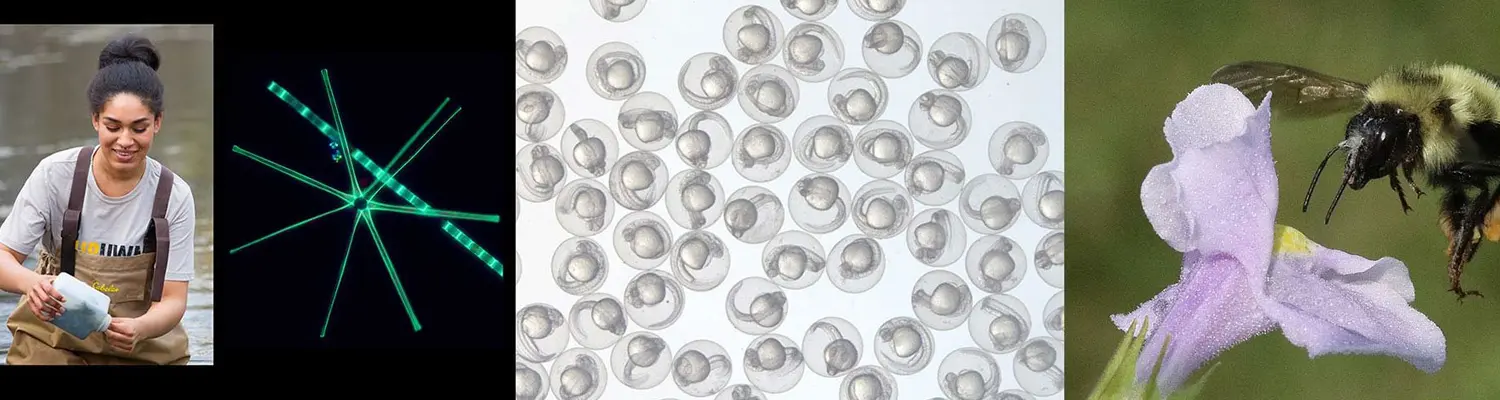
One of the advantages of studying biology or microbiology at UWM is the opportunity to work side-by-side with faculty researchers and graduate students. You can work in a research lab and learn first-hand what it takes to become a scientist and take part in new discoveries. You will be part of a team working on ideas such as finding treatments for plant disease, identifying and analyzing frog communication patterns, studying how bacteria cause disease, and much more. Learn more about how you can get involved in research here.
Career Outlook
There is broad demand for biologists and microbiologists in both the private and public sectors. Examples include farming, food processing, environmental stewardship, as well as in the biomedical and biotechnology fields. A degree in biology or microbiology also prepares you for professional schools like medicine, dentistry, pharmacy, and veterinary science, in addition to advanced graduate studies in any of the life sciences areas.
Where You’ll Find UWM Biology Alumni
Many of our alumni work at local companies and research institutes such as the Blood Center of Wisconsin, the Milwaukee County Zoo, the Wisconsin Department of Natural Resources, Thermo Fisher Scientific, and Aurora Healthcare. Our graduates also have positions at the US Environmental Protection Agency, Lockheed Martin, Abbott Laboratories, and many other corporations, government agencies, and nonprofit organizations.
Prospective Undergraduate Students (not yet enrolled at UWM)
Prospective students, contact our admissions counselor at let-sci@uwm.edu or 414-229-7711.
Current Undergraduate Students
General questions such as how to declare, how to change a major, general education requirements, etc. should be directed to the college advising office at ls-advising@uwm.edu or 414-229-4654.
Specific questions about Biological Sciences, such as research opportunities, internship opportunities, major requirements, etc., should be directed to Emily Latch.
Undergraduate Programs



Ready to Declare?
Select the declaration that’s right for you, and you will find more instructions on how to declare and what to expect.
Recommended Resources for Undergraduate Students










Campus Resources
Enhance your college experience and unlock even more opportunities on campus. Start career planning, participate in wellness activities, conduct cutting-edge research and more.