
- This event has passed.
Biological Sciences Colloquium: Dr. Daisy Sahoo
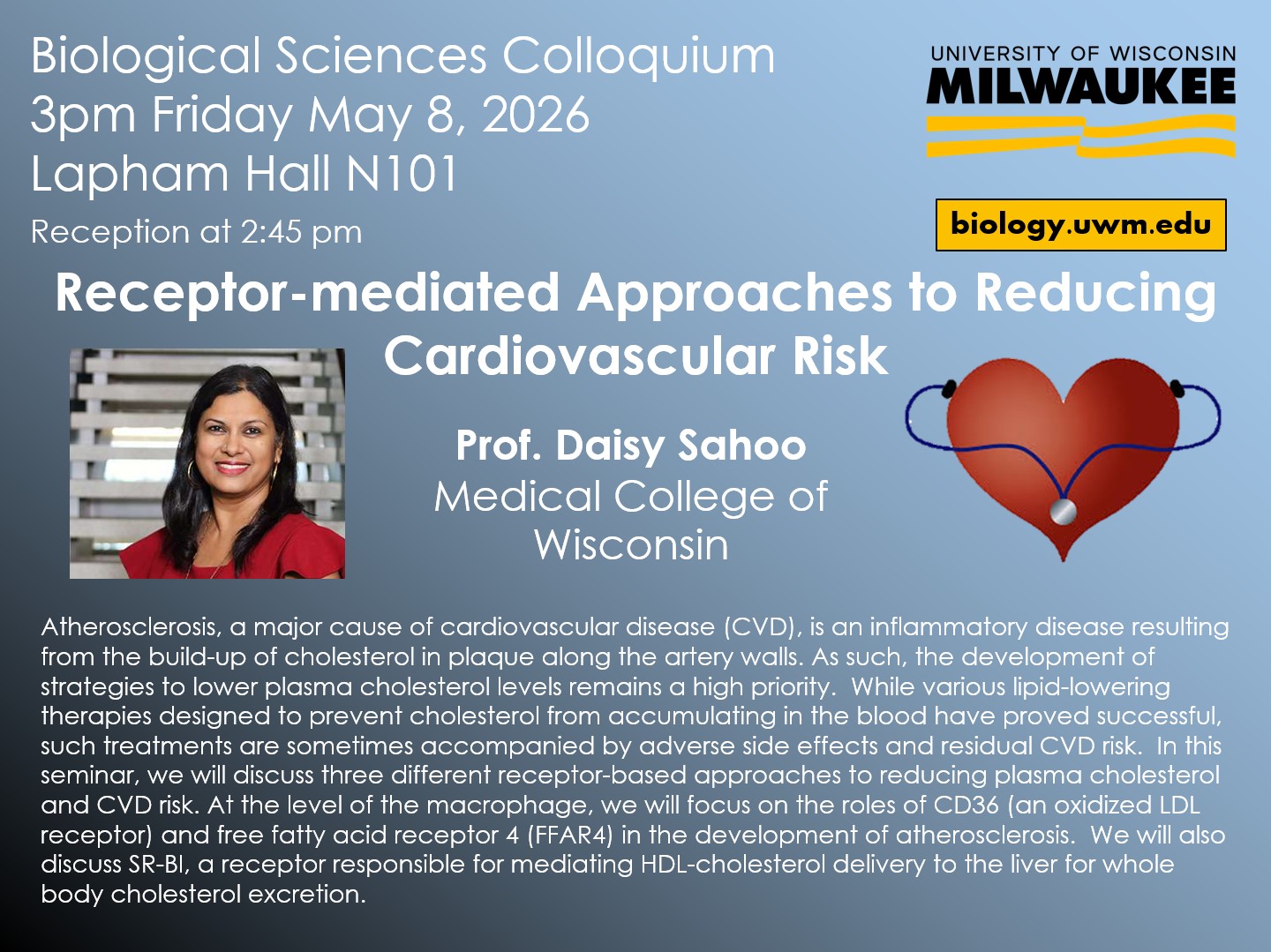
Dr. Daisy Sahoo, professor of biochemistry at Medical College of Wisconsin, will be giving a talk about her work entitled “Receptor-mediated Approaches to Reducing Cardiovascular Risk.” The abstract is as follows:
Atherosclerosis, a major cause of cardiovascular disease (CVD), is an inflammatory disease resulting from the build-up of cholesterol in plaque along the artery walls. As such, the development of strategies to lower plasma cholesterol levels remains a high priority. While various lipid-lowering therapies designed to prevent cholesterol from accumulating in the blood have proved successful, such treatments are sometimes accompanied by adverse side effects and residual CVD risk. In this seminar, we will discuss three different receptor-based approaches to reducing plasma cholesterol and CVD risk. At the level of the macrophage, we will focus on the roles of CD36 (an oxidized LDL receptor) and free fatty acid receptor 4 (FFAR4) in the development of atherosclerosis. We will also discuss SR-BI, a receptor responsible for mediating HDL-cholesterol delivery to the liver for whole body cholesterol excretion.
The presentation will begin at 3:00 PM in Lapham Hall N101, preceded by an informal reception from 2:45-3:00 PM.