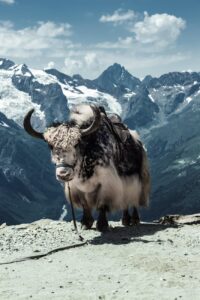
“Dung is vital for survival in the grassland. The most popular material for fuel is yak-dung, mostly for strong, quick cooking. Just like the Tibetan language has fine-grained terminology for the different stages of maturity of these animals, so as yak-dung: the yellow-colored dried dung of late autumn, those flat pieces used to cover the outer façade of walls to keep heat inside during winter and outside during summer, those picked up from the top of mountains or flat-land, those from the season when grass was not strong, etc. Its value, said in a folksong: “Yak-dung, you are much precious than gold, burning yourself and bringing warmness and light to humans.”
Read the entire article: The Use of Dung in Northern Tibetan Culture–From Grassland to Grassland | THINKING C21 (c21uwm.com)