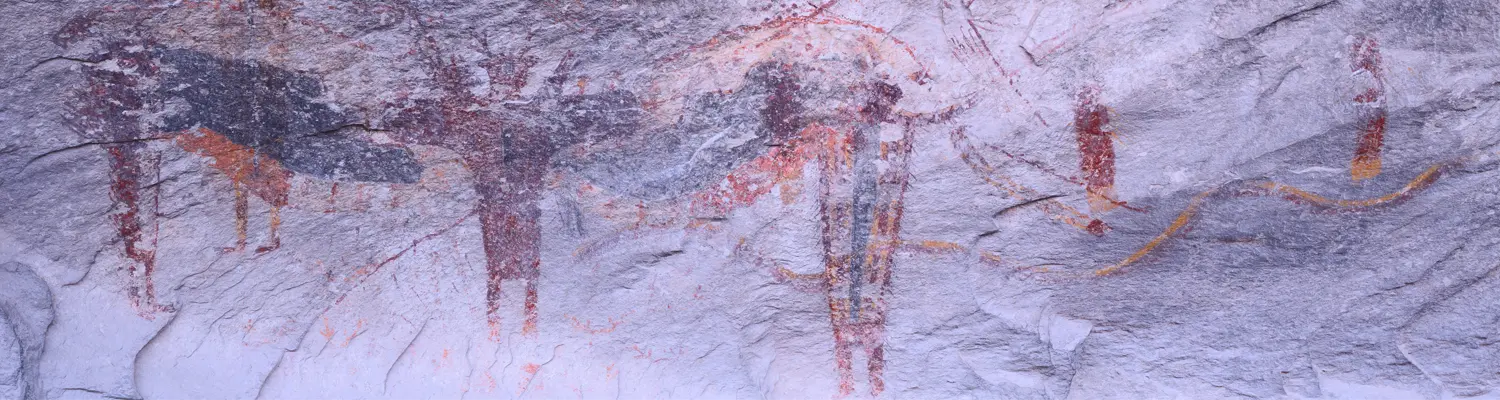
Anthropology, BA BA
Anthropology is the scientific study of human beings and their cultures across time and space. In the broadest sense, anthropology is about how the human species came to be, how it developed myriad ways of living in the world, and how those ways may change in the future. It is the major most closely associated with archaeology. Anthropology is a unique field that combines elements of social science and natural science. Students will find themselves in all types of settings - out in the field collecting physical samples, in a lab analyzing fossils and specimens, interviewing individuals and groups to collect oral histories, in the library and community researching, and in the classroom learning how to fit all of the pieces of evidence into a cohesive theory. Students at UWM will be exposed to all types of anthropological work. Some may find themselves more drawn to the "people" side of things and gravitate more towards electives that focus on culture and societal structures. Social anthropologists may examine issues such as workplace behavior, religious rituals, art, family structures or gender relations. Others may find linguistic anthropology - the study of the development of languages - more interesting. Students who have always envisioned themselves digging up artifacts will find archaeology or biological anthropology of most interest. Regardless of specialization, hands-on experience is critical. UWM offers all types of field experience and research opportunities, locally and at spots around the globe.
Career Resources and Job Outcomes
Program Type
Major
Program Format
On Campus
Listed below are the requirements for the Anthropology major. In addition to the requirements for the major, students must also satisfy all university and college general degree requirements. Degree requirements will vary depending on when you took your first college class. We encourage you to consult your advisor regularly to ensure you stay on track towards earning your degree. You can read more about the degree requirements on the L&S Degree Requirements web pages.
Anthropology Major Requirements
Students majoring in anthropology can select from a wide variety of courses organized under three subfields:
- Sociocultural Anthropology
- Archaeology
- Biological Anthropology
Although majors take some coursework in each of the three subfields, they are encouraged to shape their own programs to meet individual needs and interests. Students majoring in anthropology must earn a GPA of 2.0 or better in anthropology courses attempted at UWM. In addition, the College of Letters and Science requires that students attain a 2.0 or better GPA in all anthropology courses attempted, including any transfer work. The major in anthropology requires 36 credits within the department. At least 15 credits in advanced-level courses (numbered 300 or above) must be taken in residence at UWM.
| Code | Title | Credits |
|---|---|---|
| Required | ||
| ANTHRO 101 | Introduction to Anthropology: Human Origins (GER NSWL) | 3 |
| ANTHRO 102 | Introduction to Anthropology: Culture and Society (GER SBS) | 3 |
| ANTHRO 103 | Digging Up the Past: Approaches to Archaeology (GER SBS) | 3 |
| ANTHRO 460 | Anthropological Theory 1 | 3 |
| 9-15 credits satisfying the following requirements 2 | 9-15 | |
1 methods course | ||
1 course satisfying the research requirement | ||
1 course in each of the three subfields | ||
| 6-15 additional ANTHRO credits | 6-15 | |
| Total Credits | 36 | |
- 1
Only seniors may enroll in ANTHRO 460, and it is recommended that they do so after having completed all other anthropology course requirements.
- 2
Methods courses and research requirement courses may overlap with each other or with one of the three ANTHRO subfields. See tables below for additional details.
Methods Courses
| Code | Title | Credits |
|---|---|---|
| ANTHRO 403 | The Human Skeleton 1 | 3 |
| ANTHRO 405 | Forensic Anthropology 1 | 3 |
| ANTHRO 497 | Study Abroad: 1 | 1-12 |
| ANTHRO 525 | Zooarchaeology: Analysis of Faunal Remains 1 | 3 |
| ANTHRO 535 | Analysis of Archaeological Ceramics 1 | 3 |
| ANTHRO 560 | Introduction to Research Methods in Anthropology 1 | 3 |
| ANTHRO 561 | Techniques and Problems in Ethnography | 3 |
| ANTHRO 562 | Techniques and Problems in Archaeology | 3 |
| ANTHRO 566 | Archaeological Analysis and Report Preparation: 1 | 3-6 |
| ANTHRO 567 | Archaeological Field School | 3-6 |
| ANTHRO 568 | Introduction to Anthropological Statistics | 3 |
- 1
This course may also satisfy a research and/or subfield requirement in the Anthropology major. However, no single course may count for more than two requirements.
Research Requirement Courses
| Code | Title | Credits |
|---|---|---|
| ANTHRO 401 | Primate Populations 1 | 3 |
| ANTHRO 424 | Ethnoarchaeology and Experimental Archaeology | 3 |
| ANTHRO 497 | Study Abroad: 1 | 1-12 |
| ANTHRO 525 | Zooarchaeology: Analysis of Faunal Remains | 3 |
| ANTHRO 535 | Analysis of Archaeological Ceramics | 3 |
| ANTHRO 560 | Introduction to Research Methods in Anthropology | 3 |
| ANTHRO 566 | Archaeological Analysis and Report Preparation: 1 | 3-6 |
- 1
This course may also satisfy a methods and/or subfield requirement in the Anthropology major. However, no single course may count for more than two requirements.
Letters & Science Advising
During your time at UWM, you may have multiple members of your success team, including advisors, peer mentors and success coaches. Letters & Science students typically work with at least two different types of advisors as they pursue their degrees: professional college advisors and faculty advisors. L&S college advisors advise across your entire degree program while departmental faculty advisors focus on the major.
College advisors are located in Holton Hall (or virtually for online students) and serve as your primary advisor. They are your point person for your questions about navigating college and completing your degree. College advisors will:
- Assist you in defining your academic and life goals.
- Help you create an educational plan that is consistent with those goals.
- Assist you in understanding curriculum, major and degree requirements for graduation, as well as university policies and procedures.
- Provide you with information about campus and community resources and refer you to those resources as appropriate.
- Monitor your progress toward graduation and completion of requirements.
Faculty advisors mentor students in the major and assist them in maximizing their development in the program. You will begin working with a faculty advisor when you declare your major. Faculty advisors are an important partner and will:
- Help you understand major requirements and course offerings in the department.
- Explain opportunities for internships and undergraduate research and guide you in obtaining those experiences.
- Serve as an excellent resource as you consider potential graduate programs and career paths in your field.
Students are encouraged to meet with both their college advisor and faculty advisor at least once each semester. Appointments are available in-person, by phone or by video.
Currently enrolled students should use the Navigate360 website to make an appointment with your assigned advisor or call (414) 229-4654 if you do not currently have an assigned Letters & Science advisor. Prospective students who haven't enrolled in classes yet should call (414) 229-7711 or email let-sci@uwm.edu.
We encourage you to begin exploring career options when you declare your major or at the start of your sophomore year, whichever comes first.