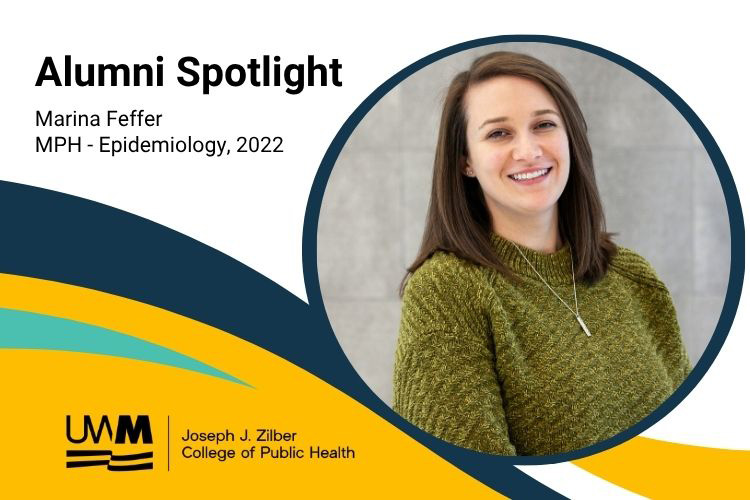
Since graduating in 2022 from the Zilber College of Public Health with an MPH in Epidemiology, Marina Feffer has been supporting the next generation of public health professionals as a mock interviewer. Over the past several years, she has provided MPH students with valuable practice and confidence as they prepare to enter the workforce.
Facing the Nerves of “What’s Next”
Marina clearly remembers what it felt like to sit on the other side of the table. As a student participating in mock interviews, she—and many of her peers—felt significant nerves. For Marina, those feelings were tied to a larger realization: graduation was near, and real job interviews were just around the corner.
“Training was almost complete, and life was getting real,” she recalled. That awareness made the mock interview experience feel high-stakes, even though it was designed as a safe space to practice.
Fortunately, Marina had some prior exposure to mock interviews during her undergraduate studies. However, those earlier experiences were conducted through recorded sessions rather than live, interactive conversations. The in-person mock interview format at the Zilber College, conducted by a person the student has never met before, added a new layer of realism and value.
The Importance of Interpersonal Skills
Marina emphasized how critical it is for academic programs to teach interpersonal and professional development skills alongside technical knowledge. She believes that these skills—especially interviewing—were once overlooked in higher education but are essential for career success.
She also shared that not all graduate programs offer this type of support. Comparing notes with her sister, who completed a graduate program without mock interview opportunities, reinforced Marina’s appreciation for Zilber’s approach.
Giving Back to the Public Health Community
Now working as a biostatistician at Loyola University Chicago—a position she secured immediately before graduating—Marina sees her role as a mock interviewer as a way to give back.
“The core tenet of public health is community,” she said. “Before we go out into the world as leaders, we need to support each other.”
She enjoys helping students at different stages of readiness, recognizing that each individual brings unique strengths and needs. For Marina, mentoring emerging professionals is not just rewarding—it’s essential to building a strong, collaborative public health workforce.
Advice for Emerging Public Health Professionals
Marina’s advice to current students is both practical and empowering: don’t hold yourself back.
She encourages students to apply for positions even if they don’t meet every listed qualification. “If you meet about 60% of the requirements, go for it,” she said. “Don’t quit on yourself before you even start.”
She speaks from experience. When applying for her current role, the job description required a Master of Science in Biostatistics—something she did not have. Initially removed from consideration, Marina took the initiative to contact the program director directly. She explained how her MPH in Epidemiology provided comparable training and relevant skills.
Her proactive approach paid off. She was reinstated in the applicant pool and ultimately offered the position.
Rethinking “Experience”
Marina also encourages students to broaden their understanding of what counts as experience. Internships, academic projects, and fieldwork all contribute valuable, applicable skills.
“Experience isn’t just formal employment,” she noted. “Your time in school matters.”
Building Confidence Through Practice
Reflecting on her journey, Marina credits the seminar course and mock interview experiences at Zilber with helping her successfully transition into the workforce. Now, as she helps guide current students through that same process, she’s continuing the cycle of support that defines public health.
Her story is a reminder that preparation, persistence, and community can make all the difference—and that sometimes, the most important step is simply believing you’re ready to begin.