Antarctica is a barren, lonely place. Ice and snow stretch for miles, and the only sound is the howling of the wind.
“But when you go underwater, there’s this whole array of diversity and color and life,” said Lauran Liggan, a PhD student in UWM’s Biological Sciences Department. “It’s just such a stark contrast above and below the surface.”
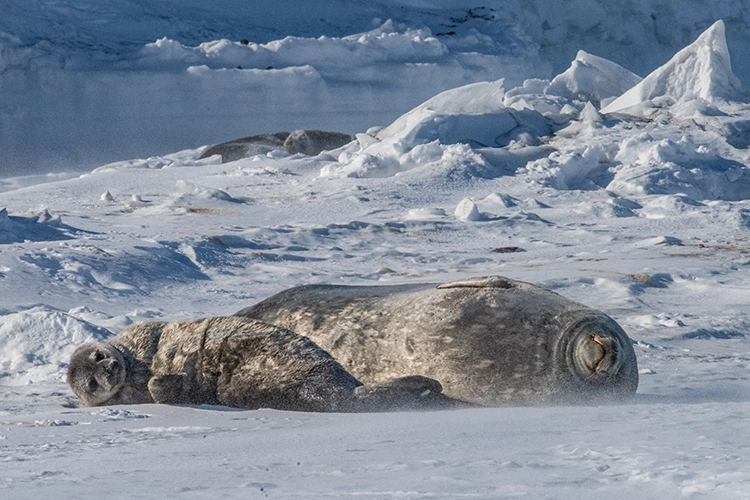
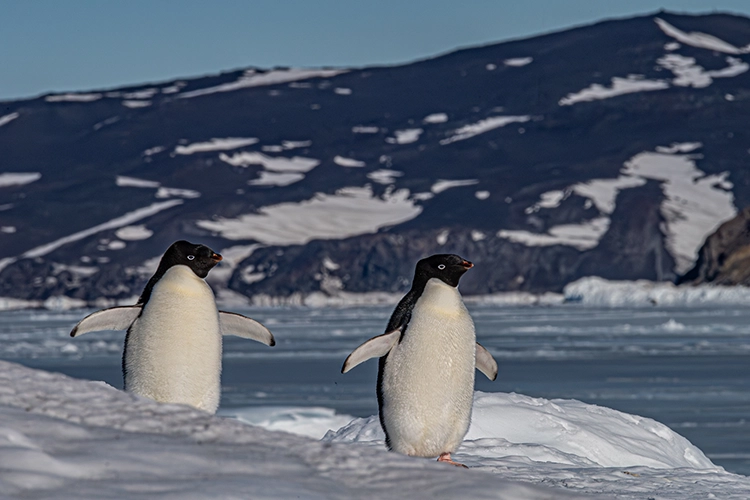
In the frigid waters beneath Antarctica’s sea ice, life is thriving. Seals call to each other as they hunt and play. Penguins dart through the currents as starfish wave from the ocean floor.
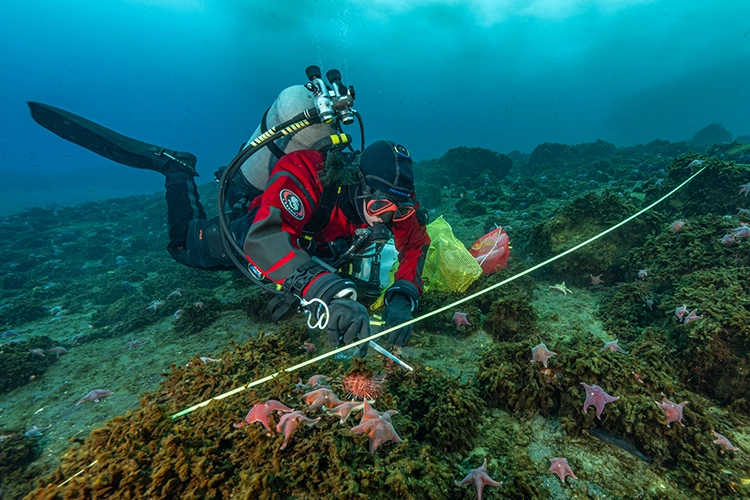
Liggan got to witness it all first-hand as she dove into Antarctica’s waters on McMurdo Sound to collect samples of red algae. She is studying that species’ genetic diversity to see how the algae – a vital part of Antarctica’s underwater ecosystem – is affected by climate change. Answering that question is becoming increasingly important as Earth’s warming climate causes Antarctica’s sea ice to recede further with every passing year.
An Antarctic adventure
Liggan grew up in southern California and frequently went scuba diving with her dad. She fell in love with the giant kelp forests that grew in the sea off the coast of Catalina Island – her “playground,” she called it – and was inspired to become a marine biologist. She majored in botany and then earned a master’s degree in seaweed ecology.
When she began thinking about a doctoral degree to explore her interest in marine plant diversity, it just made sense to apply to work with UWM Biological Sciences Professor Filipe Alberto, an expert on kelp population genetics. Plus, Alberto had an exciting project for Liggan: Some of his colleagues were looking for a marine botanist to travel to Antarctica on a grant from the National Science Foundation. With her diving and remote fieldwork experience, Liggan was a perfect fit.
It wasn’t hard to convince her to join the trip: “I’m like, ‘Oh yeah, twist my rubber arm,’” she joked.
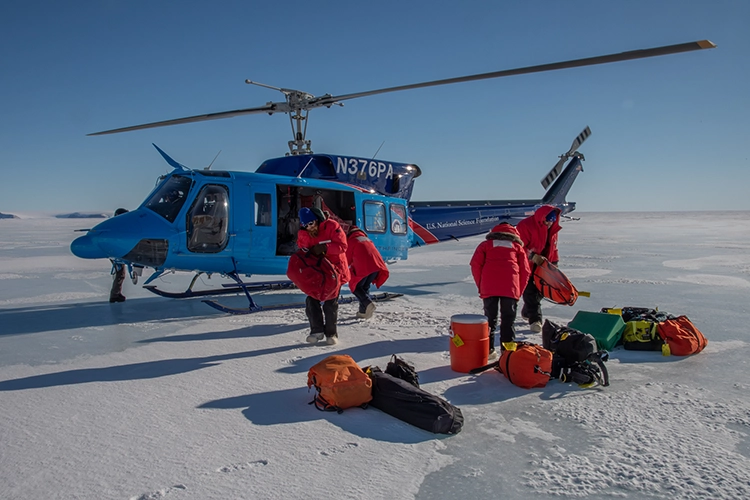
Traveling to Antarctica is an arduous task. First, Liggan had to pass a physical exam to ensure she was healthy enough to visit a remote land with limited medical care. Then, she had to fly to New Zealand to complete some of the training required of Antarctic visitors and receive her cold weather gear. At last, she and the other researchers and scientists took a U.S. Air Force plane to the McMurdo base to begin their Antarctic adventure.
Scuba diving in Antarctica was totally different than the diving Liggan was used to. For one thing, the water was a frigid 28 degrees Fahrenheit. She had to wear a heated vest and gloves to stay warm and carry a 5-pound battery to power the heaters.
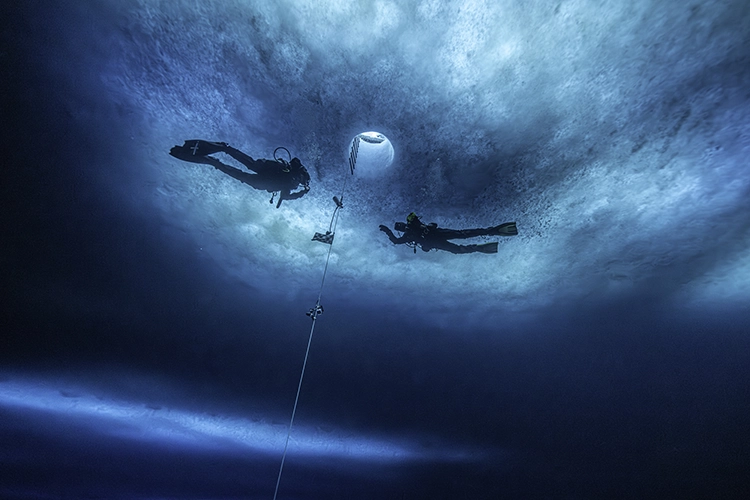
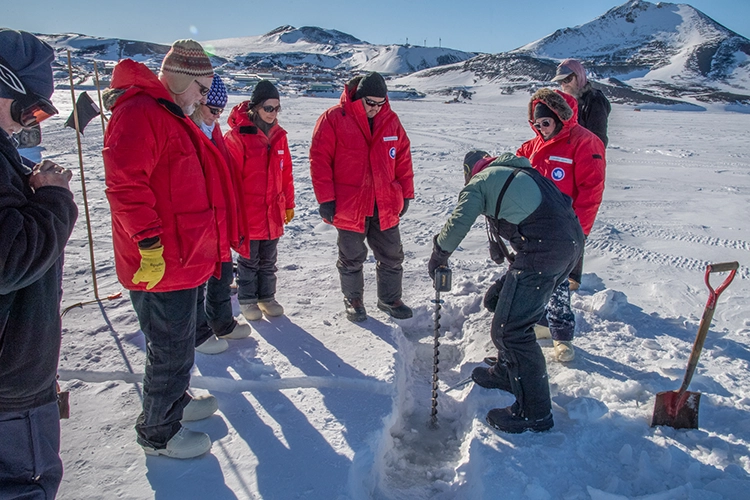
Even finding places to dive could be a challenge. The divers descended to the water through holes drilled in the ice, like ice fishing holes about 4-5 feet in diameter, Liggan said. If there wasn’t an existing entry point at the site where the team wanted to dive, they had to make their own by using an auger to drill through six feet of sea ice.
But being able to explore the Antarctic sea was worth it.
“Antarctica has some of the best (underwater) visibility in the world. It feels like you can see forever,” Liggan said. “It’s quite otherworldly.”
Algae genetics and climate change
On her dives, Liggan was on the hunt for Phyllophora antarctica, a type of red algae. Scientists had studied the ecology of this species in the 1990s, but now researchers want to revisit those studies and see how climate change has impacted the population since then.
“This sea ice extent has drastically changed throughout the years. This year was actually the worst year for sea ice that anyone on the team has ever experienced,” Liggan noted. “Light and temperature have a huge effect on communities, especially on seaweed. If the sea ice is receding, then these populations might change drastically in how they’re cued for reproduction, or even how dense or abundant they are.”
For instance, Liggan saw that areas with little sea ice cover had extensive mats of algae growing on the rocks that choked out other species like anemones and sea sponges, whereas areas with more sea ice coverage showed greater diversity.
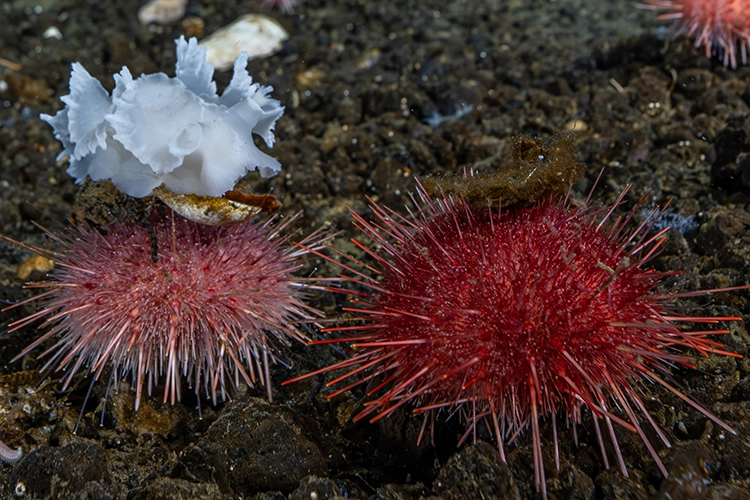
Liggan had some unexpected helpers as she collected her samples: sea urchins. “They take the algae and they put them on top of their bodies like little hats,” she laughed. “I think they’re using that as a lunch bag, basically waiting until they get hungry and they can move it to their mouth and eat it.” She felt bad for stealing their lunch, but it was all in the name of science.
Liggan is also interested in how connected – or not – the red algae populations are to each other. She gathered about 100 samples of algae from seven different sites and is currently in the process of identifying “microsatellite markers” – areas of genetic code in the algae that are prone to mutation, which makes it easier to identify different individuals of the same species. By comparing the microsatellite markers across her samples, she can see if the populations of algae at the different sites are isolated from each other or if they’re connected by dispersal. If the populations are isolated, that might mean they’re more at-risk if the environment changes over time, because they won’t be able to adapt as easily.
Liggan, who will graduate in May, eventually plans to publish her research. Her work is important because algae can be “canaries in a coal mine” when it comes to impacts of climate change because they are found throughout McMurdo Sound and are directly affected by environmental changes. By looking at red algae’s population genetics, Liggan hopes she can help keep life thriving beneath Antarctica’s sea ice.
By Sarah Vickery, College of Letters & Science