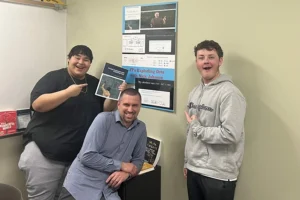
UW-Milwaukee is an access institution, meaning the university welcomes students who often face barriers to a college education. To help overcome some of those barriers, select students are invited to enroll in the First Year Bridge program, a transitional program that provides extra support in math, English, and other skills during a student’s first two semesters of college.
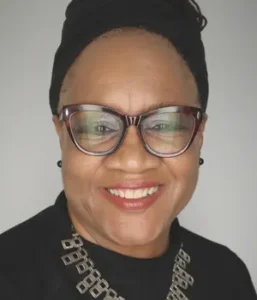
First Year Bridge (FYB) was originally housed at UW-Waukesha, but with the closure of Waukesha’s campus in 2025, FYB moved to UWM’s College of Letters & Science. Now, as their first year in their new homes draws to a close, FYB Director Angie Izard says the change has opened up new opportunities for her students.
“I am excited about our new home at the Milwaukee campus, because there are so many resources here,” Izard said. “Folks have been so welcoming to First Year Bridge. They’ve extended themselves and really gone out of their way to let us know that they want us to be part of the College and that they’re willing to support and assist us.”
Extra support
Students are selected for the First Year Bridge program based on their high school GPAs and a pattern of struggling in English or math. There are about 400 students in every cohort, said Izard. Most are from Milwaukee, but the program has also welcomed students from as far away as New Jersey and California.
FYB students still take their general education courses with the rest of the first-year class, but they also attend math and English support courses that provide additional academic assistance.
The students also meet with mentors and a success coach who help them develop college skills, such as making study plans, managing time, managing test anxiety, and learning about campus resources, like the Financial Aid Office or the Writing Center.
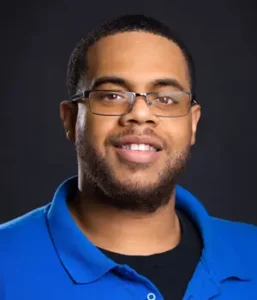
“(A lot) are first-generation students who don’t have a lot of foundational experience with being a college student,” said Derrick Langston. “Based on where they were previously, there’s only so much information they can get about what college life is like. A lot of students are learning about college while they’re moving through it.”
Langston is a First Year Bridge success coach and retention specialist who joined the program this year. He doesn’t have the institutional memory to compare First Year Bridge at Waukesha versus at UWM, but he knows that being in UWM’s College of Letters & Science makes things easier for the students he works with.
For instance, he said, “A lot of (general education) requirements are fulfilled within L&S, so there’s a great sense of relational support we can offer to one another. And there’s also a lot of familiarity among faculty, staff, and other teaching assistants. Us being housed here, functionally speaking, is really helpful.”
The definition of success
Transitioning from UW-Waukesha to the College of Letters & Science was challenging, but Izard and her staff were deliberate and mindful about the changes to be made and the pillars of success to be retained. Now, as FYB wraps up its first year at UWM, Izard and Langston are looking to the future – both for the program and for their students.
“One of our goals is for us to work on our retention rate. We know that Bridge is a good thing. We share success stories about students who really benefited greatly from the program. Now I want to create more stories,” said Izard.
Despite support, only about 52% of FYB students continue past their first two semesters of college. Their challenges are not just academic; many face affordability, social, or family challenges. For Langston, those statistics go beyond numbers – they are students that he knows personally.
“I create and maintain a rapport with these students. That personal element is really important to me,” he said. He plans to use those relationships to help students get the support they need to continue on their college journeys as he keeps working with the program.
Seeing students succeed on that journey is one of the best parts of Izard’s job. She loves when her students come back to visit and report their triumphs; many say that FYB helped them start their college careers on the right track. She smiles when she describes one of her former students, now a junior, who will be studying abroad in Japan for his senior year.
“I was just beaming with pride,” she said. “On paper, those students may not have looked as though they were going to be the success stories that they are, but just given the chance, given the opportunity, here they are.”
By Sarah Vickery, College of Letters & Science