Volume 15, Number 12
- What can you do with a mathematical sciences major?Every year, graduates from the College of Letters & Science enter the workforce and begin to contribute thousands of dollars to their local, state, and national economies. They bring the skills and knowledge they gained …
- Neuroscience major helps students explore the workings of the brainFour years ago, UW-Milwaukee debuted its neuroscience major. The first year, two students enrolled in the program. By the second year, there were 75 neuroscience majors. Now, there are over 150 – and that number …
- We need “some” context: UWM linguist’s research reveals cognitive patterns in languageDo you agree with this phrase? “Some elephants have trunks.” If you’re a pragmatic thinker, you might disagree. It’s not just some elephants that have trunks; all elephants have trunks. If you’re a logical thinker, …
- UWM researcher reconstructs ancient landscapes from the Midwest to MarsYou might think Antarctica is the most remote place someone’s career might take them. UWM alum Libby Ives traversed Antarctica’s ice landscapes to study glacial sediments laid down more than 300 million years ago, but …
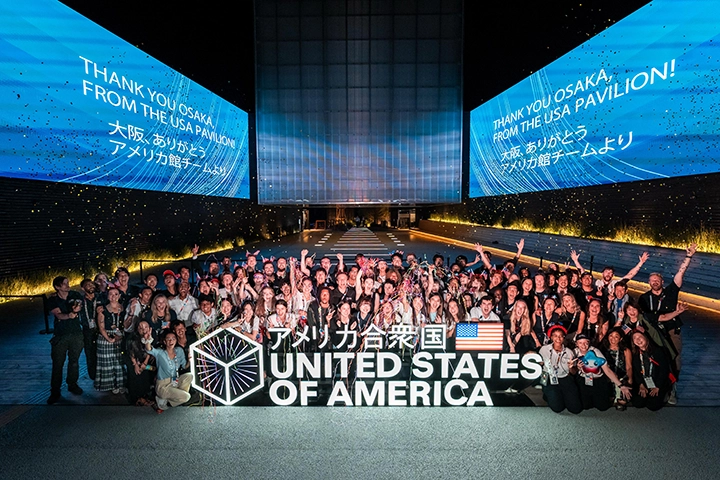
- Japanese student broadens her horizons at the World Expo in Osaka, JapanUWM student Gabrielle Sweeney had an unusual summer job: She was a youth ambassador at the American Pavilion at the World Expo in Osaka, Japan. What, exactly, is a World Expo? “That’s what I wondered …
Please be aware that some publications require a subscription in order to view articles and most links below leave this site.
Alumni Accomplishments
Kitty Morse (‘70, MA French and Spanish) helped to open the Coronado Historical Association’s new “Remembering D-Day: From the Front Lines to Coronado’s Backyard” exhibit in November by presenting a lecture focused on her acclaimed book, Bitter Sweet: A Wartime Journal and heirloom Recipes from Occupied France. The book examines the toll of civilians on the homefront in Nazi-occupied France. The book was inspired by the discovery of Morse’s great-grandfather’s wartime journal and two notebooks of old family recipes.
Marie Kohler (‘79, MA English) presented a talk on her plays “Boswell” and “Midnight and Moll Flanders” (both published in 2024 by Dramatic Publishing) at Next Act Theatre in November. Audiences also heard a reading from Next Act Theatre’s Wisconsin-Premiere production of “Boswell.”
Laurels & Accolades
PhD student Nancy Carman (Geosciences) was featured on the Wisconsin Space Grant Consortium’s website in November for her achievements, including being awarded the WSGC Dr. Laurel Salton Clark Graduate and Professional Fellowship. Her research focuses on the preservation of potential biosignatures in hydrothermal systems. She has previously served as a Science Team Collaborator on NASA’s Perseverance rover ant the Jet Propulsion Laboratory.
Professor Patrick Brady (Physics) earned the 2026 Richard A. Isaacson Award in Gravitational-Wave Science from the American Physical Society. Brady’s groundbreaking work in gravitational-wave data analysis and his leadership in the LIGO Scientific Collaboration have advanced humanity’s understanding of the universe, from black hole collisions to confirming Einstein’s theories.
Associate Professor Cary Costello (Sociology) was selected to receive the 2025 Elena Dominguez Award from the Milwaukee LGBT Community Center in recognition of his contributions to education and community service. Costello has served UWM as Director of LGBTQ+ Studies for 14 years and has been an active public educator. He has also served as an expert on intersex issues with the NIH and on transgender education with the American Sociological Association, and has served with many local LGBTQ+ education and advocacy groups. Costello was honored at the Community Center’s “Big Night Out” award ceremony and fundraiser on Nov. 22.
Distinguished Professor emeritus Anastasios A. Tsonis (Mathematical Sciences) has been selected to receive the Lewis Fry Richardson Medal from the European Geosciences Union (EGU). This award recognizes individuals who have made important contributions to the Earth, planetary, and space sciences.
In the Media and around the Community
A UWM education equips graduates with a plethora of job skills. Just ask Alexis Pegram-Piper (‘16, PhD English) who was hailed as an “undercover jack of all trades” by The Mirror, Lakeland university’s student-run news site.
Director Jean Creighton (Planetarium) gave a preview of the Planetarium’s “Spirits Dancing” show on WUWM Radio’s Lake Effect show in November.
In November, Professor emerita Brenda Cárdenas (English) read from her work as part of a Milwaukee benefit to support recovery efforts in Jamaica following Hurricane Melissa.
UWM’s Retrolab, a collection of historical computing technologies, was featured on TMJ4 News. Professor Thomas Haigh (History) explained the value of the repository in helping students understand the evolution of computing.
Graduate student Ryan Krakowiak (Geosciences) was pictured alongside an article titled, “Reviving a watershed mission” published by the Ozaukee Press in November.
Poetry can open paths to self-expression and memory for people living with dementia. That’s why Antonio Paniagua Guzman’s (‘22, PhD Sociology) idea to launch sessions to create poetry with Ojibwe tribal elders and their families has seen such success, CNN reported. Paniagua Guzman is a senior research associate with the Memory Keepers Medical Discovery Team.
UWM employee Roy Badger (‘98, BA Sociology) spoke to CBS 58 News about his surprise when the U.S. Supreme Court declined to hear a petition that sought to overturn Obergefell v. Hodges, a landmark case in 2015 that secured the right for marriage for gay and lesbian couples in the United States. Badger and his husband, Garth Wangemann, met at UW-Milwaukee and were married for 10 years before Garth’s death in January.
Professor Anne Bonds (Geography) and Associate Professor Derek Handley (English) presented the findings from their “Mapping Racism and Resistance in Milwaukee County Project” at the Milwaukee Central Library’s Centennial Hall in November. The Milwaukee Journal Sentinel published images from their event. The Wisconsin Examiner published an in-depth preview of their research before the event, and WUWM Radio invited both professors on the Lake Effect Show to explain their research.
Jeffrey Sommers (African & African Diaspora Studies and Global Studies Program) was co-organizer (along with Institute of World Affairs Director Doug Savage) and speaker (along with retired U.S. diplomat John Katzka) for the 2025 Institute of World Affairs George Kennan Lecture held at Saint John’s on the Lake on Oct. 8. The Kennan event was entitled, “The Re-Configuring Global (Dis)Order. Sommers also delivered two invited lectures on Sept. 9 including “The United States and Changing World Order” at the Whitefish Bay Jewish Community Center and “Tripwires: Geography and Destiny in the Baltic States” to a group of former U.S. diplomats and general public in Cedarburg, Wisconsin on Nov. 6. He co-authored a piece with Cosmin Marian titled, “Empire Strikes Back!” Oligarchs and Values Fatigue in Latvia’s Rejection of the Istanbul Convention,” that was published in CounterPunch on Nov. 17, and co-authored “Donald Trump: Reconfiguring Global Order” alongside Zoltán Vörös and István Tarrósy, which saw publication on E-International Relations on Nov. 16. Finally, he advocated for raising the minimum wage in an opinion piece for the Milwaukee Journal Sentinel.
Associate Professor Ashley Lemke (Anthropology) taught a community audience about ancient life in the Great Lakes at the Milwaukee Public Museum in November.
Animal trader Carl Hagenbeck’s idea to display zoo animals in their natural landscapes, rather than concrete and metal cages, laid the basis for the layouts of modern zoos, Professor emeritus Nigel Rothfels (History) wrote in an article published by History Today.
In the Leader Independent, Architectural historian Justin Miller (Cultural Resource Management) commented on the city of Monona, Wisconsin, designating Frost Woods as a “historic district” on the State Register of Historic Places. The move protects some effigy mounds in the area.
If you spent Thanksgiving with friends, you’re not alone. Director Marc Tasman (Digital Arts & Culture) spoke about “Friendsgiving” on Radio Milwaukee.
Associate Professor Jocelyn Szczepaniak-Gillece (Film Studies) spoke about the headwinds facing small-town movie theaters on Wisconsin Public Radio.
People in Print
Associate Professor Nataliya Palatnik (Philosophy). 2025. Review of Karl Ameriks, Kantian Dignity and Its Difficulties (Oxford University Press). Kantian Review. Online first.
Passings
Professor Gerald K. Bergtrom (emeritus Biological Sciences) passed away on Nov. 7 at the age of 80. He joined the UW-Milwaukee faculty in 1978 and served for 33 years, retiring in 2011. Even then, he continued to teach and work in UWM’s Center for Excellence in Teaching & Learning for another four years to help his colleagues design courses to foster student engagement and interactive learning.
He was an accomplished researcher with numerous publications, including a free, interactive Cell & Molecular Biology textbook that was downloaded tens of thousands of times around the world, helping to provide accessible education to all.
Beyond his research and teaching, Bergtrom was a warm and congenial person who supported and mentored his colleagues as they grew in their careers – in one case, calling Congressional representatives relentlessly to make sure that one colleague’s visa was approved to allow her to remain in the United States and continue her career at UW-Milwaukee.
He “was not only a distinguished scholar but also a generous colleague whose support left a lasting impact on me and my academic journey,” remembered Professor Ching-Hong Yang.