New Faculty Alert

Please help us in welcoming Professor Xin Yu, Assistant Professor, Buck Professor of Chinese History to UWM.
Professor Yu joined the department after completing his PhD in 2022 from Washington University in St. Louis and was drawn to UWM by the strong sense of community he experienced during his campus visit. His research focuses on the history of Chinese family genealogies, exploring how economic change, globalization and social status shaped family identity over the past 500 years.
With his vast academic experience and studies in both China and the United States, Professor Yu brings a personal global perspective to his teaching and studies to the department.
When he’s not researching or teaching, he enjoys shooting hoops and working on his basketball skills. We’ve heard the Bucks might need a replacement soon👀
We’re excited to have him as part of the UWM History community.
UWM Remembers Historian David D. Buck

The University of Wisconsin-Milwaukee community mourns the loss of David Douglas Buck, professor emeritus of history and a longtime supporter of the university. Buck passed away on March 6, 2026, in Milwaukee at the age of 89.
A respected scholar of modern Chinese history, Buck dedicated more than three decades to teaching and research at UWM. Joining the university in 1972, he spent 32 years as a faculty member in the Department of History, where he taught courses on Chinese history and international affairs and mentored generations of students. He also served as chair of the department for nine years and was widely recognized for his leadership and contributions to the field of Asian history.
Born in Denver, Colorado, on December 31, 1936, Buck developed an early interest in Asian languages and cultures while studying at Stanford University, where he earned his bachelor’s degree. He went on to receive a master’s degree in Chinese history from Harvard University before serving as an officer in the United States Navy, stationed in Okinawa, Japan.
During his time in Okinawa, Buck met his future wife, Diane Ratty, who was teaching there with the American Dependents Schools. After completing his military service, he returned to Stanford to earn his Ph.D. in modern Chinese history.
Throughout his academic career, Buck was known for his wide-ranging scholarship and international engagement. He published numerous articles on Asian history and culture, including the book Urban Change in China: Politics and Development in Tsinan, Shantung, 1890–1949. From 1990 to 1995, he served as editor of the Journal of Asian Studies, the flagship publication of the Association for Asain Studies. He also taught abroad at universities in Taiwan, China, Japan and England.
Buck’s passion for sharing global perspectives extended beyond the classroom. Over the years, he led more than 20 trips to China for American travelers, including tours organized by the Milwaukee Public Museum and the Smithsonian Institution, helping participants gain a deeper cultural and historical understanding.
After retiring from UWM in 2002, Buck continued his commitment to community service through the Buck Foundation, supporting initiatives focused on revitalizing urban green spaces and expanding housing opportunities for underserved communities.
Buck remained deeply connected to UWM throughout his life. Together with his wife Diane, he supported many areas of the university, including the establishment of the David D. Buck Professorship in Chinese History, which continues to advance scholarship and teaching in Chinese history.
Buck is survived by his wife of 62 years, Diane Buck; his sons Douglas and Andrew; his grandchildren Jane, Charlotte and Arthur; and his sister Carol Dettmann.
Through his scholarship, mentorship and generosity, Buck leaves a lasting legacy at UWM and within the broader community of scholars dedicated to the study of Asian history.
Marcus Allen: Uncovering Overlooked Histories Through Research and Teaching
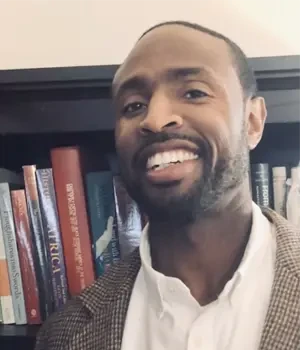
The University of Wisconsin-Milwaukee History Department welcomes Assistant Professor Dr. Marcus Allen, whose work brings new depth to the study of African American history through an economic lens.
Dr. Allen’s path to UWM reflects more than a decade of persistence, movement, and scholarly growth. Over the course of his career, he has served as a lecturer, adjunct instructor, visiting professor, and postdoctoral scholar, gaining experience across institutions and refining both his research and teaching. Most recently, he held appointments at the National Humanities Center in North Carolina and Case Western Reserve University, where he continued to develop his work in African American history.
At the center of Dr. Allen’s scholarship is his ongoing book project, which examines Black depositors in a white-owned savings bank in Baltimore between 1850 and 1900. Drawing from savings account records, personal inventories, and wills, he reconstructs the financial and material lives of African Americans during the antebellum and postbellum periods. His research offers a more expansive understanding of the 19th century, one that moves beyond narratives focused solely on hardship to also highlight financial strategy, resilience, and economic agency within Black communities.
“There’s a lot of history that still needs to be uncovered,” Dr. Allen explains. “We have to be careful about drawing strong conclusions, because there may be history out there that changes how we understand things.” This perspective shapes his approach to both research and teaching, emphasizing the importance of continued discovery and critical inquiry.
Dr. Allen’s work also extends beyond academic spaces. He was recently featured on Black Nouveau, where he discussed his research on Black economic life and the importance of uncovering overlooked histories. In the interview, he highlights how examining financial records and everyday economic decisions can reshape our understanding of the past and reveal stories that have long gone unrecognized.
His interest in Black financial history began during his undergraduate studies, when he first encountered the story of the Freedman’s Savings and Trust Bank and the significant losses experienced by many Black depositors after its collapse. That moment sparked a lasting curiosity about Black economic institutions and the historical narratives that have been overlooked or underexplored. What began as a single question has grown into a sustained research agenda focused on understanding how Black communities navigated economic life in the 19th century.
In the classroom, Dr. Allen brings the same level of passion and curiosity to his teaching. He is committed to creating an encouraging environment where students feel empowered to challenge themselves and think critically. Whether teaching Black American history or broader historical themes, his goal is to help students see new possibilities in both their academic work and their personal growth. As he puts it, he aims “to encourage people to try to do things they think they can’t do.”
Dr. Allen was also drawn to UWM by the opportunity to join a department engaged in meaningful historical work and by the chance to contribute to a new academic community. As he settles into Milwaukee, he is especially interested in learning more about the city’s history, what he describes as rich, layered, and often underrecognized. He looks forward to exploring those stories and incorporating them into his teaching and research over time.
Beyond his academic work, Dr. Allen enjoys running and cooking, mentioning specifically eating kale and lime juice straight up, raises a few eyebrows.
As he begins his time at UWM, Dr. Allen brings with him not only a strong research agenda, but also a commitment to uncovering overlooked histories and expanding how the past is understood. His work serves as a reminder that history is not fixed; it is continually being discovered, questioned, and reinterpreted.
UWM Faculty & Affiliates Publish New Works Across History, Culture, and Society
From Wisconsin’s brewing past to postwar Europe and even the world of science fiction, UWM faculty and affiliates are producing work that brings new perspectives to familiar stories. Their latest publications highlight the depth, creativity and impact of the university’s academic community.
Beer Ghosts: In Search of Lost Hops and the Women Who Grew Them
by Jennifer A. Jordan, affiliate professor of history
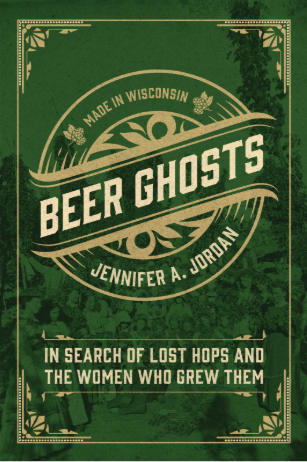
Jennifer A. Jordan brings to light a largely forgotten chapter of American brewing history. Set in nineteenth-century Wisconsin, Beer Ghosts explores the critical role women and girls played in harvesting hops, an essential ingredient in beer production. At the height of the 1860s hop boom, tens of thousands of seasonal laborers traveled to farms across the state, creating a vibrant yet temporary community centered on agricultural labor.
Through rich archival research, including agricultural records and the diary of a young hop picker named Ella, Jordan reconstructs this fleeting industry and the lives behind it. The book not only deepens our understanding of beer history but also restores visibility to the women whose labor made the industry possible.
The Postwar Antisemite: Culture and Complicity after the Holocaust
by Lisa Silverman, professor of history
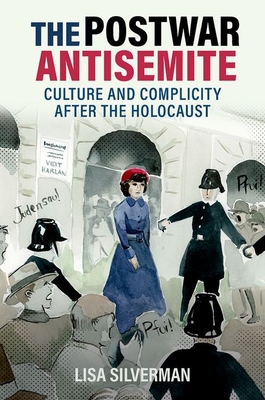
Lisa Silverman’s work examines how societies grappled with the aftermath of the Holocaust. Rather than confronting widespread complicity, many in postwar Austria and Germany turned to a symbolic figure—the “Antisemite”—as a way to externalize guilt and reshape national identity.
Drawing on trials, films, literature, and cultural narratives, Silverman argues that this figure became a convenient tool that allowed societies to distance themselves from responsibility while avoiding deeper reflection on persistent antisemitism. The book offers a critical lens on memory, denial and the complexities of moral reckoning in the postwar era.
I’d Just as Soon Kiss a Wookiee: Uncovering Racialized Desire in the Star Wars Galaxy
by Greg Carter, associate professor of history
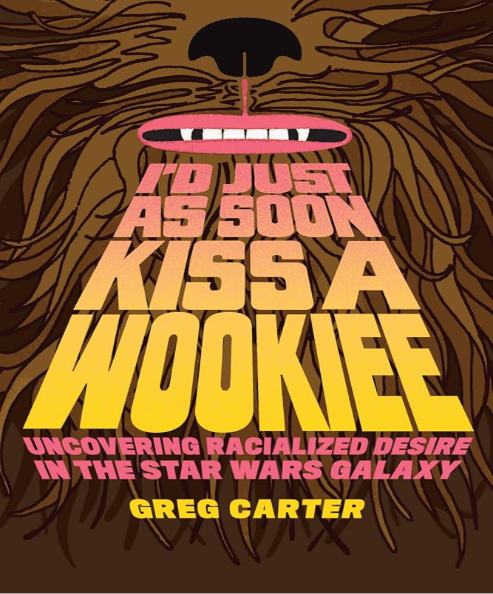
Greg Carter turns to the Star Wars universe to explore how science fiction reflects real-world ideas about race and gender. While set in a distant galaxy, Carter argues that the franchise mirrors American social structures, particularly in its portrayals of hierarchy, servitude and racial boundaries.
By analyzing both the films and their fandoms, Carter uncovers how themes like racialized labor, restrictions on interracial relationships, and assumptions of dominance are embedded in the narrative. The book also considers how audience interpretations have evolved over time, revealing the complexities of race and representation within popular culture.
Village, Town, City, Suburb: Commemorating Glendale at 75
by Amanda Seligman, professor of history; Kimberly Hernandez, senior teaching faculty; Martha Bergland; and Nancy A. Herrick
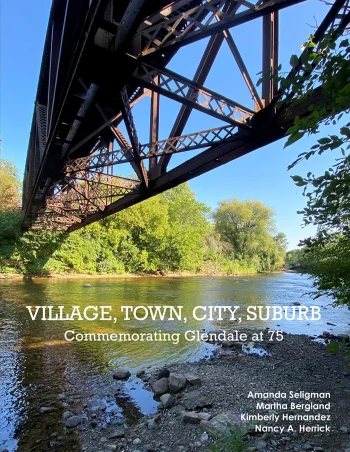
This collaborative work celebrates the rich and layered history of Glendale, Wisconsin, marking the city’s 75th anniversary. The book traces Glendale’s transformation, from ancient Indigenous settlements and agricultural land to a modern suburban community.
Blending historical research with community voices, the authors explore how Glendale has evolved socially, economically and culturally. Featuring photographs, maps, and personal perspectives from local leaders, the book captures the essence of the city’s past while offering insight into its present and fu
The Wizard of Holton Hall: Celebrating Lex Renda

Lex Renda is Associate Professor Emeritus of History and Affiliated Associate Professor Emeritus of Urban Studies at the University of Wisconsin–Milwaukee, where he devoted more than thirty-three years to teaching, research, service, and leadership before retiring in 2025. A specialist in nineteenth-century U.S. history, Renda focused his scholarship on the Civil War era, American political development, constitutional history, voting rights, slavery, and the law. He earned his Ph.D. from the University of Virginia in 1991 and soon became a deeply respected presence within UWM’s History Department.
Over the course of his career, Renda taught everything from introductory surveys in early American history to specialized courses on the Civil War, Reconstruction, American political history, and graduate research methods. Students and colleagues alike knew him as an engaging, thoughtful, and direct professor who was generous with his time and feedback. Described by colleagues as “always honest and direct, never mincing words while still being kind and generous with his comments.”
Beyond the classroom, Renda played a vital role in shaping the department itself. As a member of the History Department and a longtime administrator within the College of Letters and Science, he became known as the “wizard of Holton” for his remarkable ability to untangle administrative problems, manage complex scheduling needs, and respond almost instantly to emails. Colleagues affectionately referred to him as the “Deacon of Course Scheduling” for the care and precision he brought to arranging the department’s extensive course offerings while balancing the needs of faculty and students alike.
Renda was also instrumental in expanding access to history education at UWM, helping establish opportunities for online students and advocating for a reduced teaching load structure that benefited faculty across the department. He contributed to public history efforts through the Encyclopedia of Milwaukee, writing entries on Joshua Glover, Temperance, and the Bridge War, and remained a consistent voice for the greater good of the department and its community.
Longtime colleagues still remember his arrival at UWM as a young faculty member, always dressed in a suit and tie and carrying his own lectern to class before the internet transformed the modern classroom. Around campus, he developed a reputation for knowing nearly every corner of UWM, reflecting both his decades of service and his deep connection to the university community.
Outside academia, Renda’s love for sports was something worth noting. A devoted fan of the Green Bay Packers and Milwaukee Brewers, he often shared games and conversations with colleagues while also bringing his enthusiasm for baseball and football into the classroom. Though he arrived in Milwaukee as a die-hard Yankees fan, he eventually became a loyal supporter of “the Crew,” complete with extensive baseball knowledge, stories, and we wouldn’t be shocked if he knew the “Secret Stadium Sauce.”
Through his scholarship, leadership, humor, and steady presence, Lex Renda left a lasting mark on generations of students, faculty, and the University of Wisconsin-Milwaukee community. In May 2025, the UWM Department of History Executive Committee endorsed his ascension to emeritus status, celebrating a career defined by intellectual curiosity, service and dedication.
Celebrating the Career of Distinguished Professor Martha Carlin
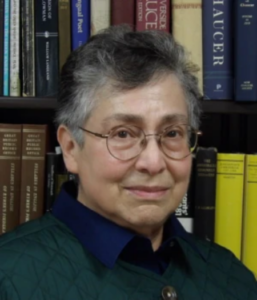
Martha Carlin is a Distinguished Professor in the Department of History at the University of Wisconsin-Milwaukee, where she has been a faculty member since 1990. Over more than three decades at UWM, she has become a deeply respected historian and a consistent, welcoming presence in the department. She was named Distinguished Professor in 2023, recognizing a long career shaped by curiosity, care and dedication to both students and colleagues.
Her work focuses on medieval England, especially the lives of everyday people. Instead of only studying kings or major political events, she has spent her career looking closely at how ordinary life worked-what people ate, how homes were organized, how towns functioned and how daily routines shaped the wider world. She is especially skilled at working with old historical sources written in languages like Latin, Anglo-Norman and Middle English, which allows her to uncover details about medieval life that are often overlooked.
What stands out about her work is how she brings the past to life through these small, human details. Her writing shows how something as simple as food, housing, or household routines can reveal much larger stories about society and change over time. She has also made important discoveries while working in archives, including previously unknown documents connected to William Shakespeare and research that sheds light on early merchant communities in London. Her work on Shakespeare and the Tabard Inn even reached audiences beyond history specialists, showing how closely literature and everyday life can be connected.
Beyond her individual research, she has played an important role in collaborative digital projects, including work with the Medieval and Early Modern Data Bank, which supports historical research around the world. Colleagues often see her as someone who not only produces important work herself, but also helps create tools and spaces that allow others to do better research too.
At UWM, Martha has also been a dedicated teacher and mentor. She is known for helping students understand that history is not just distant events, but something rooted in real human lives. In her classes, topics like food, homes, and daily routines become ways to understand much bigger historical patterns. She has supported generations of students, always combining high expectations with genuine care and encouragement.
Within the department, she has also helped build a strong sense of community. She played a key role in creating the History Department Common Room in Holton Hall, which has become a place where faculty and students regularly gather, talk, and work together. Many colleagues remember her as someone who often stopped by, asked thoughtful questions, and helped turn everyday conversations into meaningful intellectual exchange.
She is also warmly remembered for the personal touches she brought to department life-her gardens, which she generously shared with colleagues, and her well-loved deviled eggs that became a highlight of departmental gatherings. These little details reflect something many people in the department feel about her: she has always contributed not just through her work, but through kindness, presence and care for the people around her.
As she retires after a long and meaningful career, Martha Carlin leaves behind a lasting impact. Her work has changed how people understand medieval life, and her presence has shaped the community at UWM in lasting ways. She will be remembered for her insight, her generosity and the many ways she helped others learn, grow and connect.
RetroLab in the News
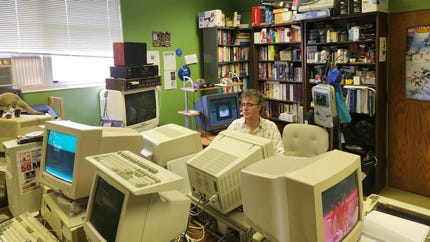
Thomas Haigh and his RetroLab are spotlighted in an article in the Milwaukee Journal Sentinel. Way to go, Tom!
Rick Popp, Telephony Expert

Check out this 99 Percent Invisible podcast. The discussion features the introduction of the Inward Wide Area Telephone Service (INWATS), more commonly known as the 800 number. Our own Rick Popp is an expert interviewed extensively in the podcast!
Lisa Silverman’s Book Honored

Congratulations to our own Lisa Silverman! Her recent book, The Postwar Antisemite: Culture and Complicity after the Holocaust was recently named a short-list finalist for the German Studies Association’s David Barclay Book Prize, awarded to the best monograph (in English or German) on the social, cultural, economic, political, or labor history of nineteenth-century and twentieth-century Germany or central Europe.
A Spirit of Revolt Published

A Spirit of Revolt: Conrado Alvillar and the Rank-and-File Wobblies of the 1927–1928 Colorado Coal Strike is being released October 13, 2026 – CONGRATULATIONS, Michael!
A tale of solidarity in the Colorado coal fields.
A Spirit of Revolt examines the lives and histories of mine workers who were at the center of an understudied statewide strike led by the Industrial Workers of the World in Colorado from 1927 to 1928. The book explores the biographies and genealogies of union activists from southern Colorado, roughly half of whom were Spanish speakers. These miners’ stories are contextualized within broader histories of colonization, migration, exploitation, and resistance that shaped their communities. Mine worker and anticapitalist union organizer Conrado Alvillar plays a central role, a talented artist whose paintings were displayed in union halls across the state and whose articles, in both Spanish and English, were printed in the IWW press. Alvillar was deeply troubled by violent state and vigilante repression and by how racism divided the working class, thus fueling his optimistic faith in the revolutionary potential of industrial unionism, the organizing philosophy of the IWW. To better understand the collective intellectual efforts of Alvillar and the other strikers, this book explores the intersections and contradictions between industrial unionism, the broad labor movement, and other revolutionary ideologies.
Michael Robert Gonzales teaches history and ethnic studies at the University of Wisconsin-Milwaukee. He is a member of the Industrial Workers of the World and a researcher of twentieth-century working-class social and political movements. A Spirit of Revolt is Gonzales’s first book.