
- This event has passed.
Margo Anderson to Speak on Her Recently Published Co-Authored Book
As part of our noon talk tradition, the Department of History is pleased to announce that our colleague Margo Anderson is stepping in to deliver a talk based on her recently published co-authored book, Use and Misuse of the United States Census: The Role of Data in the Incarceration of Japanese Americans During World War II. Thanks to the department’s sunshine fund, we will also have some light snacks.
Title:
Don’t Do It Again: The Relevance of the “Japanese Internment” during World War II to the Trump Administration’s Efforts to Harass, Intimidate and
Control Americans, Deport Immigrants, and Reshape the American State,
Margo Anderson, Distinguished Professor Emerita, History & Urban Studies
A Reading
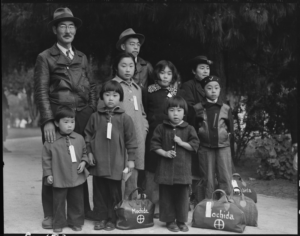
From my new book with William Seltzer, Use and Misuse of the United States Census: The Role of Data in the Incarceration of Japanese Americans During World War II [New York: Springer Nature, 2024], the talk will delve into our research process and relate the historical narrative of the Nikkei incarceration during WWII to the Trump II issues of immigration control, birthright citizenship, and the role of “data” in the American state.
The Story:
Between late February and August 1942, the U.S. Army Western Defense Command, based in San Francisco, rounded up and incarcerated 100,000+ West Coast Americans of Japanese ancestry, who were housed in concentration camps across the country during the war. The Census Bureau provided technical expertise, small area tabulations from the 1940 Census [down to block level in cities where available], and developed and administered a population registration system to monitor the incarcerated. Two thirds were U.S. citizens. The incarcerated did not receive due process hearings, on the grounds that ‘military necessity’ required their rapid removal. Courts and Congress at the time supported the program.
In the 1960s and 1970s, the Japanese American community and civil rights supporters formed a “redress” movement to reexamine the program. The congressional Commission on Wartime Relocation and Internment of Civilians repudiated the program in 1982, finding that “racial prejudice, wartime hysteria, and a failure of political leadership,” not “military necessity,” were the “causes” of the program. The government provided token reparations to survivors. In 2000, the Census Bureau acknowledged its role in the incarceration and apologized.
The Message:
How and why did the federal government do it? And what are the lessons for our current crisis?