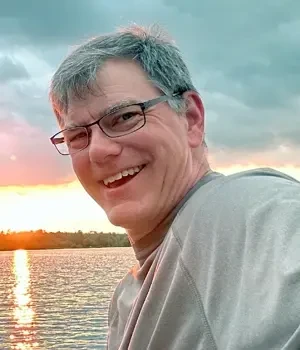
Christian Young
- Program Director, Conservation & Environmental Science
- Teaching Professor, Conservation & Environmental Science
Education
- PhD, History of Science and Technology, University of Minnesota
- BA, Biology, minor in English, Hamline University
Teaching Schedule
| Course Num | Title | Meets |
|---|---|---|
| CES 390-001 | Changing Climate: A Conservation and Sustainability Approach | TR 1pm-2:15pm |
| CES 471-401 | Practicum in Natural Resources Management | MW 2:30pm-4:20pm |
| CES 471G-001 | Practicum in Natural Resources Management | MW 2:30pm-4:20pm |
| CES 489-101 | Internship in Environmental Studies, Upper Division | No Meeting Pattern |
| CES 499-101 | Ad Hoc: Revitalizing Milwaukee Green Spaces | F 9am-11am |
Teaching Interests
Throughout his teaching career, he continues to research and write on topics in the history of wildlife biology and environmental science, natural history, conservation biology, science education, and collaboration in science and higher education. These topics inform his approach to teaching in courses that focus on climate change, evolution, natural history, land restoration, and introductory concepts in biology.
He is particularly interested in the ways that people make connections to the natural world, especially in cities. A shared curiosity about sunflowers and milkweed, herons and hummingbirds, otters, ants, mushrooms, and germs puts everyone on a path to become careful observers and lifelong naturalists. As much as the study of environmental science can sometimes feel like a lesson in how people have messed it all up, it also can put people on a trajectory to understanding how vital our actions are in making this world better for everyone's lives now and for those who follow after.