
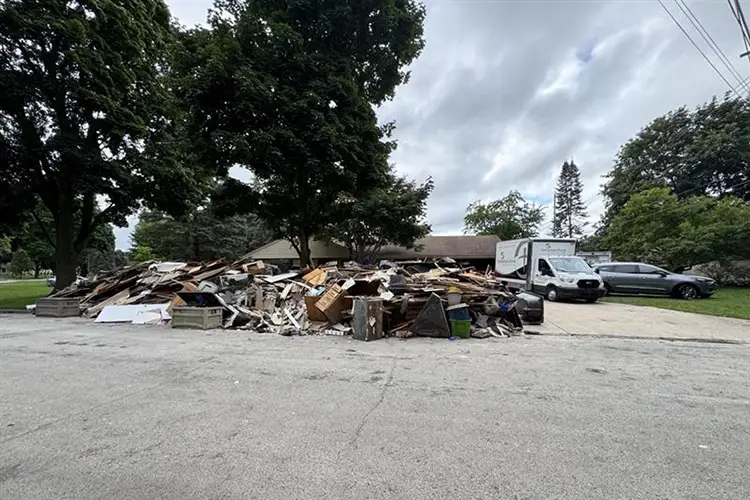
In August 2025, after 6 to 12 inches of rain fell across the Milwaukee region in just 24 hours, flooded basements and damaged homes dominated local headlines.
For Milwaukee Metropolitan Sewerage District (MMSD), the historic storm exposed familiar vulnerabilities in the region’s aging infrastructure. For University of Wisconsin–Milwaukee urban planning students, it became a living policy lab.
Teaching in real time
“We hold year-end meetings with our Master of Urban Planning students each May, and many of the students over the last few years have expressed interest in addressing environmental challenges,” said Dr. Robert Schneider. “So I was looking for an environmental policy topic for my Fall 2025 Planning Policy Analysis course.”
When the flood struck, Schneider saw both urgency and opportunity.
“The immediate shock from seeing people in our community being caught in floodwaters and news over the next week about flooded basements, damaged houses, and massive loss of personal belongings drew me toward how we could help the Milwaukee Metropolitan Sewerage District with any aspect of their efforts to address flooding,” Schneider said.
Within weeks, Schneider connected with MMSD staff and developed a case study for his Planning Policy Analysis course.
Working from within challenge
Students focused on MMSD’s Private Property Infiltration & Inflow (PPII) Reduction Program, which encourages homeowners to disconnect foundation drains from the sanitary sewer system to reduce basement backups.
“Many planning projects aim to improve complex systems to produce long-term public benefits,” he said. “Examining options to improve the effectiveness of the PPII Reduction program was an ideal fit for a planning analysis topic due to its challenges and the many possible options to improve the program.”
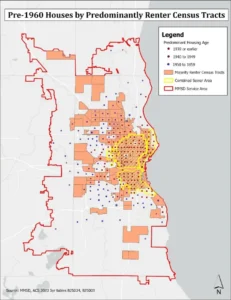
More than 100,000 older homes in the region still need to disconnect foundation drains from the sanitary sewer system. Construction can be disruptive and expensive, and some property owners do not realize their foundation drains pose a risk at all. Meanwhile, MMSD must operate within a limited outreach budget.
Against that backdrop, students debated alternatives, evaluated tradeoffs, and presented recommendations directly to MMSD leaders.
Strategies ranged from adjusting financial incentives to refining outreach and advertising, targeting the highest-risk properties, or working with municipalities on regulatory approaches.
From analysis to action
For MMSD, the partnership was more than an academic exercise.
“MMSD sees tremendous value in working with students,” said Hannah Johnson, MMSD Public Engagement Specialist. “Anytime there are residents, community members or students who are interested and engaged in this topic, it benefits the MMSD PPII program tremendously.”
Several recommendations moved quickly from presentation into practice.
“There are a few items that came up in the presentations that we have already started on, including connecting with Neighborhood Improvement Districts (NIDs) in the City of Milwaukee to pair our efforts with theirs and using past Pipe Check participants to create testimonials for the program,” Johnson said.
The agency also reviewed homeowner cost trends and adjusted financial support accordingly.
“One of the largest changes in 2026 financial incentives was an increase in the Foundation Drain Disconnection financial incentive from $2,500 to $3,800, based on trends in homeowner costs.”
Preparing urban planners to make a difference
And MMSD’s exploration of student ideas will continue beyond the initial case.
“We are also planning to explore a few of the other ideas, in 2026 and coming years, including collaborating with the Fresh Coast Resource Center to find opportunities to partner with the Green Summer program, finding other outreach and partnership opportunities, and using characters that help tell the story to homeowners,” she said.
For students, seeing movement matters.
“They love to see their work making a difference for their clients and the community,” Schneider said. “This gives them a great foundation for their professional planning careers.”
Story by Oliver J. Johnson