
- rjschnei@uwm.edu
- 414-997-7740
- Architecture & Urban Planning 249
- He / Him
Directory Categories
Robert James Schneider
- Professor, Urban Planning
- Co-Chair, Urban Planning
Education
- PhD, Urban Planning, University of California, Berkeley
- Master of Urban and Regional Planning, University of North Carolina at Chapel Hill
- BA, Geography, Mathematics, Augustana College
Biography
Dr. Robert Schneider is a Professor and the Co-Chair of the Department of Urban Planning. He is an Associate Director of the USDOT-funded Center for Pedestrian and Bicyclist Safety University Transportation Center and a Member of a member of the Transportation Research Board Committee on Integrated Transportation Safety Management. Dr. Schneider has more than 25 years of practical and research experience on active transportation safety, travel behavior, demand analysis, and multimodal data collection.
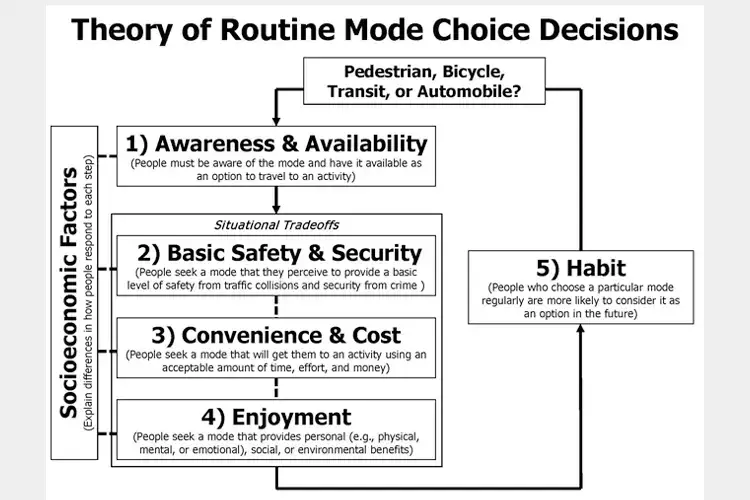
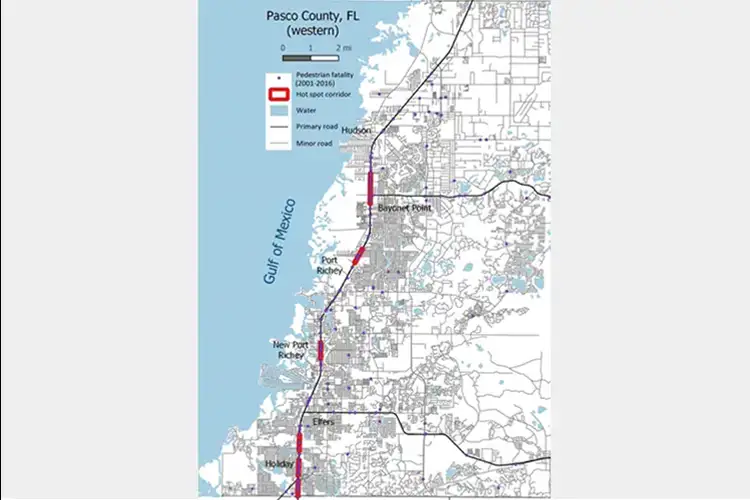
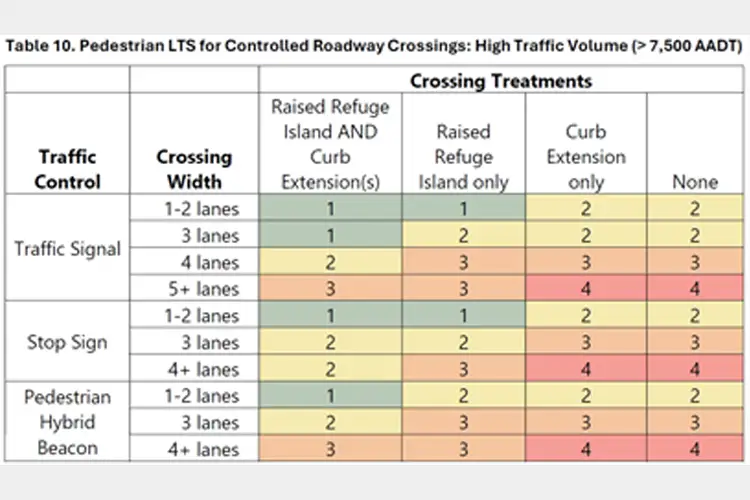
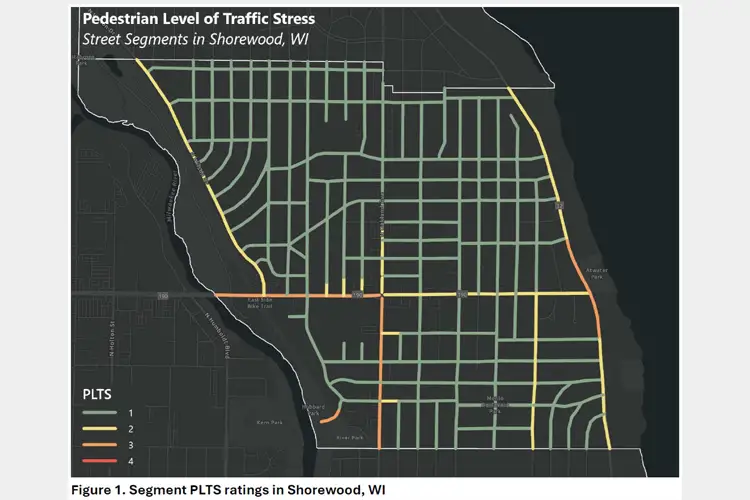
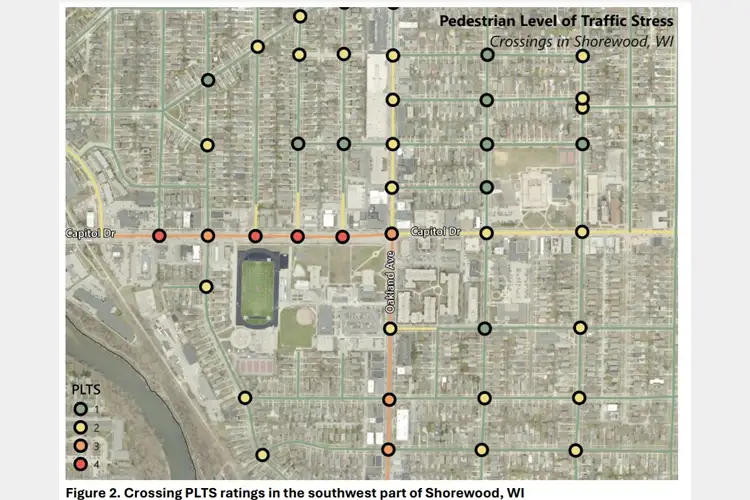
Through his research, Dr. Schneider’s has identified roadways with the highest concentrations of pedestrian fatalities across the US, summarized US pedestrian fatality trends over four decades, produced a new method of classifying pedestrian and bicycle crashes, established the Theory of Routine Mode Choice Decisions, and co-developed a Pedestrian Level of Traffic Stress (PLTS) method. His pedestrian fatality hot spots study was one of two academic articles cited in the US Department of Transportation’s National Roadway Safety Strategy. Dr. Schneider’s research has been featured in Streetsblog USA, Planetizen, and the Washington Post.
Dr. Schneider has authored more than 30 peer-reviewed journal articles related to pedestrian and bicycle transportation, led research projects sponsored by the National Science Foundation and the Wisconsin Department of Transportation, and served on multiple National Cooperative Highway Research Program teams. His research has won awards from the Transportation Research Board Pedestrian Committee in 2001, 2012, and 2023; the World Society of Transport and Land Use in 2014; and the Transportation Research Board Bicycle Committee in 2021. He was named Research Professional of the Year in 2019 by the Association of Pedestrian and Bicycle Professionals.
Dr. Schneider teaches Pedestrian and Bicycle Transportation, the first graduate-level course of its kind in Wisconsin. Dr. Schneider developed and has updated this course continuously for more than 15 years, teaching the latest policy and practice in the pedestrian and bicycle transportation profession. Dr. Schneider also teaches Planning Policy Analysis, one of the two Master of Urban Planning program capstone courses. During the semester, he teaches students an analytical framework to define a challenging planning problem, evaluate multiple alternatives against specific criteria, and identify an optimal solution. Then students apply this framework for three clients at organizations in Milwaukee and other communities throughout Southeastern Wisconsin.
Links
- Curriculum Vitae, CV (PDF)
- robertjschneider.com
- Google Scholar
- WPR - How ‘traffic calming’ measures can help Wisconsin cities reduce speeding and make main streets easier to navigate
Recent & Selected Works
Articles & Selected Papers
- Schneider, R.J. (2013). “Theory of Routine Mode Choice Decisions: An Operational Framework to Increase Sustainable Transportation,” Transport Policy, Volume 25, pp. 128-137, https://doi.org/10.1016/j.tranpol.2012.10.007.
- Schneider, R.J., R.L. Sanders, F.R. Proulx, and H. Moayyed. (2021). “United States Fatal Pedestrian Crash Hot Spot Locations and Characteristics,” Journal of Transport and Land Use, Volume 14, Number 1, pp. 1-23. DOI: https://doi.org/10.5198/jtlu.2021.1825.
- Hsu, C., Tsao, M., Moran, M.E., Griswold, J.B., Schneider, R.J., and Bigham, J.M. (2025). “A Context-Sensitive Roadway Classification Framework for Speed Limit Setting in the US,” Transportation Research Interdisciplinary Perspectives, https://authors.elsevier.com/c/1lk7I9CyM56M80.
- Giron, A., X. Gu, and R.J. Schneider. (2025). “Socioeconomic Characteristics of Drivers Versus Pedestrians in Pedestrian Crashes,” Transportation Research Interdisciplinary Perspectives, https://doi.org/10.1016/j.trip.2024.101308.
- Schneider, R.J., Hu, L., Cancel Martinez, Y., Yan, A., and Chakraborty, T. (2025). “Who Uses FlexRide Milwaukee? Lessons from a New Employment-Based Microtransit Service,” Case Studies in Transport Policy, https://authors.elsevier.com/sd/article/S2213-624X(25)00089-6.
- Hu, L. and R.J. Schneider. (2024). “Panacea or Band-Aid? First-/Last-Mile Connection in Public Transit Systems,” Journal of the American Planning Association, pp.1-8, https://doi.org/10.1080/01944363.2024.2365681.
Books
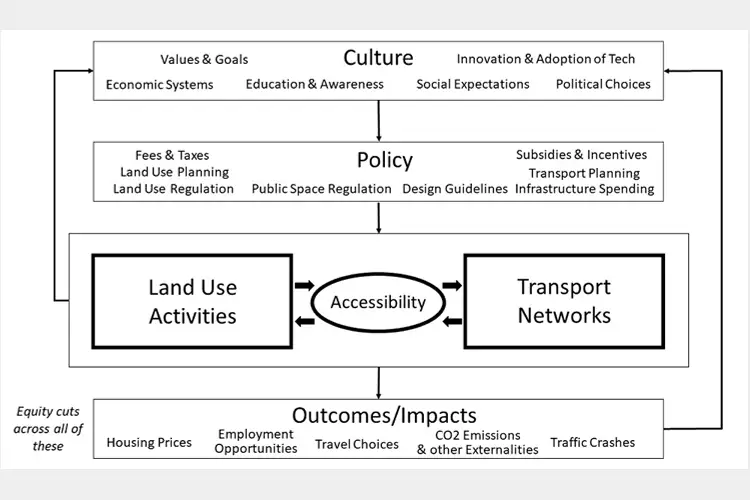
Abreu e Silva, J., Currans, K., Van Acker, V., Schneider, R.J. Handbook on Transport and Land Use: A Holistic Approach in an Age of Rapid Technological Change, Edward Elgar Publishing, 2023.
Grants/Funded Research
- United States Department of Transportation, Center for Pedestrian and Bicycle Safety (CPBS), Tier 1 University Transportation Center, subconsultant to University of New Mexico, 2023-2027. ($1.6M over five years)
- Wisconsin Department of Transportation, Analysis of Geographic, Temporal, and Socioeconomic Shifts in Pedestrian & Bicyclist Traffic Injuries, 2024-2025. ($84K)
- National Science Foundation. User-Centered Mobility Solutions (UCMS): A New Vision to Connect Jobs and the Labor Force, Smart & Connected Communities, Civic Innovation Challenge (CIVIC) Full Grant, 2021-2023 (served in PI role from July 2022). ($1M)
- National Cooperative Highway Research Program. Strategies to Improve Pedestrian Safety at Night, NCHRP Project 17-97, subconsultant to Toole Design Group, LLC, 2021-2023. ($42K)
Technical & Research Reports
- Swift, S., Schneider, R.J., and Nelson, K. Pedestrian Level of Traffic Stress, Center for Pedestrian and Bicyclist Safety University Transportation Center (CPBS UTC), Prepared by University of Wisconsin-Milwaukee, https://www.pedbikesafety.org/_files/ugd/71d50c_45338ef866774d978fcc08cbe750b6b1.pdf, 2024.
- Schneider, R.J., Nelson, K., Gu, X., Barbee, H., Thompson, C., Thorne, K., Rukhsana, F., Mohebbi, F., and Qin, X. Analysis of Geographic, Temporal, and Socioeconomic Shifts in Pedestrian & Bicyclist Traffic Injuries, Wisconsin Department of Transportation, WisDOT Report Number 0092-24-60, Prepared by University of Wisconsin-Milwaukee, https://wisconsindot.gov/documents2/research/report-ped-cyclist-traffic-injuries.pdf, 2025.
- Danila, M., Brodie, S., Schooley, S., Sanders, R.L., Schoner, J., Almdale, B., Hurwitz, D., Jashami, H., Suwandhaputra, K., Schneider, R.J., Walter, B., Marshall, N., and Henning, W. Strategies to Improve Pedestrian Safety at Night, National Cooperative Highway Research Program, NCHRP Report 1157, Web-Only Document 430, NCHRP Research Project 17-97 Report, Prepared by Toole Design Group, https://nap.nationalacademies.org/catalog/29225/improving-pedestrian-safety-at-night, 2025.
- Schneider, R., Hu, L., Cancel-Martinez, Y., Yan, A., Chakraborty, T., Lynde E., Sarnecki, J., and Rueda, X. FlexRide Milwaukee Summary Report, National Science Foundation, Civic Innovation Challenge Grant, “User-Centered Mobility Solutions (UCMS): A New Vision to Connect Jobs and the Labor Force,” Award Number 2133337, https://saruprc.ad.uwm.edu/pdf/sarupwebsitedocs/up/flexride-milwaukeesummaryreport-062623.pdf, 2023.