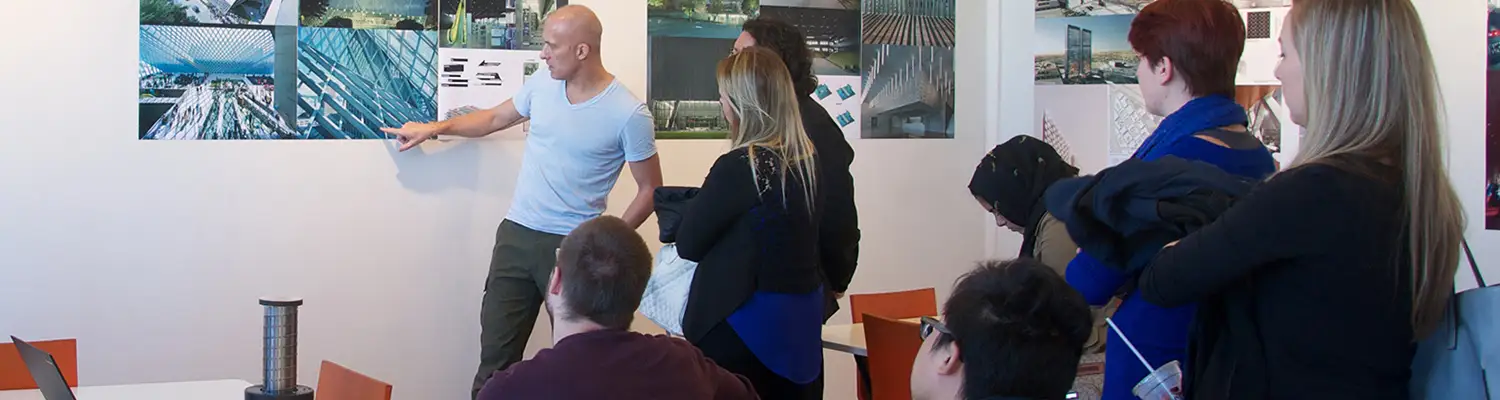
The UW-Milwaukee School of Architecture & Urban Planning awards a biennial international architecture prize to recognize the talent and achievements of emerging architects in the early stages of their career. Marcus Prize recipients co-teach a studio with a faculty member, bringing world-class architects directly into reach of architecture students.
Origin

The Marcus Prize was created in 2005 through the vision and generosity of Marcus Corporation Foundation. The goal of the award is to honor architects for their outstanding work to date—and their promise of greatness in the future.
The $100,000 prize provides $50,000 to the winner and $50,000 to lead a design studio in collaboration with faculty. In addition to the award itself, Marcus Corporation Foundation provides financial support to host the selection jury and to bring the awardees to Milwaukee for the studio.
An International Prize with Local Impact
Since its inception, the Marcus Prize has welcomed architects from around the world to Milwaukee, directly impacting the region through Wisconsin-based projects and creating lasting effects on the lives of future architects through hands-on studios.
2025 Marcus Prize Winner

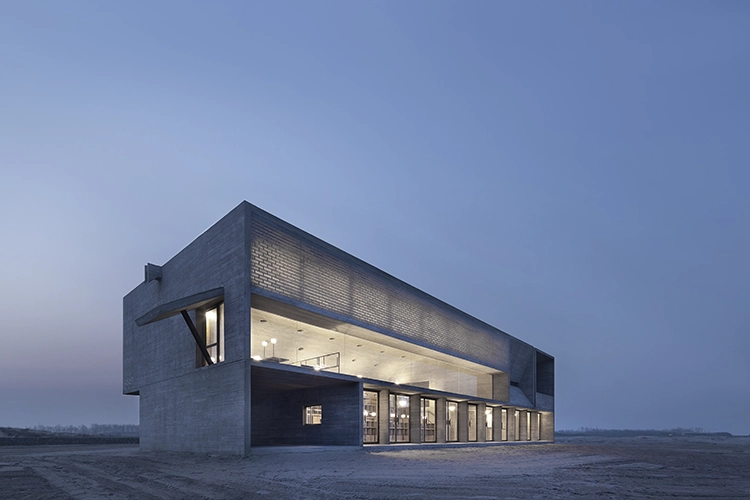
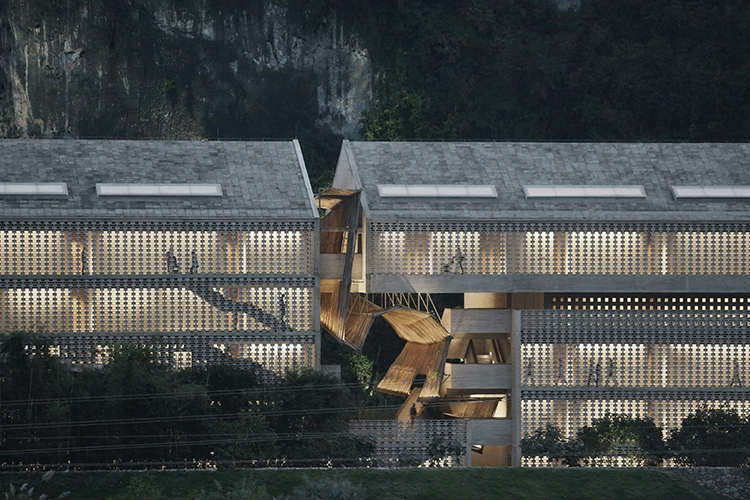
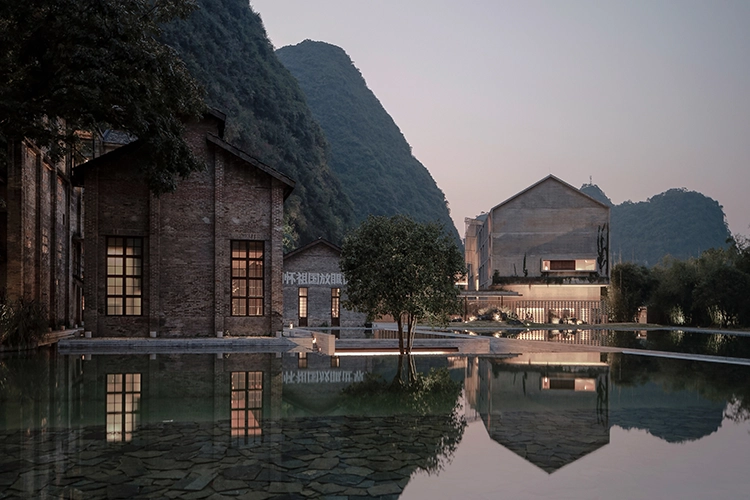
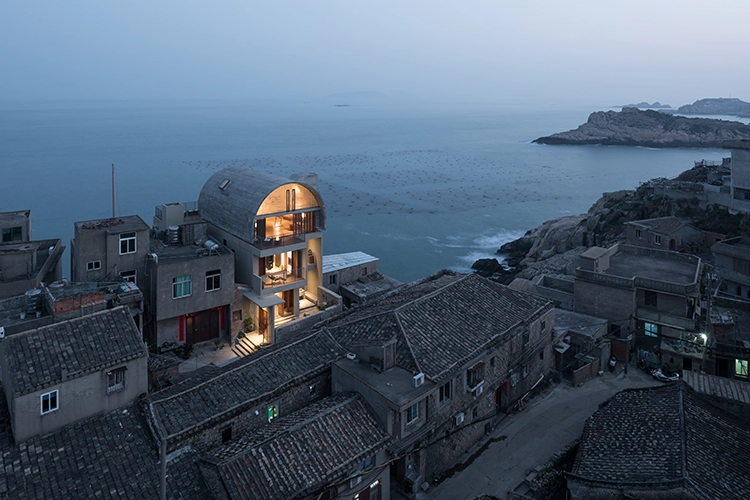
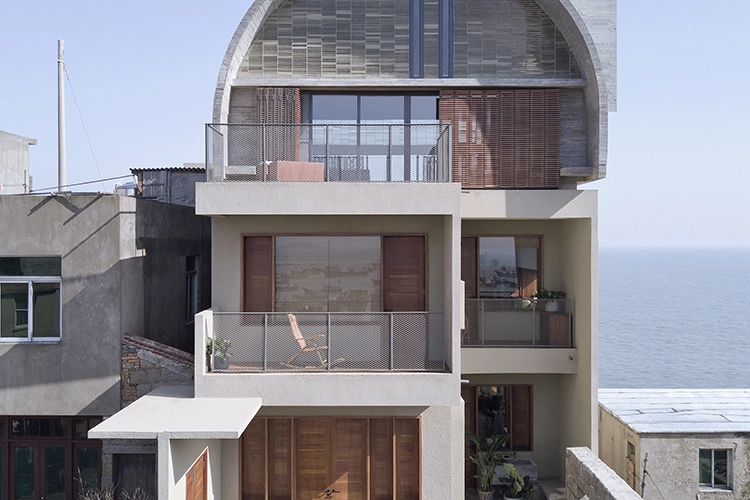
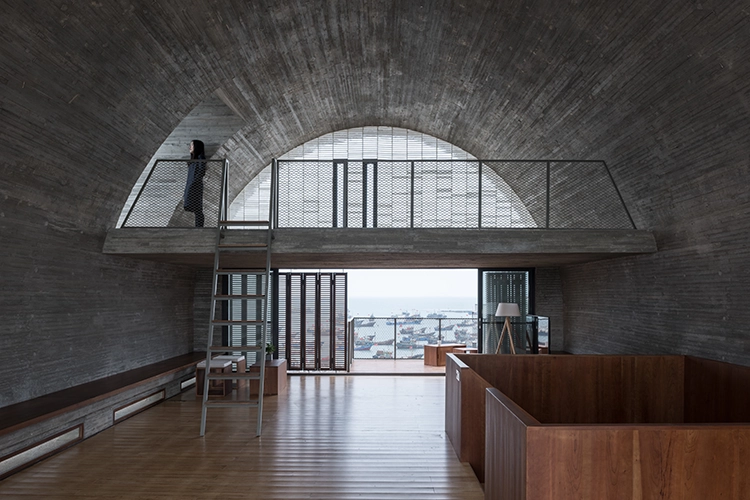
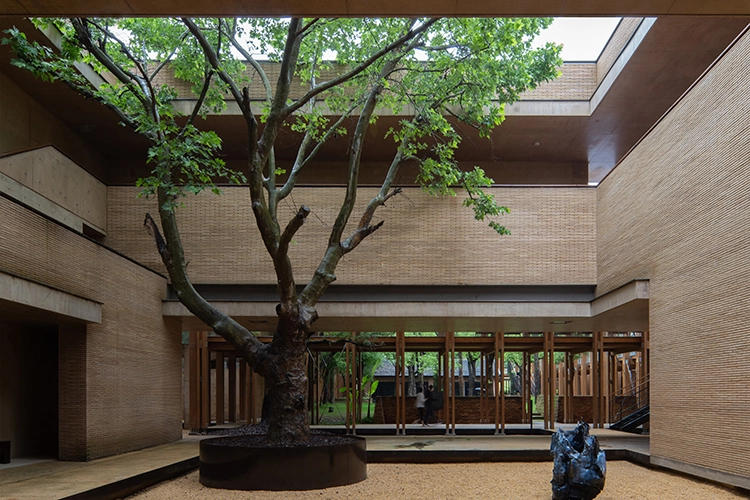
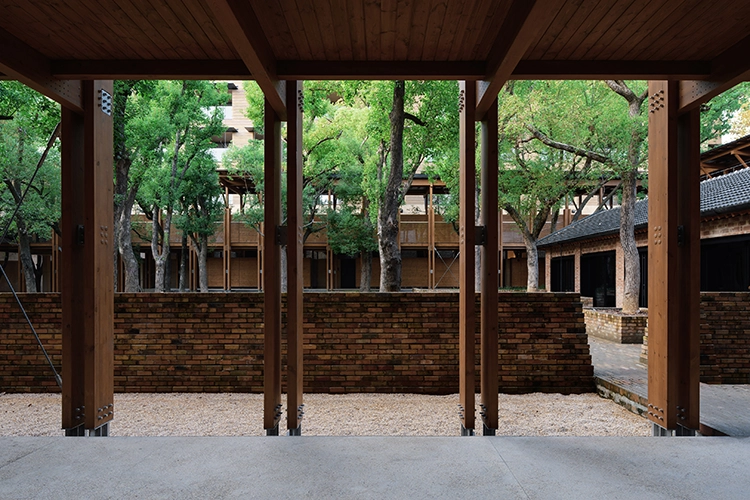
Dong Gong is the founder and design principal of Beijing-based Vector Architects. He describes his firm as intensely focused on issues of site, light and making.
Gong’s practice has earned international acclaim for his representational works, including projects such as Seashore Library, Yangshuo Sugarhouse Hotel, Renovation of the Captain’s House, Pingshan Art Museum, and Jingyang Camphor Court.
Vector Architects has been recognized with major honors including the Architects Regional Council Asia Gold Award, the RIBA International Award for Excellence, and the Archmarathon Awards, as well as inclusion in Domus’ “100+ Best Architecture Firms.”
Past Marcus Prize Winners



Infrastructure, Ecology, and Communities: Reimagining the Hattie Street Dam


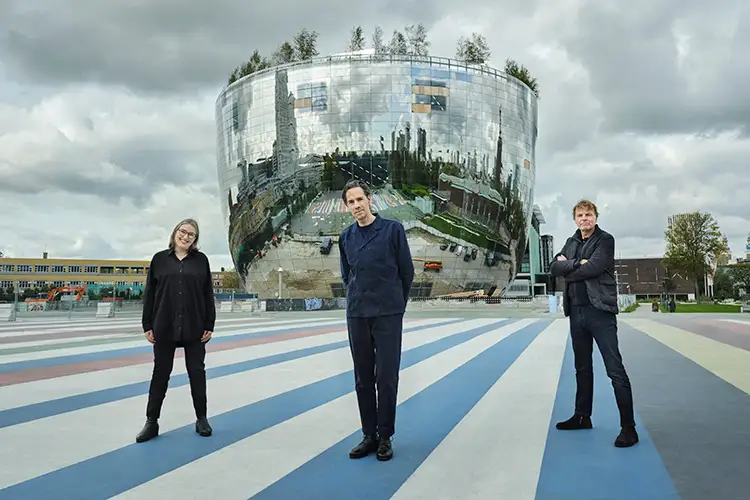
Tiantian Xu, DnA _Design and Architecture | 2023 Marcus Prize Winner
Co-Taught by Assistant Professor Sam Schuermann
Tiantian Xu’s Marcus Prize Studio immersed students in an exploration of adaptive reuse strategies of historic architecture, water infrastructure and its ability to engage the public. The Hattie Street Dam, which connects Menominee, Michigan, and Marinette, Wisconsin, presents a compelling case study. Originally constructed to support industrial activity, the dam and adjacent structures are in good condition and invite a unique opportunity for reimagining their role in the community.
Through site visits, research, and iterative design processes, students analyzed how the dam and its surroundings might be transformed into a multi-functional space that integrate community engagement, education, and sustainable production.
Housing the 21st Century Milwaukee and the Dream of 1 Million Residents
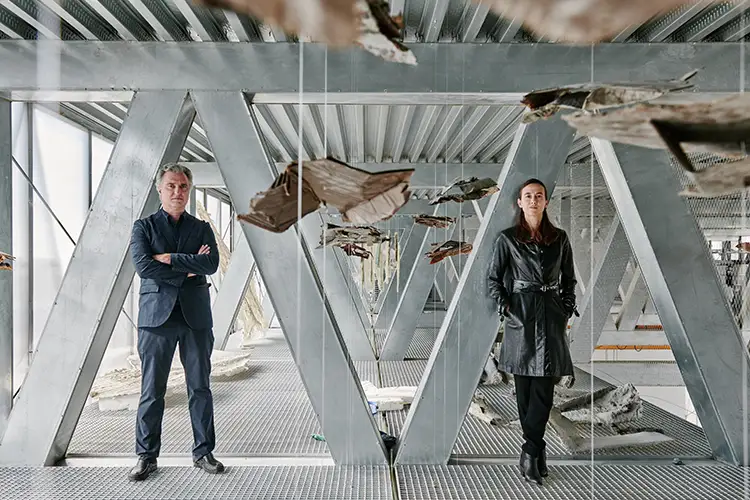
Antón García-Abril and Débora Mesa, Ensamble Studio | 2021 Marcus Prize Winner
Co-Taught by Assistant Professor Lindsey Krug
The 2022 Marcus Prize Studio paired architects Antón Garcia-Abril and Débora Mesa-Molina of Ensamble Studio with SARUP students to investigate the complexities and architectural opportunities in making Milwaukee an accessible, hospitable and thriving city of 1 million. Milwaukee Mayor Cavalier Johnson has vocalized ardent support for the city hitting a 7-figure population and advocates for a long-term strategy of “people-centered development” (Milwaukee Magazine).
Students studied four sites in downtown Milwaukee where they designed new high-density housing proposals. While smart and innovative housing solutions are vital to urban growth, housing alone does not make for a burgeoning 21st-century metropolis. Students explored creative and cutting-edge programmatic synergies to incorporate into their housing proposals for the future Milwaukee.
From Private to Commons: A Space To Share
Tatiana Bilbao, Tatiana Bilbao Estudio | 2019 Marcus Prize Winner
Co-Taught by Assistant Professor Alex Timmer
The 2020 Marcus Prize Studio studied the concept of the commons as a tool to develop new community typologies. The commons can be defined as a shared resource that is sustained, supported, and improved on by participants that contribute to its maintenance. Applied to the public realm, it creates the arena for collective spaces whose success is dependent on social contracts and its flexibility to evolve with shifting needs.
Students studied the viability of public spaces vs. common spaces. And through this differentiation, students proposed a structure specific to a site and a neighborhood, designed to foster connection and collaboration.
2018 Marcus Prize Studio
Jeanne Gang, Studio Gang | 2017 Marcus Prize Winner
Co-Taught by Associate Professor Kyle Reynolds
The 2018 Marcus Prize studio paired Marcus Prize recipient, acclaimed architect and MacArthur Fellow Jeanne Gang with twelve of the school’s most highly regarded students to investigate the design and development of a cultural institution for Milwaukee that combined the Betty Brinn Children’s Museum and the Milwaukee Public Museum into a single project.
Students investigated the potential opportunities in combining multiple institutions into a single building leveraging these possibilities to produce an exceptional architectural proposal. This Marcus Prize experience combined an October lecture and exhibition at SARUP with multiple visits to Studio Gang headquarters in Chicago.
Advancing the Strategostructure
Joshua Prince-Ramus, REX | 2015 Marcus Prize Winner
Co-Taught by Matthew Jarosz and Gil Snyder
The 2017 Marcus Prize Studio, led by Joshua Prince Ramus, centered on adaptive reuse and sustainable densification in downtown Milwaukee. Students collaborated on proposals to transform the underutilized midcentury U.S. Post Office into a vibrant civic cultural hub: a “Strategostructure” housing theaters, museums, libraries and multiplexes.
Working from the Pritzlaff Building near the site, they engaged directly with the existing structure, its history and local professionals to envision realized urban interventions.
Between Nature and Architecture
Sou Fujimoto, Sou Fujimoto Architects | 2013 Marcus Prize Winner
Co-Taught by Associate Professor Mo Zell
The 2014 Marcus Prize Studio was a design/build studio that transformed material into architecture, engaging the user in defining space. Students designed a temporary brick installation for downtown Milwaukee. The installation emphasized fundamental issues of how people interact with architecture, while transforming a massive material like brick into something appearing lightweight and ephemeral.
Capitalizing on the history of brick manufacturing in the region, the brick unit was sourced locally. For the summer of 2014, the installation converted an unused lot into a park, drawing visitors in to engage with the structure.
2012 Marcus Prize Studio
Diébédo Francis Kéré, Kéré Architecture | 2011 Marcus Prize Winner
Co-Taught by Associate Professor Chris Cornelius
The 2012 Marcus Prize Studio, collaboratively spearheaded by Diébédo Francis Kéré, founder of Kéré Architecture (Berlin, Germany) and Associate Professor Chris Cornelius, focused on underserved areas of Milwaukee, proposing interventions that would help neighborhoods and harnessing Kéré’s ideology of community engagement through architecture.
Students analyzed census data along a 26.2 mile strip in the city to determine different needs for the adjacent population. With cost in mind, students proposed small to large urban interventions using simple materials.
Forecasting Milwaukee for the Urban Age
Alejandro Aravena, Elemental | 2009 Marcus Prize Winner
Co-Taught by Ryan O’Connor
In 2009, the Chilean practice of Alejandro Aravena was selected as the third Marcus Prize recipient from the largest pool of nominees to date consisting of 40 international architects drawn from 18 countries. Aravena’s practice, a self-described “Do-Tank,” is affiliated with COPEC, a Chilean oil company, and the Universidad Católica de Chile. The affiliation has a social/political agenda and considers architecture a source for building social equity. The studio, which focused on specific architectural challenges that inspire positive change within Milwaukee’s urban fabric, was conducted in 2010.
2008 Marcus Prize Studio
Frank Barkow and Regine Leibinger, Barkow Leibinger | 2007 Marcus Prize Winner
Co-Taught by Associate Professor Kyle Talbott and Frank Barkow
In 2007, the Berlin-based practice, Barkow Leibinger, was selected as the second recipient of the Marcus Prize from among 26 nominees. The firm is known for its environmentally sensitive industrial buildings, as well as research and experimentation in new building technologies and materials.
Frank Barkow (Barkow Leibinger) and Kyle Talbott (Associate Professor, UWM) co-led the second Marcus Prize Studio. Using the framework of a conventional design/ build studio as a starting point, the teaching dyad asked students to experiment in designer-led building construction by radically reallocating the responsibilities of designers and builders. The intensive curriculum resulted in a fully designed and constructed, permanent, 120 square meter park pavilion and storage facility in a reclaimed Milwaukee industrial corridor.
The Barkow-Talbott studio’s built work has been reviewed internationally and is the recipient of the 2008 Mayor’s Urban Design Award.
Skycar City Studio
Winy Maas, Jacob van Rijs and Nathalie de Vries, MVRDV | 2005 Marcus Prize Winner
Co-Taught by Associate Professor Grace La
In May of 2005, a five-person jury convened at the school to select the first recipient of the Marcus Prize. A distinguished pool of international nominators identified 22 candidates, representing nine different countries and a broad spectrum of design agendas. From this pool and following extensive deliberations, the jury selected the Rotterdam firm of MVRDV.
Subsequently, Winy Maas (MVRDV) and Grace La (Associate Professor, UWM) co-led the inaugural Marcus Prize Studio. This teaching dyad undertook design research born from their shared interest in urban form and infrastructure.
Speculating upon the notion of skycars in relation to the problems of density, and working fluidly between architectural research, conjecture, and design, the results of the studio are documented in the publication, “Skycar City” (Actar, 2007). The book sold over one thousand copies in the first weeks of its release and has been reviewed internationally. Additionally, the work of the Skycar City Studio, co-led by Winy Maas and Grace La, was exhibited in the main pavilion at the 2009 Venice Biennale.
In The Media
- SARUP connections featured in Archinect’s Top Prize-Winning Architects and Design Leaders of 2025A recent Archinect roundup of the most significant architecture and design honors of 2025 highlights several figures with notable ties to the UWM School of Architecture & Urban Planning. Among them is Dong Gong, principal of Vector Architects, who was named the 2025 Marcus Prize laureate. Awarded by SARUP, the Marcus Prize is one of …