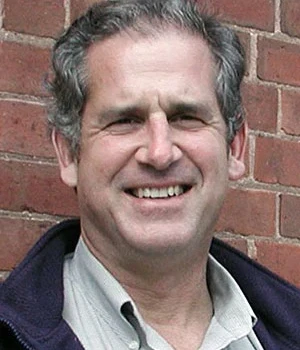
Photo of Benjamin Campbell

Benjamin Campbell

  • Associate Professor, Anthropology

Education

  • PhD, Biological Anthropology, Harvard University, 1990
  • MA, Anthropology, Harvard University, 1986
  • MA, Zoology, Indiana University, 1983
  • BA, Biology, Indiana University, 1982

Courses Taught

  • ANTH 203 - Indigenous Religion
  • ANTH 301 - Human Evolution and Variation
  • ANTH 404 - Hormones and Behavior
  • ANTH 406: Evolutionary Biology & Human Diseases
  • ANTH 407 - Neuroanthropology
  • ANTH 446: Child in Different Cultures

Research Interests

My research falls in with life history; the evolutionary study of the human life course.  I focus on steroid hormones as a critical link between energetics, the brain and the timing of childhood growth, pubertal maturation, and senescence. In the first phase of my career I did fieldwork in Africa, including time with the Turkana and Ariaal pastoralists of northern Kenya. I focused on the impact of ecological factors on hormones (mostly testosterone) and the male life course.  More recently, I have shifted my attention to adrenarche (the onset of adrenal DHEAS production) and its role in middle childhood.   I have published a series of theoretical papers suggest that the primary impact of DHEAS is to promote brain development in humans and the great apes. I am now looking for collaborators with which to test this hypothesis.  In addition to my core research, I have also supervised graduate students on topics ranging from primate growth, development and reproduction, to the understanding of evolution among museum patrons and college students.

Related Activities

  • Co-organizer, Human Migration Conference, University of Kansas, March 1 & 2, 2010

Selected Publications

Campbell, B. C.() San Trance Dance: Lived Experience and Neurological Mechanism.Religion, Brain & Behavior.
Campbell, B. C.(2021) Commentary on Adrenarche and Middle Childhood.Journal of Neurobiology and Physiology, 3(2), 24-28.
Campbell, B. C.(2020) DHEAS & Human Development: An Evolutionary Perspective.Frontiers in Paediatric Endocrinology, 11, 101.
Farooqi, N. A., Scotti, M. , Yu, A. , Lew, J. , Monnier, P. , Botteron, K. N., Campbell , B. C., Booij, L. , Herba, C. M., Seguin, J. R., Castellanos-Ryan, N. , McCraken, J. T., & Nguyen, V. T.(2019) Sex-specific contribution of DHEA-Cortisol ratio to Prefrontal-hippocampal structural development, cognitive abilities and personality traits.Journal of NeuroEndocrinology, 31, e12682.
Dunk, R. , Petto, A. , Mayer, G. , Campbell , B. , & (2015) Seasonality of Conceptions in Captive Rhesus Macaques.International Journal of Primatology, 36, 855-860.
Barone , L. , Andrew, P. , & Campbell, B. C.(2014) Predictors of Evolution Acceptance in a Musem Population.Evolution, Education and OutReach, 7, 23.
Campbell, B. C.(2012) Stone Age Body Image: Male Embodiment and Vitality in Subsistence Societies.Downey, G. , & Lende, D. (Eds). The Encultured Brain: An Introduction To Neuroanthropology, 237-259. MIT Press.
Campbell, B. C.(2011) Adrenarche and Middle Childhood.Human Nature, 22, 327-349.
Campbell, B. C., Gray, P. B., & Radak, J. (2011) In the Company of Men: Quality of Life and Social Support Among the Ariaal of Northern Kenya.Cross-Cultural Journal of Gerontology, 26, 221-237.
Campbell, B. C.(2010) Energetics and the Human Brain.Muhlenbein, M. (Ed). Human Evolutionary Biology, 425-438. University of Cambridge Press.
Campbell, B. C., & Garcia, J. R.(2009) Neuroanthropology: Evolution and Emotional Embodiment.Frontiers in Evolutionary Neuroscience, 1(Article 4), 1-6.
Campbell, B. C., Leslie, P. W., & Campbell , K. L.(2006) Age-related patterns of urinary gonadotropins among Turkana men of northern Kenya.Social Biology, 53, 31-45.
Campbell, B. C., Prossinger, H. , & Mbzivo, M. (2005) Timing of pubertal maturation and the onset of sexual behavior among Zimbabwe schoolboys.Archives of Sexual Behavior, 34, 505-16.
Campbell, B. C., & Leslie, P. W.(1996) The Reproductive Ecology of Human Males.Yearbook of Physical Anthropology, 38(S21), 1-26.

UWM Land Acknowledgement: We acknowledge in Milwaukee that we are on traditional Potawatomi, Ho-Chunk and Menominee homeland along the southwest shores of Michigami, North America’s largest system of freshwater lakes, where the Milwaukee, Menominee and Kinnickinnic rivers meet and the people of Wisconsin’s sovereign Anishinaabe, Ho-Chunk, Menominee, Oneida and Mohican nations remain present.   |   To learn more, visit the Electa Quinney Institute website.