The Helen Bader School of Social Welfare proudly offers opportunities for students to learn about social welfare issues from an international perspective.
Students can choose from programs in Austria, Costa Rica and South Africa. All programs are open to students in any major.
Austria
Comparative Public Policy and Practice – Social Work and Criminal Justice
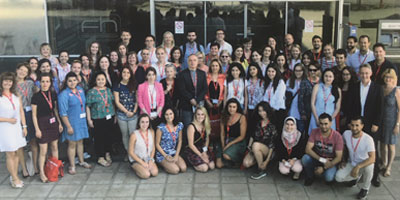
The University of Applied Sciences Upper Austria Summer Course in Social Work and Criminal Justice is a two-week summer course for graduate and undergraduate students. This course is relevant to students in social work, criminal justice, history, political science, psychology, peace studies and other related fields.
Comparative Public Policy and Practice: Social Work & Criminal Justice Program
This two-week summer course for students focuses on Austria’s public policies. Topics relate to social work practice, criminal justice, services to children and families, treatment of addictions, immigrant families and social justice. Within each of these areas, students compare an aspect of the Austrian system to a similar concept in the U.S.
Students are housed in a hotel in Linz near the university and on a direct transportation line to the city center. The accommodations consist of a double sleeping room with a bed and desk for each student and a private bathroom.
The Austria course includes attendance at an international conference where there will be opportunities to interact with students and faculty from several countries. The second week consists of seminars, agency visits and historical tours of sites with significant impact on current public policies.
Lectures
- Lectures are in English. Translators will be available at all site visits to facilitate interaction with participants.
- Students will attend lectures by foreign professionals and will visit agencies where they can interact with staff and users of services.
- Lectures may include European social policy, issues of immigration and crime, historical background on the Nazi era, and responses to family violence and substance abuse.
Site Visits
Site visits may include:
- Immigration centers and refugee camps
- Violence prevention centers
- Residential substance abuse facilities
- Mauthausen, a former concentration death camp
- Local police departments
- Garsten prison
- Residential center for youth involved in the criminal justice system
The two weeks are full, but there is time built-in for additional travel. There is one unscheduled weekend where students can take advantage of day trips to Vienna, Salzburg or the area around Linz. Adventurous students may decide to visit an adjoining country such as Germany, Hungary or the Czech Republic.
Assignments and Grading
- Attendance at mandatory orientation meetings including a pre-departure orientation program hosted by the Center for International Education (CIE).
- Attendance at all lectures and site visits. At each of the visits, students generally attend a presentation after which they will have an opportunity to interact either with service users or staff.
- Students are graded on their participation in these lectures and site visits as well as on their final written assignment. The program instructor will attend the lectures and site visits and be responsible for course grading. The final assignment is graded based on the adequacy of the research and a comparative analysis.
- A syllabus will be available before departure. The final project is due in August.
A rough estimate based on previous years is between $2,600-$3,000 and includes tuition, lodging, international conference registration, lectures, agency visits, ground transportation and some meals.
Airfare is not included, but many students have been able to get low airfare by researching deals and booking early. Students can apply for and use financial aid for the program. Scholarships and grants are available for qualified undergraduate and graduate students. Apply early and submit by posted deadlines!
Please contact Amy Kirby, or visit the Center for International Education.
Amy Kirby, MSW, LCSW
Clinical Associate Professor
kirby@uwm.edu
- Dates:
June 6-20, 2026
Apply by January 20, 2026 - Credits:
3 elective credits in Social Work or Criminal Justice & Criminology (undergraduate or graduate) - Instructor:
Amy Kirby, MSW, LCSW
Clinical Associate Professor
kirby@uwm.edu - Visiting University:
University of Applied Sciences Upper Austria
Costa Rica
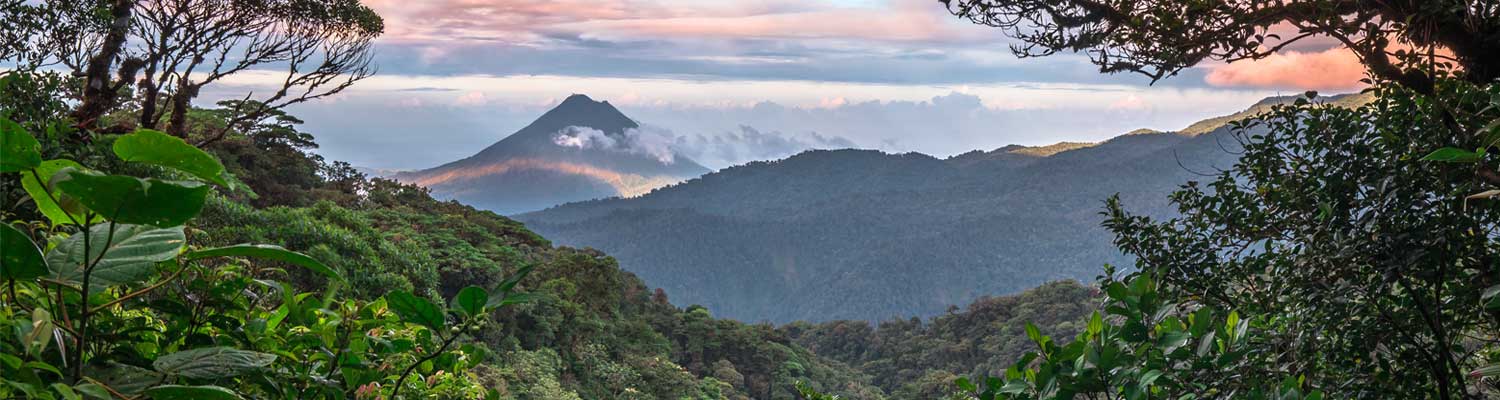
The Costa Rica study abroad course immerses students in the language and culture of Central America. Students learn conversational Spanish and culturally competent practice — skills that prepare social work students to serve Latino clients in Wisconsin.
Spanish for Social Workers
Students will study with social work students and practitioners from across the U.S. during this two-week course, Spanish for Social Workers, which was developed in consultation with the California chapter of the National Association of Social Workers (NASW).
The course consists of classroom study, lectures by social work scholars, and visits to nearby social service agencies, as well as exquisite nature preserves and ecological tourist sites. The intensive language course accommodates each student’s current language skill level, ranging from beginner through advanced.
Evenings are free for study and socializing in the Central Plaza (where most young people meet). Grecia has a thriving local central market, various restaurants, bars and coffee houses.
Costa Rica’s tropical climate, with its heat and humidity, greatly influences the local lifestyle — from the design of homes and communities to the style of dress, which is typically modest and light.
Host Families
- As part of the academic curriculum, students will live with local host families during their visit.
- All host families are conveniently located within walking distance of the school.
- Each family provides a private room for study and rest, laundry service, as well as breakfast and dinner.
- Family-style meals offer a unique chance to practice Spanish through meaningful conversations, where you can ask questions, learn more, and immerse yourself in the language — your host family likely won’t speak English, enhancing your cultural experience.
Students must attend all language class sessions and participate in all conferences and site visits.
Spanish Classes
- Classes are conducted in Spanish and typically consist of two to four students.
- Students are placed in classes dependent on their Spanish language levels.
- Instruction takes place five days per week in the morning or afternoon.
- Spanish is spoken throughout the day and during planned activities.
- Language workbooks, specifically developed for this course, are provided.
- A coffee/snack break occurs daily.
- Lunch is on your own most days.
Lectures
Lectures vary each year, but address several trending social topics:
- Costa Rica: An overview of the country and culture
- Child welfare in Costa Rica
- Social work in Costa Rica and Latin America: Who does what, how and where?
- Criminal justice in Costa Rica
Site Visits
Visits to various social service agencies allow us to engage informally with clients and practitioners while observing program activities. Site visits may include:
- Child welfare organizations
- Residential care sites
- Domestic violence shelters
- Schools
- Addiction treatment centers
Current Social Problems
You may hear about:
- Poverty
- Drug trafficking
- Illegal immigration
- Sex trafficking
- International food shortages
- Global debt crisis
- Sustainable environments
- The impact of eco-tourism
Cultural Activities and Excursions
This course includes two weekend cultural excursions. Activities may include the following:
- Manuel Antonio National Park
- River Float (Sarapiqui / Puerto Viejo River)
- Waterfall Gardens
- Chocolate Tour
- *Canopy Tour (optional and additional cost)
Other Cultural Activities included are:
- Latin dance class
- Cooking experience
- Tour of Oxcart Factory (Sarchi)
The UWinterIM 2026 Estimated Program Fee was $4,795.
Please contact Dana Riesterer, or visit the Center for International Education.
Dana Riesterer
Clinical Assistant Professor and Social Work Field Liaison
dmr3@uwm.edu
The Spanish classes made me realize how much I actually enjoy learning the ‘why’ of the language, and how important the Spanish language is to me and to those around me.
It gave me a great perspective on how important it is to slow down, take a deep breath, allow yourself to take up space and remember that everyone has hard moments.
If anyone ever asks, “Should I study abroad?” The answer is absolutely
yes. You will always be able to make more money, you will always be able
to travel, but to have a life changing experience where you can be
vulnerable and learn with others? Now that is something you cannot get
without studying abroad.
During this trip to Costa Rica, the land is my classroom. The people are my textbooks, and my speech is my practice. I believe everyone deserves to study and educate themselves with quality education that enriches the mind and broadens the scope of the world.
I can safely say that 5 days in Costa Rica has increased my Spanish proficiency far more than my entire high school Spanish class experience as well as my college semester.

- Dates:
January 7-22, 2027*
Apply to the Costa Rica Program
*Program dates subject to change based on international flight availability and cost. - Credits:
3 elective credits in Social Work or Criminal Justice & Criminology (undergraduate or graduate) - Cost
- Instructor:
Dana Riesterer
Clinical Assistant Professor - Visiting University:
Academia Centro Americana de Espanol
South Africa
Health and Social Development Short Course in South Africa
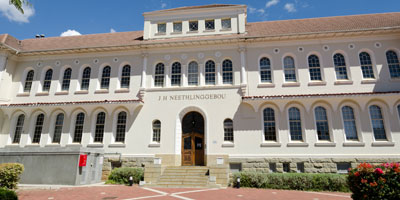
Study at Stellenbosch University in South Africa.
Coursework will be taught by faculty in South Africa and includes:
- South African welfare policy
- Role of community in social development
- Cultural practices in health care
- Mental health and substance abuse in South Africa
- South African social policy
Learn from the community in numerous field visits, including:
- Townships
- Substance abuse centers
- Health care
- Community development
Visit cultural and historical centers in Cape Town, including:
- District Six museum
- The Slave Lodge
- Robbin Island
The estimated cost is around $3,200 plus airfare, some meals and incidentals.
Contact Melinda S. Kavanaugh for application and more information. kavanaug@uwm.edu
- Dates:
The South Africa program is not offered at this time. - Credit:
3 credits in Social Work or Criminal Justice & Criminology (undergraduate or graduate) - Open to sophomore, junior and senior undergraduate students and graduate students in any discipline.
- Instructor:
Melinda S. Kavanaugh
Professor